Counting the cost

November,  2015

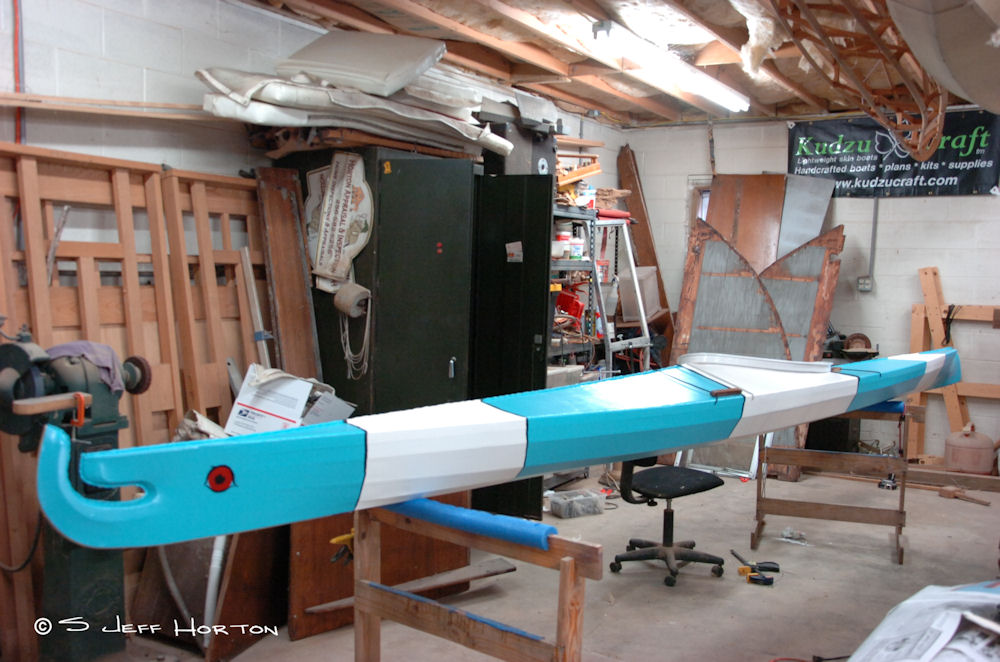
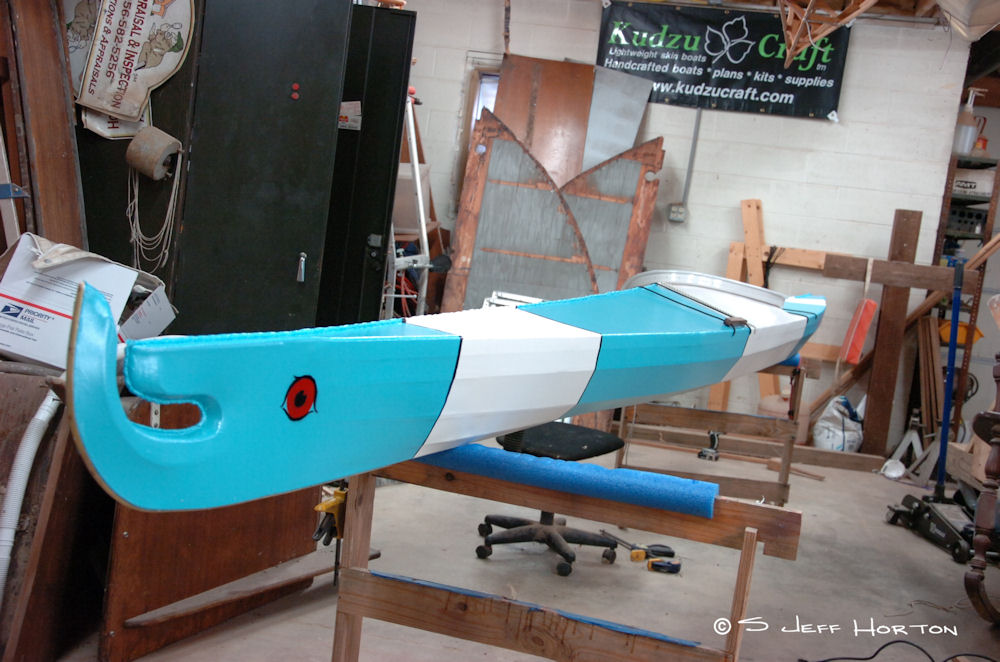
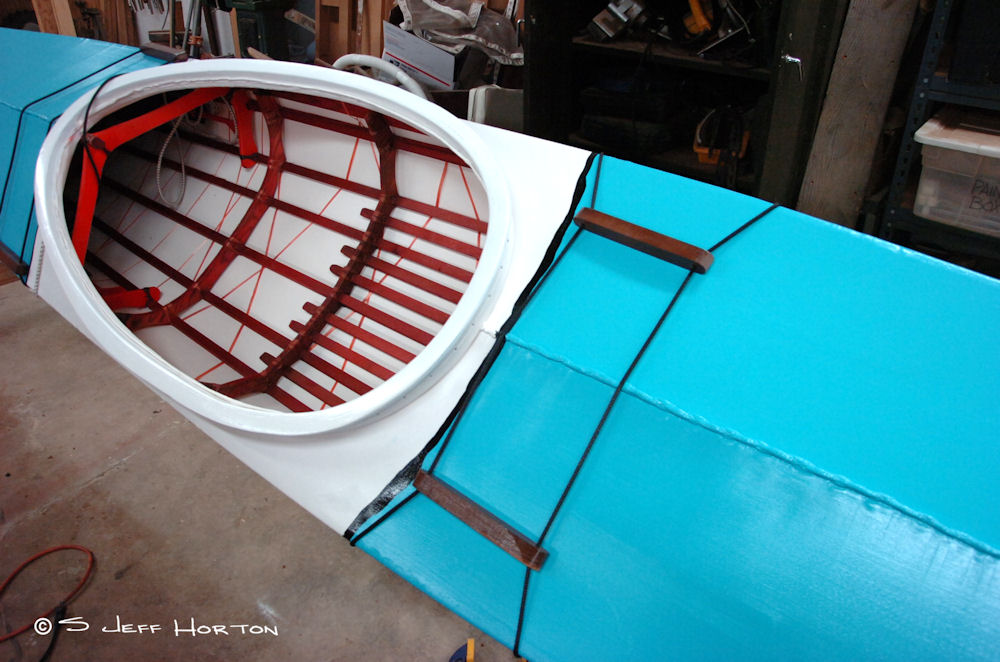
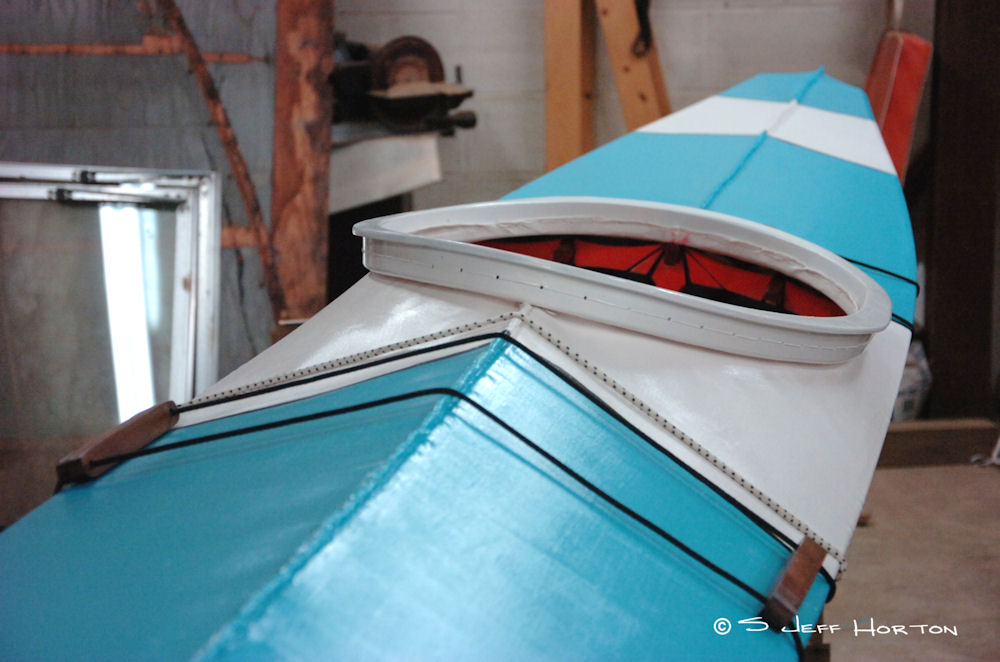
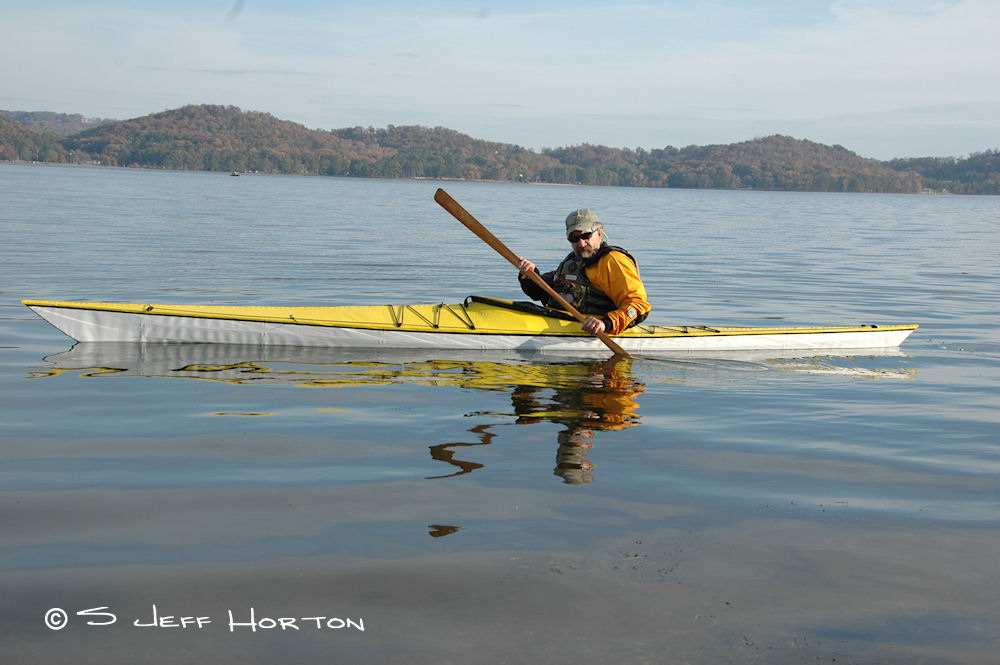
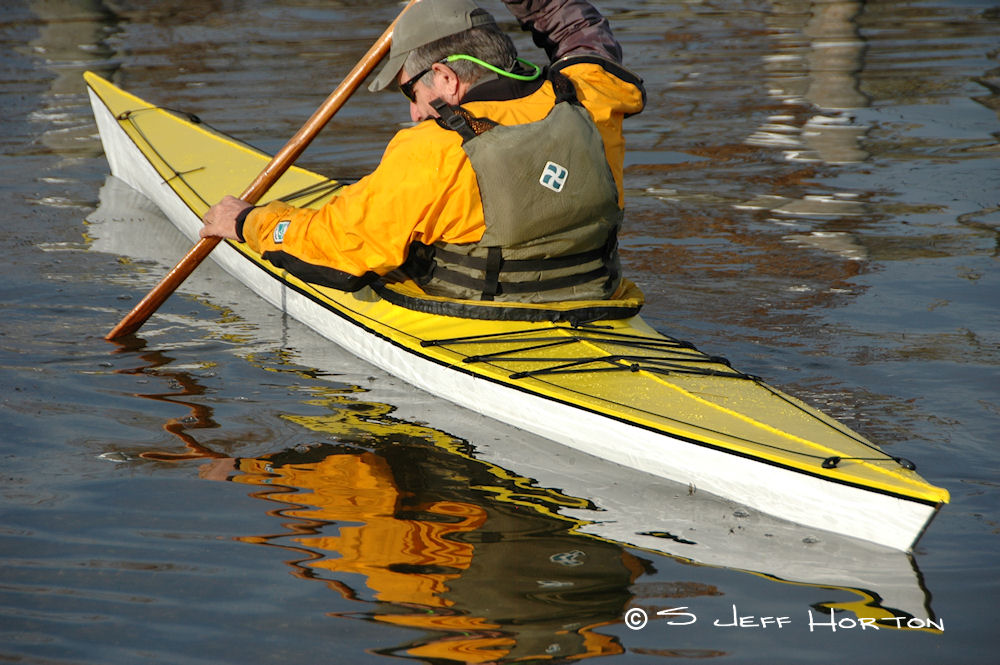
In case you have not been following along I just finished building a new kayak and I kept close track of the costs and the labor to build it. My wife finally tried  kayaking and discovered just how much fun it can be. Problem was, none of the boats in my stable really suited her, so I needed to build her one..

Short Shot has always been an under appreciate design.  At sixteen and half feet and with better resistance numbers than most of my designs I had expected great things from this design but sales were always slow at best. I felt the styling was part of the problem and I have long thought about redesigning it to look more traditional and this was the motivation I needed.
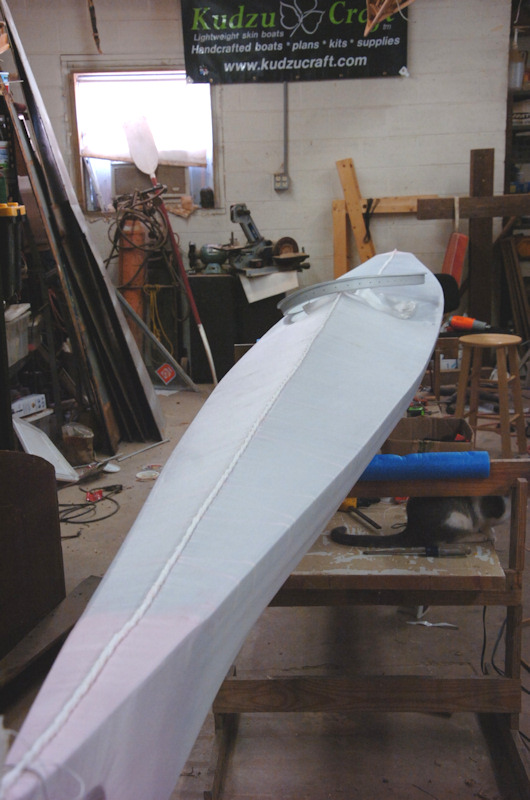
ss-24As I built Short Shot, I kept close tabs on the time and cost of this boat. I had a lot of scrap plywood and other odds in ends in the shop from other projects I had saved, so my cost to build wouldn’t reflect your cost. Instead of keeping tack of what I spent, I kept track of all the materials and prices for these items. The following is a list of what it took to build this boat.

16.5′ Short Shot kayak Fully
loaded
Minimally equipped
Materials Cost Cost
Plans $      69.00 $           69.00
Plywood for frames $      50.00 $           50.00
Western red cedar for stringers  $     25.00 $           25.00
Sinew-2 rolls $      19.00 $           19.00
Paint 2 quarts and 1 pint, Rustolem $      27.91 $          23.00
2 quarts
2 can spray poly $      21.90
Sewing thread $        9.00
18 feet of 11.7 oz fabric $     126.00 $          81.00
8 oz fabric
Seat $       86.00
Paint supplies $       21.00 $           21.00
Brass 5 feet $       30.00
Bungee 17 feet $         5.95 $             5.95
Backband $       28.00 $           28.00
Black rope $         6.40
Stainless screws for coaming (box-50) $         8.25 $             8.25
TOTAL $     533.41 $         330.20

In the first column is what I used to build the boat. It included a Redfish seat, brass strips on both ends, the 11.7 oz skin and deck rigging. We stained the frame to enhance the look and then we coated it with gloss poly. She wanted a two tone paint job with a black stripe, so that took 3 cans of paint. All this came to just under $550. When you consider this is a 34-35 lb kayak that is not a lot of money! You can’t buy a used composite boat of similar weight  for that.

A lot of people are attracted to these boats because of the low cost.  I wanted to see what the low end would be so I created a column with just the minimum parts. No stain or poly on the frame, no Redfish seat, using sinew instead of sewing thread, etc. By cutting out the extras you could build this boat for $330. With a little care I think you could come in  under $300.

You will pay almost that much for those 10′ or 11′ kayak all the big box stores sell. The difference is any of  my designs will be far easier to paddle and much faster! Yes there is a big difference and it is not the weight of the boat. I don’t design short boats because short boats are barges. There is no way around that either, but that is another story for another day.

And these are not a boat with a 2-3 year life. As long as you take reasonable care and don’t store in the sun or where it will stay wet and rot, your can probably pass it on to you kids or grand kids.

I also kept track of the labor to build Short Shot.  I feel it only fair to point out that I have built a few boats ,so I have the process down and don’t have to spend time thinking about what or how to do something. I have done it enough that it is just instinct, so I am going to be able to build one faster than most people, especially if it is your first time. But the learning curve is short and most people will be able to get reasonable close to these numbers.

Task Task Hours Total Hours
Cutting frames 8:00 8:00
Setting up strongback/cutting – scarfing – gluing stringers 2:43 10:43
Lashing 1:21 12:04
lashing 3:44 15:48
lashing 1:17 17:05
lashing 4:52 21:57
lashing-FINISHED 4:52 26:49
Staining frame 2:23 29:12
Spraying poly on frame-paint coaming 1:00 30:12
Skinning 2:00 32:12
Skinning 1:36 33:48
Skinning 4:20 38:08
Installing coming 0:54 39:02
Painting 1:15 40:17
Painting 1:30 41:47
Painting 1:12 42:59
rigging 3:18 46:17

As you can see I spent just under 46 and 1/2 hours, start to finish on this boat.  In my classes we build a single chine boat, VARDO or Ravenswood in roughly 45 hours and these are typically people who have never built a boat or much else in their life. Short Shot is a multi-chine boat and that takes a little longer to lash all those stringers. I have people tell me quite regular that spend about 60 hours on their boat and this seems like a reasonable number to me.

As I said earlier, I don’t do short boats because they are not good designs. White water boats get away with the short lengths because of the ways they are used. They are pushed along with the current and not paddled long distances on flat water, so the high resistance is not an a problem. But if you are looking for sea kayak to paddle on open flat water you need a little waterline length.

Drop in my web site and check out my designs. Kudzucraft
Talk to people who have built and paddle my boats on our forum.
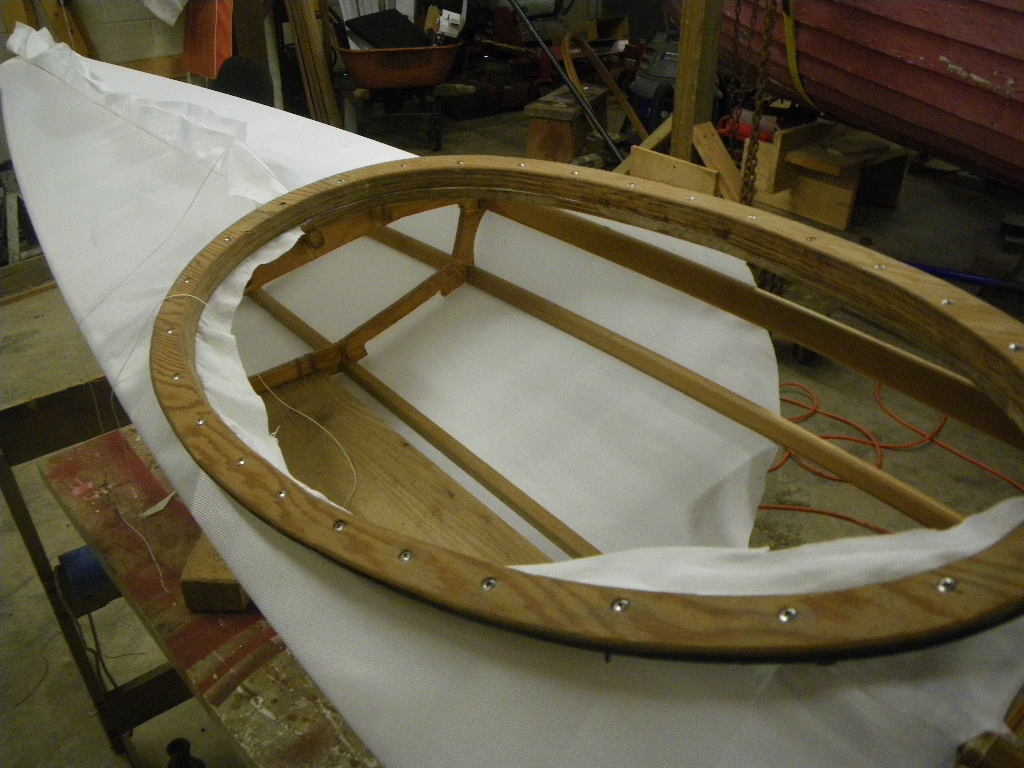
ss-27


Half a Curlew

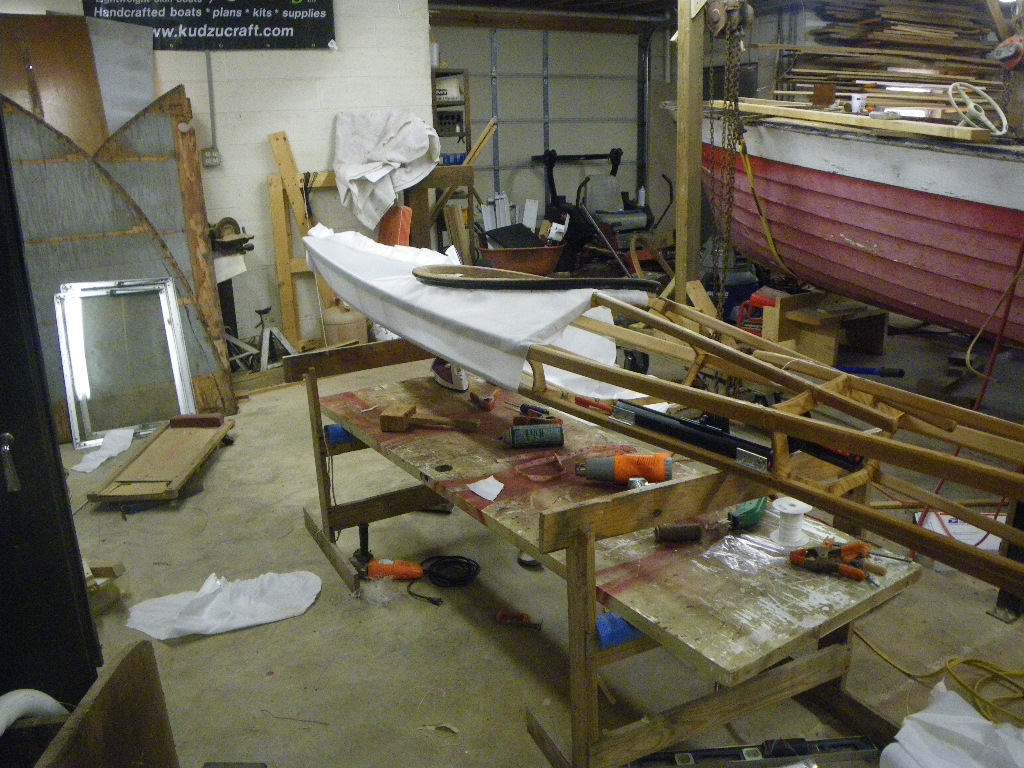
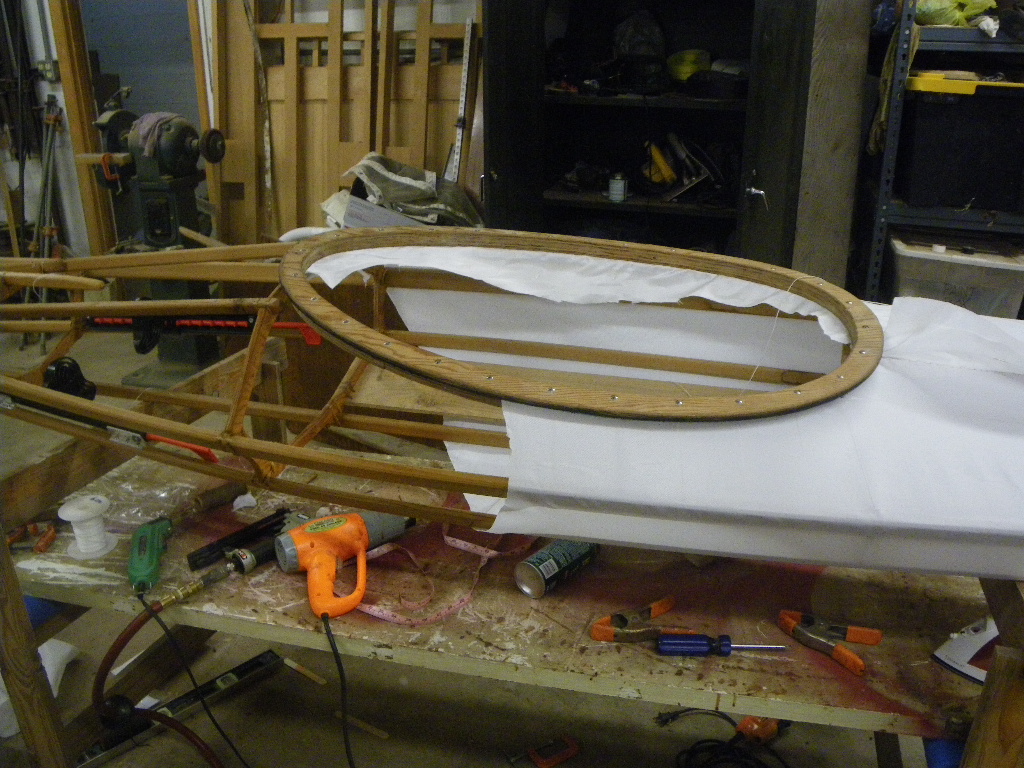
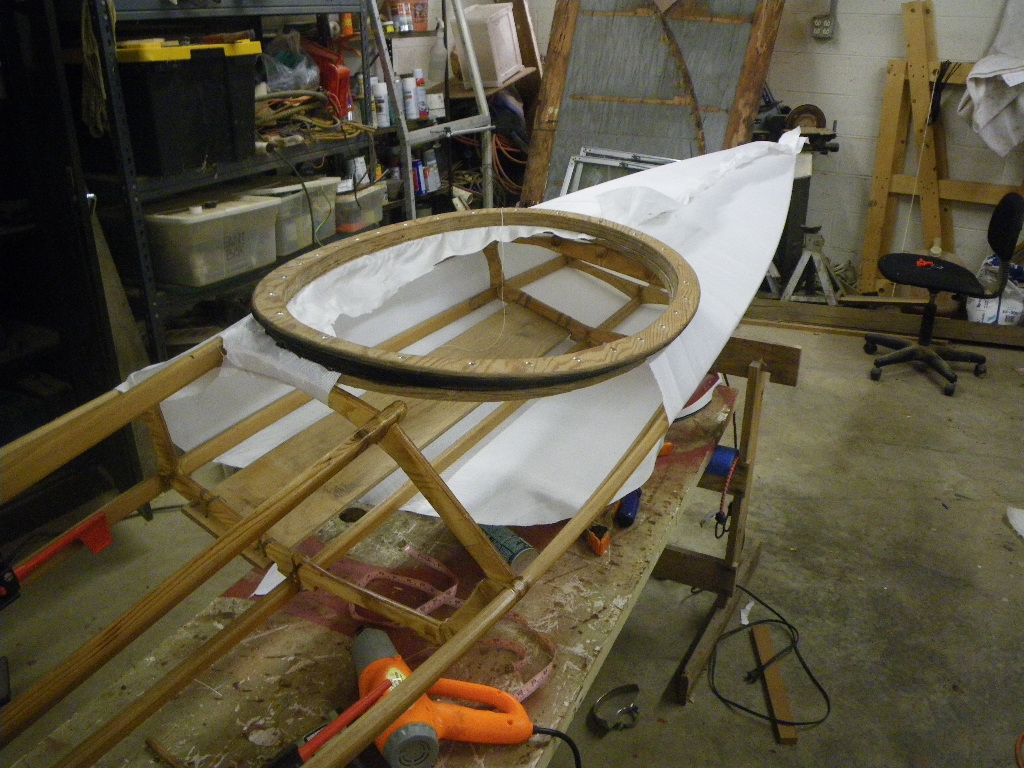
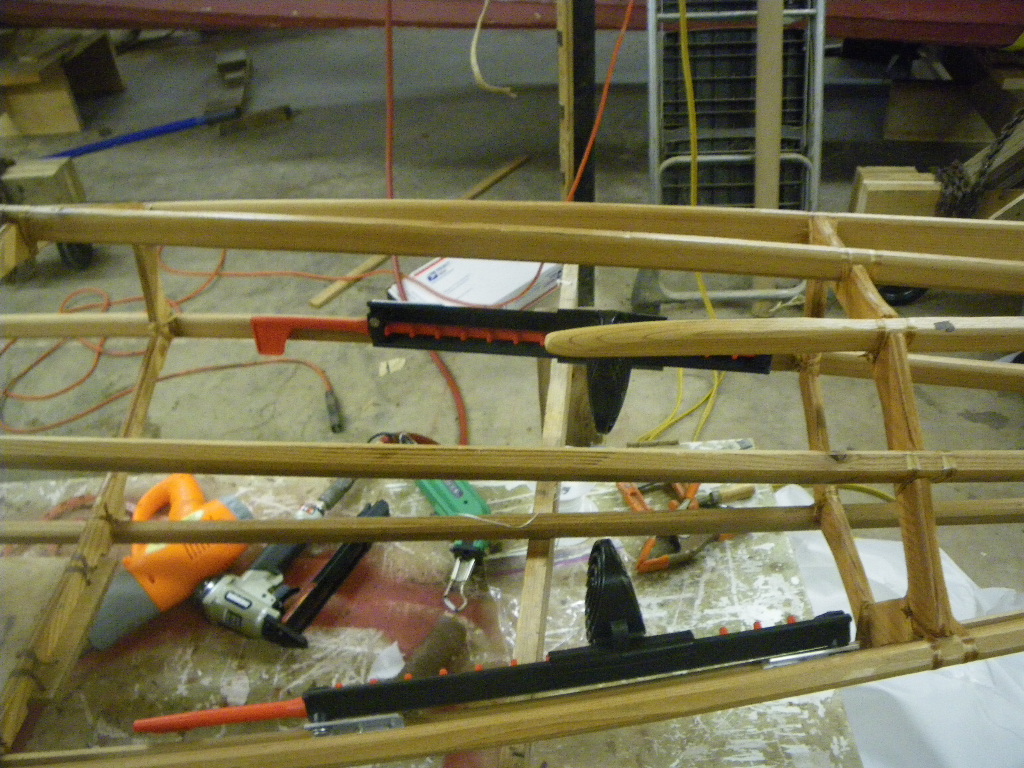
Wanted to share a fun little project I am working on. Have you ever seen those cutaway machines where you could see inside and see how it worked? I have a very vivid memory from my childhood of a washing machine, or maybe it was a dishwasher that had plastic panels where you could see inside as it operated. It make an strong impression on me that I have never forgotten!

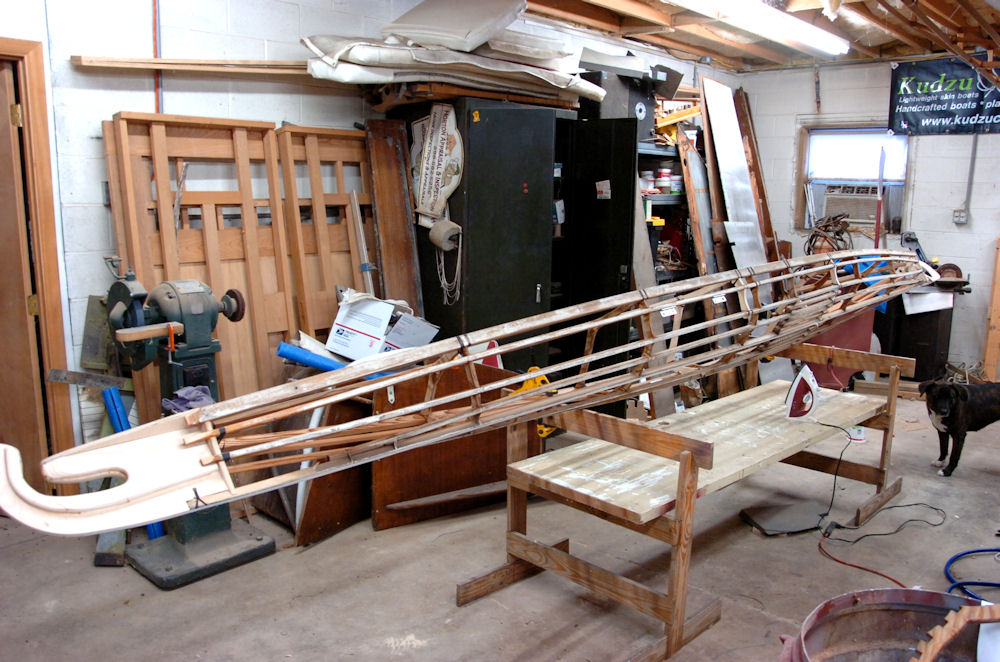
I was looking at a frame I had thrown together a few years back for a woodworking show display. Short cut were taken so it wasn’t suitable for anything other than display use and has been hanging from the shop ceiling for a long time. For some reason when I looked at it this time I had the thought of making a cutaway model from it.

I am going to Chattanooga TN this weekend for the Outdoor Gear Swap and I am getting this ready to display there. I am going to partially skin the boat, partially shrink the skin and partially paint the shrunken skin. Showing the different stages of construction and how one of my boats are built.  It’s not the same as watching a sewing machine gears operate or a dishwasher slinging water, but I think it will be pretty cool. I will post some more photos once it is finished.

IMGP6956 IMGP6951 IMGP6952 IMGP6953 IMGP6955

The BIG UNVEILING!

I did not plan on posting again till it was ready to go to the water, but I hit a little snag and decided to go ahead. I think I am at about 98% finished I just have a few details to take care of and I don’t think I will finish today. I hit my head yesterday and I still have a bit of dull  headache, so I am taking it easy and not pushing to get done.  I decided to go ahead with the ‘Big Reveal’ today anyway.

Click on the images to see them full size.

jeffs-32 jeffs-33

Like it or not, I love the paint job. I have been thinking of this since I did ‘Nemo’, the orange and white Curlew. I played around with colors when I painted Nemo and Nemo was almost painted these colors!

But I wanted to surprise John Redmond who gave me the idea.  John had posted a photo of a Clown fish and said ‘Jeff, why don’t you paint one like this?” Had it not been for that I would have used these colors.

jeffs-34

I used toggles and polyester rope instead of bungee. Toggles have the advantage of being able to  slide your paddle under them, spread the toggles apart and they will tighten, wedging your paddle across the boat. With the blade in the water it makes a big difference in the stability of the boat. It dampens the boats movements so it doesn’t roll nearly as fast on you. It is great for wet entries and much faster to deploy than a paddle float since there is nothing to find nor inflate. I put them front and back on this boat since the rear ones would get in the way during a cowboy scramble style of reentry.

jeffs-35

I put a singe white bungee right in front of the cockpit so I have a place to put gloves or a hat or something small and I don’t have to fiddle with tightening the toggles. Since I rarely carry anything other than a spare paddle on the deck the  single bungee is perfect for my needs.

jeffs-36

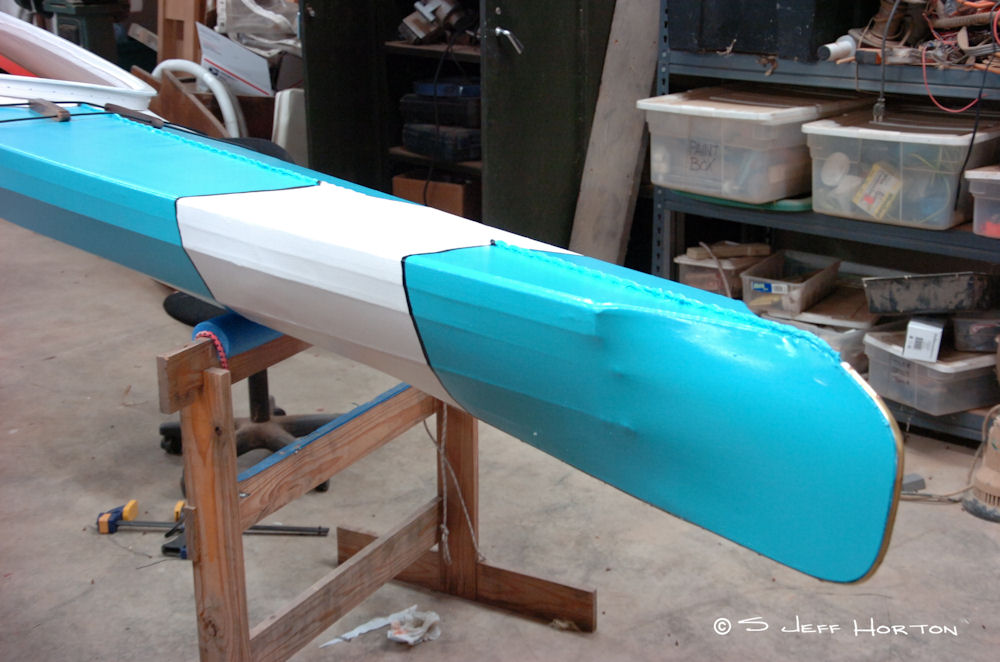
I am well pleased the way the stern turned out.  I wrapped it with a brass stemband using  #4 bronze screws to anchor it in place. There is a bead of caulking underneath it to bed it and seal the screw holes.

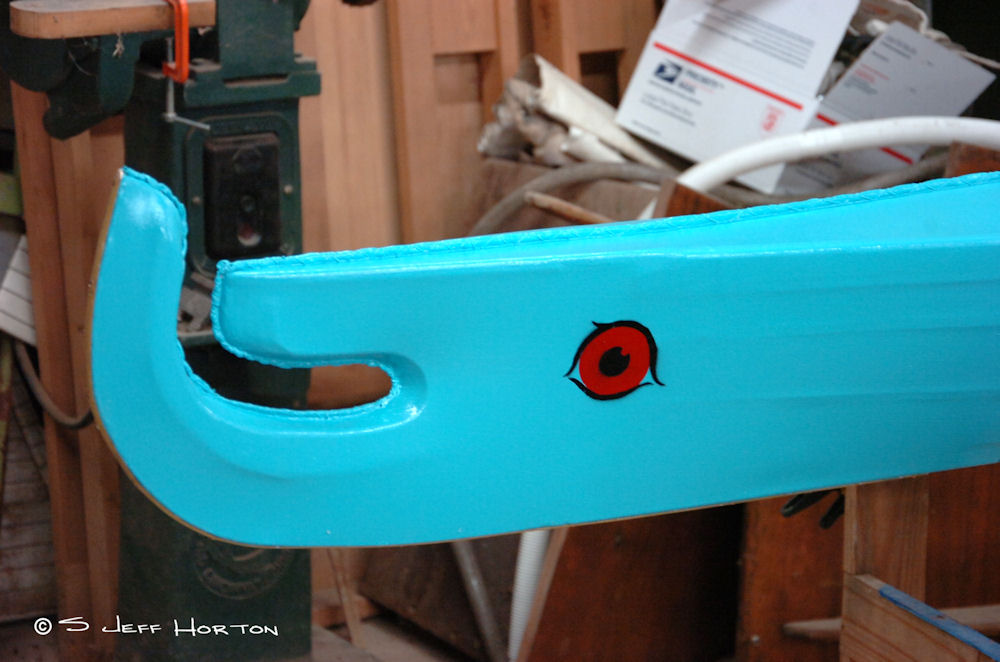
jeffs-37The bow is my favorite part of the boat. I have always wondered if the Bifid bow wasn’t inspired by the mouth of something the Inuits hunted. Maybe a way to pay tribute to the animal or animals.This style of Bifid always made me think of the Salmons appearance once it changes during the breeding run up the rivers. That is a large part of why I wanted eyes on this boat.

I am not quite finished painting the eye. I need to add some white highlights to it but the black was still wet when I took this photo. It will be tomorrow before it’s dry enough to paint those.

I wrapped the bow with stemband too. I let it run about  30″ down the bottom of the bow.  That should provide a lot of protection to the most abused part of the a skin boat. I never liked the stitching on very front of a Baidarka and that was a large part of my motivation to try this. Using the Heat-N-bond tape with the stem band turned out very well with only some very minor issues. This method would be perfect on a Stonefly or the Tangerine canoe and it would eliminate all the sewing on those two boats.

Now, I just need to tie up a couple of odds and ends and it will be finished. Once I get it on the water, probably next week, I will post launching photos and wrap this up. Thanks for following along!


Converting Long Shot * part seven

Lots of photos today and a good bit of progress too. I have started skinning the boat using the 8 oz polyester as I use on most of my boats.

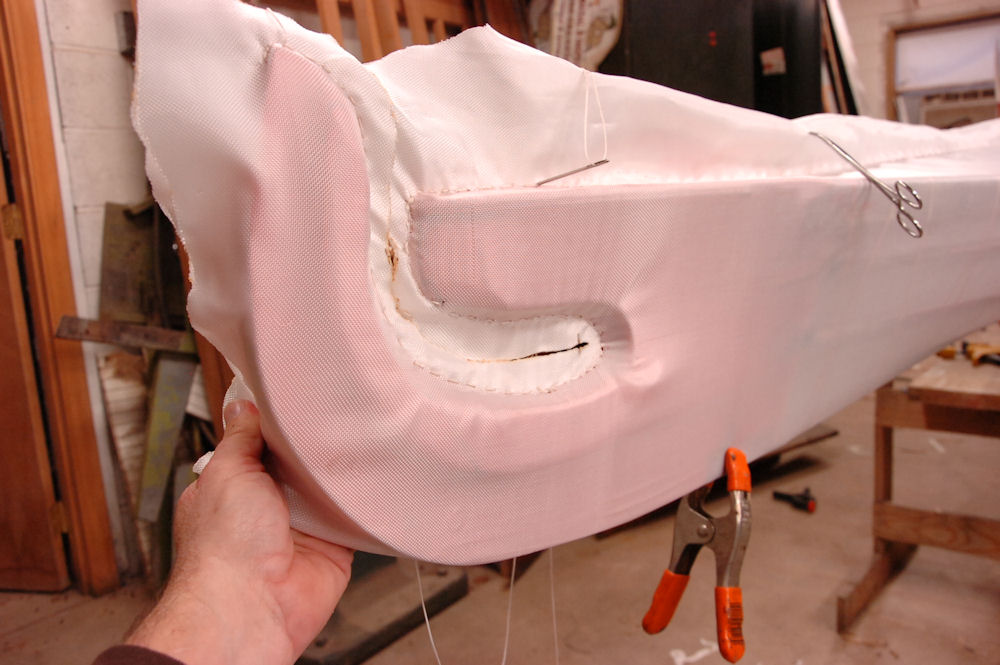
I started sewing the skin around the boat, pulling it snug as I stitch. The one trick I learned when I skinned the first Firefly was to start at the cockpit and sew toward the bow. STOP, before you get to the bow and sew the Bifid bow first! Just trust me on this.

Sewing the Bifid is always tricky and my first attempt didn’t go to well. I had to remove a lot of my stitches and try again. Second time around looked much better. I ended up with a couple of puckered spots but I expected that and they will (should) pull tight once I shrink the skin.
jeffs-22

Another thing I am doing different is I am using Heat N Bond tape on the front of the bow to hold the skin in place. It is heat activated adhesive tape and you literally iron it on to the wood. Then peel off the paper backing, stretch the fabric tight and iron the fabric to bond it to the tap. I found it fairly easy to work with has a really good bond in one direction.

If I lift the fabric I can peel it off easy enough. But when pulling across the bonded area and not lifting it has a really good grip. So in this application it works really well. But it is not a permanent solution.

Once the boat is painted, I will be adding a bronze rub strip, screwed in place over it to finish it off. That will hide the exposed edges of the fabric and provide a very durable rub strip in the most damage prone area of the boat. And I think it will look better than stitching does.

jeffs-23

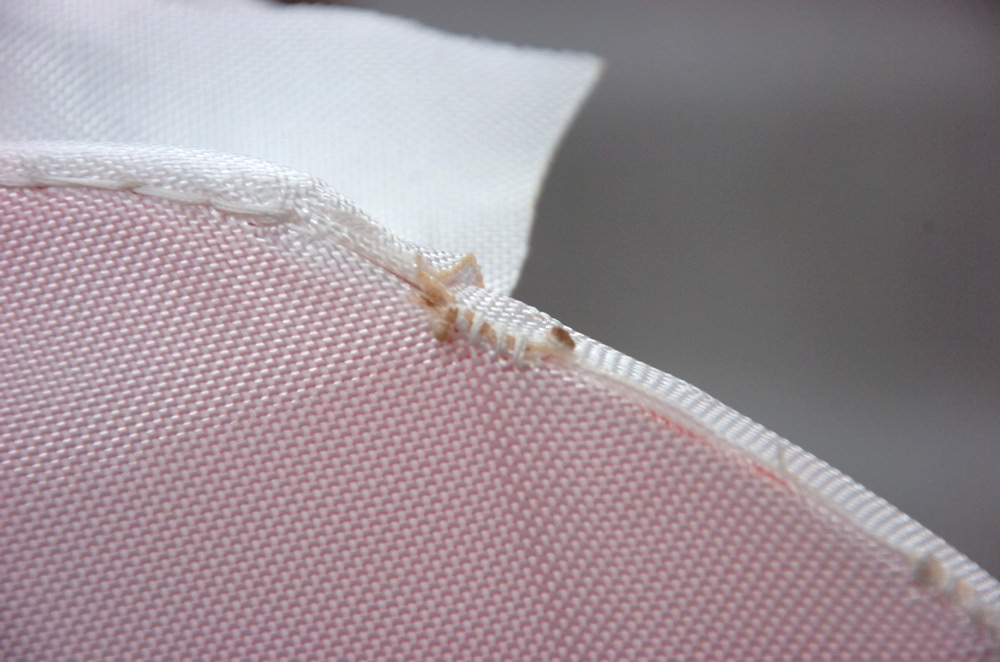
WOOPS! This is the stern and I used the tape there too. When I was trimming the excess fabric I stood on the wrong side of the boat and couldn’t see that I was hitting the corner with my hot knife and melting the fabric. If this were a clients boat I would have started over, but since it was mine I decided to repair it instead.

jeffs-24

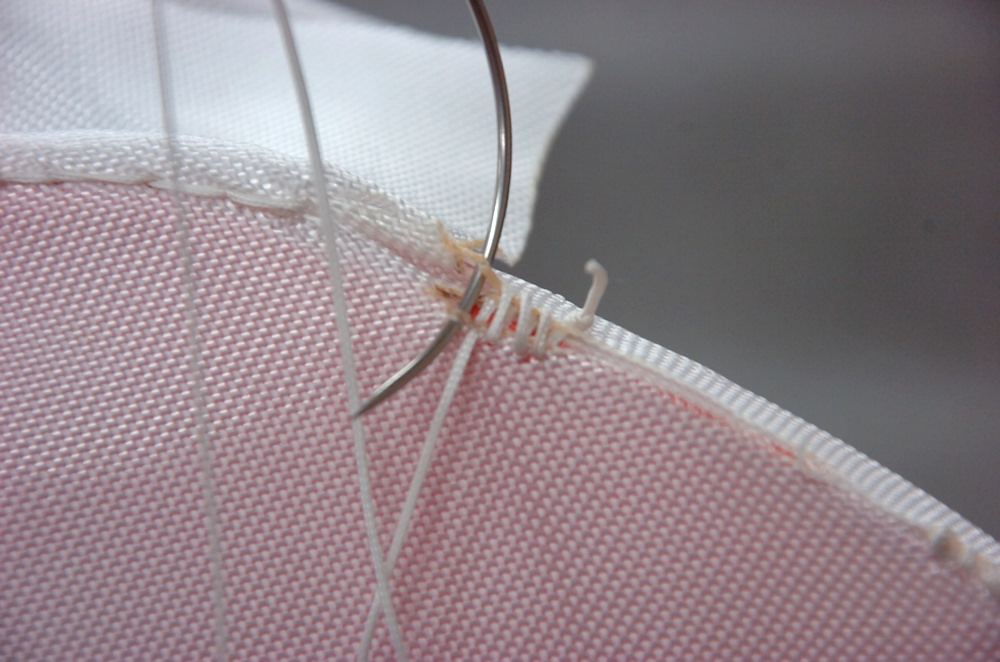
Using a curved needle I ran several stitches close together though the fabric behind the melted edge.
jeffs-25

Once it is pulled tight and the thread trimmed close you can barely eve see it. After it is painted and the brass rub strip is in place, I think it will take a sharp eye to ever spot it.

jeffs-27

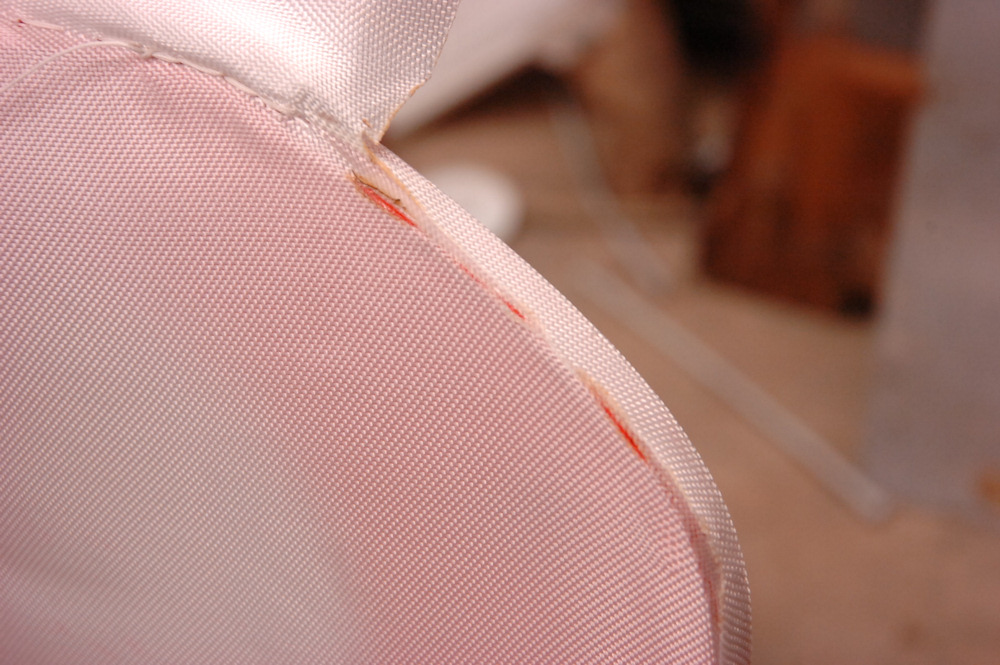
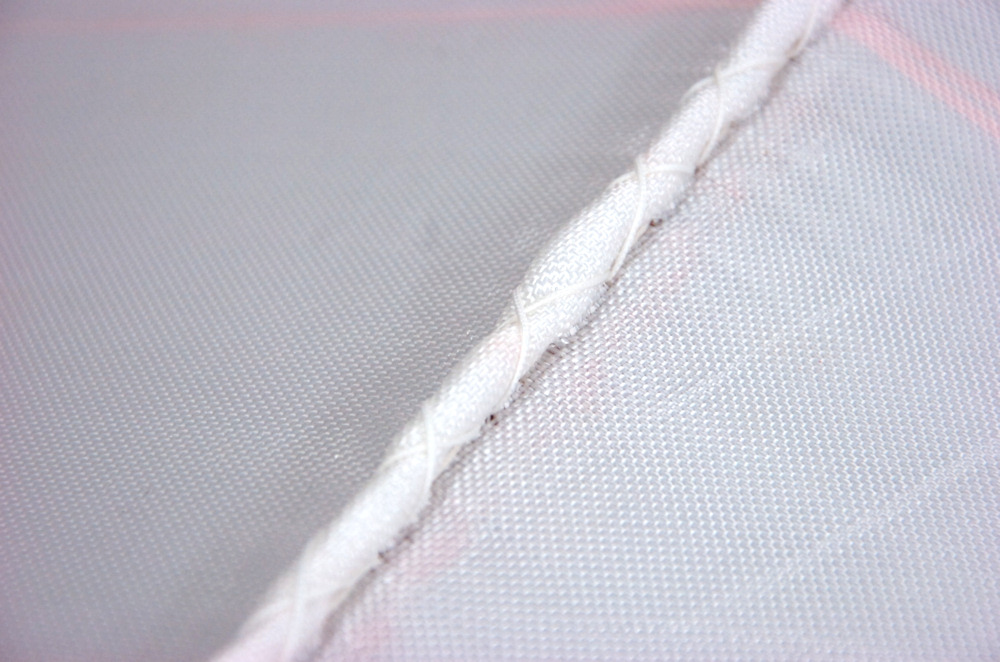
I did something a little different on the sewn seams this time. I usually just do a whip stitch and pull it tight. That makes it resemble 3 braid rope. This time I did 2 whip stitches from opposite sides and I only pulled the thread snug so that it did collapse the rolled fabric. This leaves me with a smooth bead down the center and it will give the boat a cleaner look.

jeffs-26

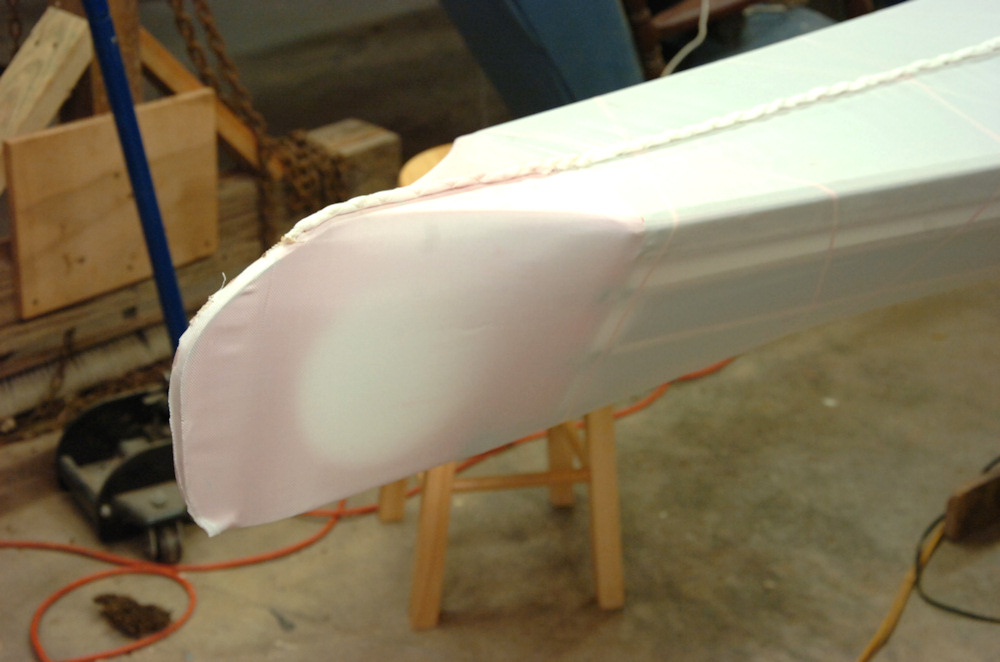
Here is the stern after I shrunk the fabric a little. If you remember I really struggled with the design for the stern and now I couldn’t be happier with this. It still looks traditional but it has a little flair and is not just squared off like many were. I never liked  the squared off corners but I love this!

jeffs-28

Check out those straight seams! Yea, I am bragging just a little bit.  I need to install the coaming and finish the seam around the Bifid bow, which I am not looking forward too! That is going to be hardest part of the sewing.

The white coaming is a first for me, I usually varnish them but this will has a ‘special’ paint job so I decided to paint it to match. And that’s the only hint you going to get on paint job.


Converting Long Shot * part six

This is a two for one post.. I am going to update you on the boat and do a quick review or first impressions if you will, of the Critter Sprayer.

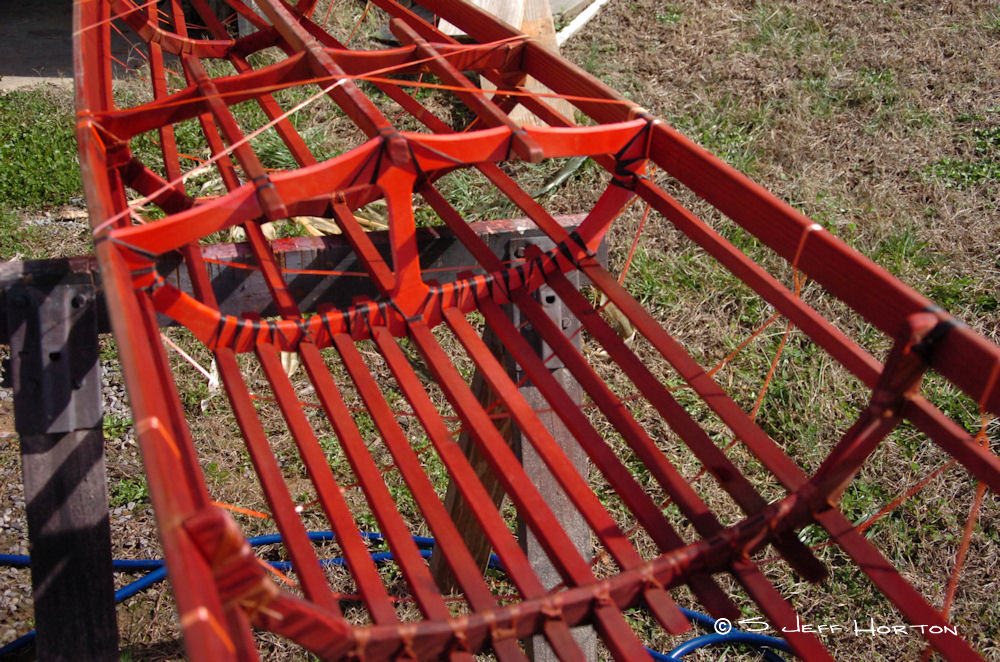
I believe I mentioned previous that I read somewhere that all/most/some Baidarka frames were dyed red. No idea why and not sure if anyone knows. I would guess they used blood to stain them and it was for religious or superstitious reasons. I always thought it was a neat idea and red will contrast with the painted skin really well, so that is why I wanted to try it.

I asked on a wood working forum I frequent and the overwhelming consensus was to use Aniline dye. It will mix with a lot of different media and water was the one thing I had plenty of. So I heated some water, added the dye till it was dark blood-red and them put it in the fridge to cool.

I set up the frame outside and here you can see the end results. The new wood accepted the color much better and is much brighter. The old wood is darker and looks more like a blood-red color. Once it is skinned I think I the new wood will be much less obvious and it should all blend in just fine.

jeffs-19

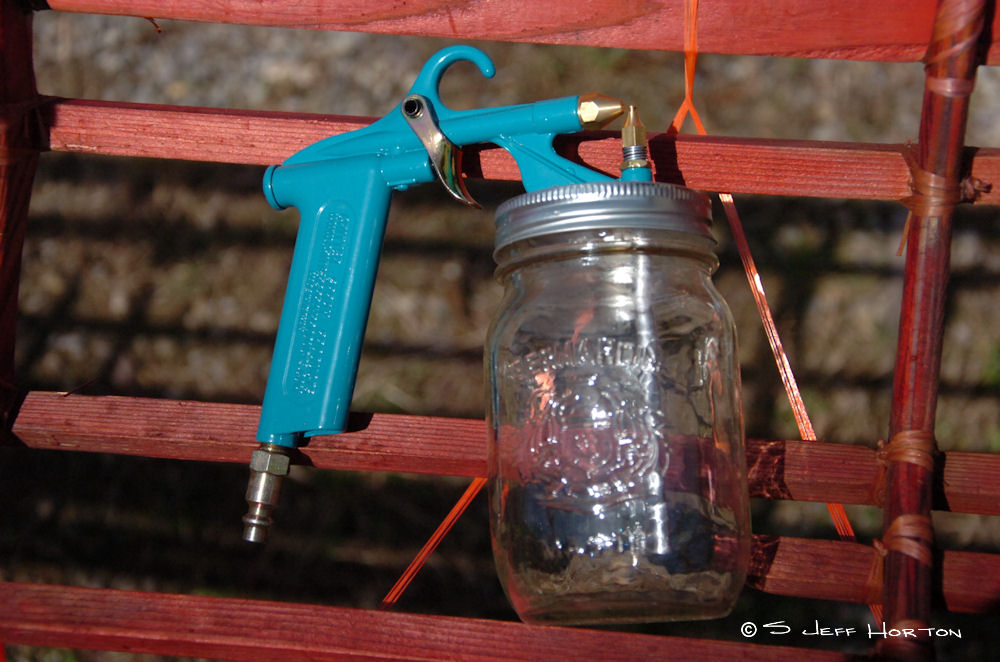
Now, the Critter sprayer. Let me start by saying I am impressed over all. It worked well and clean up took 3, minutes TOPS! It take 30 minutes minimum, to clean my HVLP gun. That along is a huge selling feature.

jeffs-20

The only thing I didn’t like was the vent hole to allow air into the mason jar. It locate on top of the lid with no baffling. Trying to spray inside the boat and I would be holding the gun at odd angles and that allowed a dye to leak or slosh out. Of course I ended up with it on my hands. With something thicker than water I think it would be much less likely to leak out as easy. After realizing what happened I tried to keep the gun more level and didn’t have it happen again.

It has one spray pattern, a round(ish) smaller spray pattern and  you can’t adjust it. It’s much like spraying with a rattle can, just larger. It took me 3 or 4 attempts at adjusting the siphon nozzle height to get it spraying like I wanted. But that is quick and easy to do.

You find the Critter sprayer online for $40 or less. It looks like a toy but my first impressions say otherwise. It is much like an oversized air brush. I wouldn’t want to paint anything really large with it, but as easy as it is to clean…. it might be worth  the extra time it would take. I really hate cleaning a spray gun.


Converting Long Shot * part five

Today I was finally able to get back to work on Long Shot. First work got very busy and I was so tired that I just didn’t feel like working. I should have recognized that as a warning. I have been through this so many times!  I was coming down with a sinus infection and for almost 2 weeks  I barely felt like getting up and fixing something to eat, much less going to the shop to work.

As I mentioned, this boat was a prototype and the frame was very flexible.I have wanted to do something to stiffen the frame for a long time. I decided to try the Geodesic Boat method of using Kevlar roving wrapped around the frame. Platt’s boat frames were so extremely light he used the Kevlar to give them enough structural strength not to collapse. OK, I don’t know that they would have collapsed but I strongly suspect some of his designs would have failed without it.  He took light weight to the extreme!

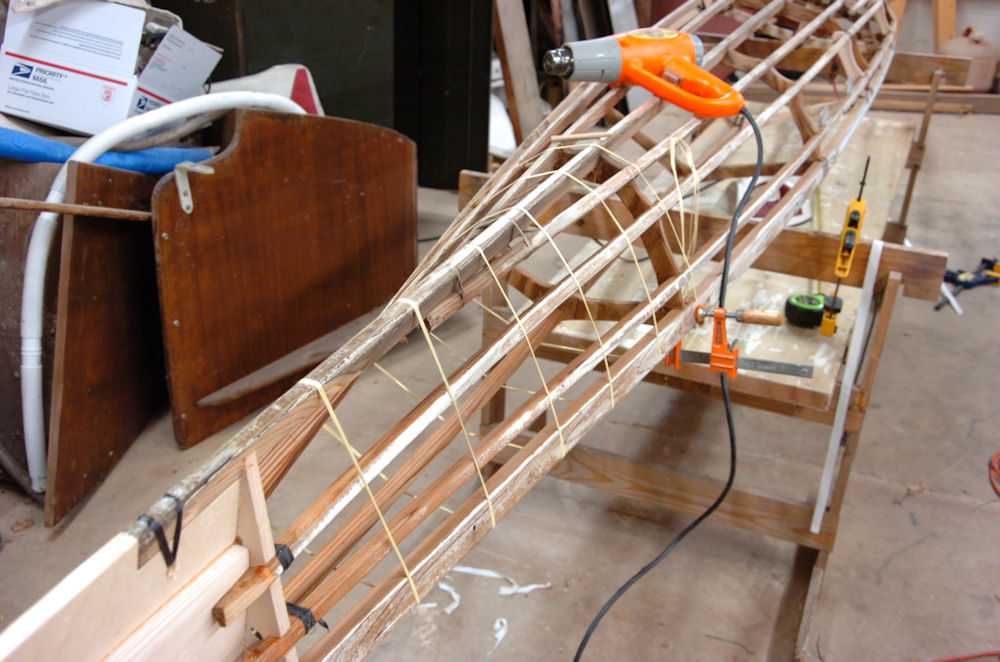
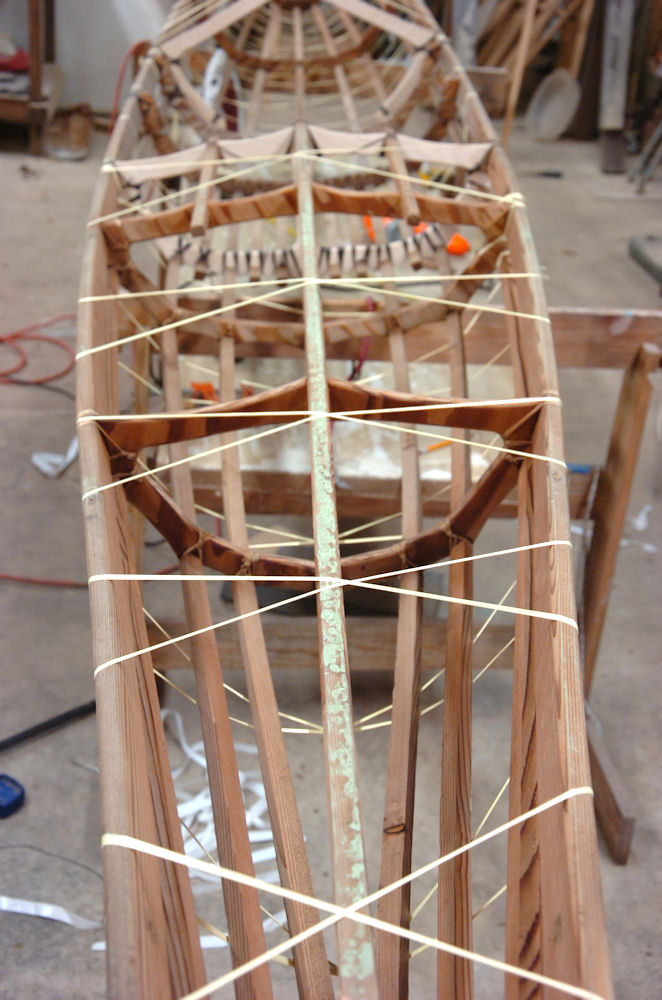
This morning I started with the Heat n Bond tape and ironed it onto the frame along the gunwale and the keel. I tied off the Kevlar to the frame and started wrapping it around the boat and then clamped the end to the frame. Starting at the front I pulled the Kevlar tight working toward the cockpit. Once the roving was tight all the way down the boat I secured the end.

jeffs-14

Using my heat gun to warm the tape where the Kevlar crossed I took a dowel with the end rounded over and pushed it into the tape to ensure a good bond.  Latter I found out that it was easier and quicker to just use the iron with some of the paper backing between the iron and roving. This kept glue from getting on the iron.

After giving the tape time to cool, I removed the clamp and was impressed with how well the tape held the Kevlar. I could lift it up without a lot of effort, but in tension the grip was strong that this where the stress is.

jeffs-15

I started on the bow wrapping the roving around the boat.  I now realize I was spacing it way to close together. On the rear of the boat I used a much bigger spacing and it is just as stiff and it was much faster to apply. And it looks much better.

jeffs-17

I kept testing the frame by flexing it and at first I was disappointed. There just didn’t seem to much improvement. But once I got everything in place I could tell that the frame was much stiffer than before. Not stiff like a plastic boat but miles ahead of where it was. 
jeffs-16
When I put the skin on I am going to pull it tight and bond it to the tape with the iron before sewing. Once the skin is shrunk I am very confident that this boat will be at least as stiff as the rest of my designs and I will be a bit surprises if it is not stiffer. Either way it will much improved over what it was.


The fix is in!

I kept pondering on this and really want to try to fix the rower frame. I knew that just gluing it together would not work. The thoughts of having to chisel out the dados to  replace the broken cross piece was not appealing, at all.

Then I had the thought, I could add a cross piece making the cross brace into a T shape. That would make the whole frame much stronger I couldn’t just glue it on top because thew wood was oiled and glue wouldn’t stick. Secondly it would be in the way for the sliding seat  hardware so I need to mill a dado and cut down the broken piece too.

Thinking on how I was going to this I leaned toward making a router jig, but I kept thinking how much faster a dado stack on the table saw would be. Problem was, I was certain it wouldn’t fit on the table.

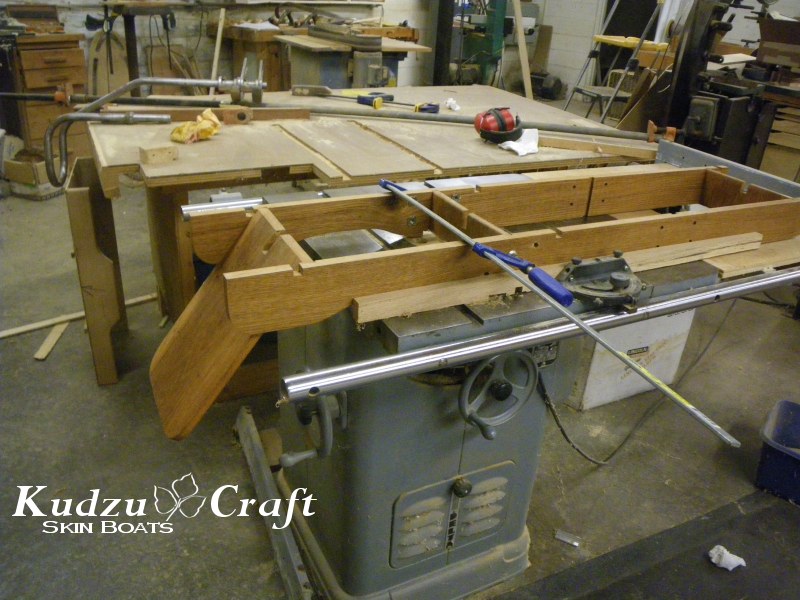
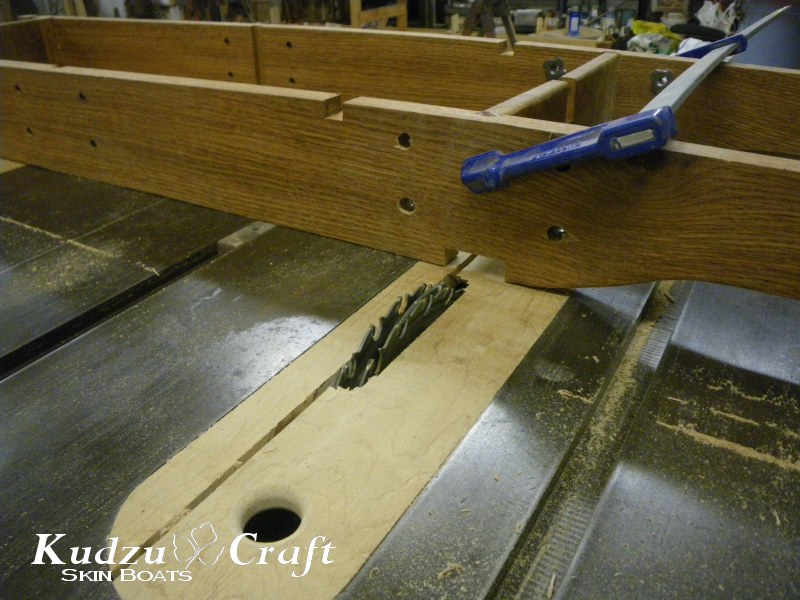
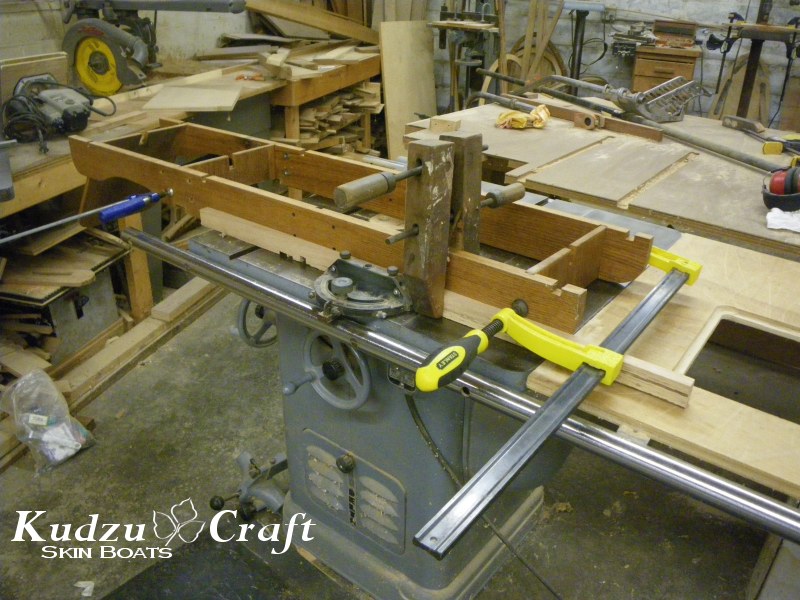
I was right, it wouldn’t fit but I discovered if I removed the left side extension on the table it would. It was going hit the fence rail at the back but there was just enough space to finish the cut. So I removed the extension. Clamped some scrap the miter gauge and clamped the broken frame together so it couldn’t move.

I am not quite finished with the cut in this photo. I cut it  1-1/2″ wide and centered on the cross brace. By doing this I cut off the top of the broken brace that was oiled. Now I have clean wood across the top to glue too.

I decided I had better add a second piece further back to help prevent any racking. When I slid it over to make the cut it really wanted to tip over without the extension table in place. I didn’t want to replace extension just yet so I grabbed one of the big cast iron clamps and placed it on the end as a counterweight to help balance it. Then I clamped it to the miter gauge and that worked.

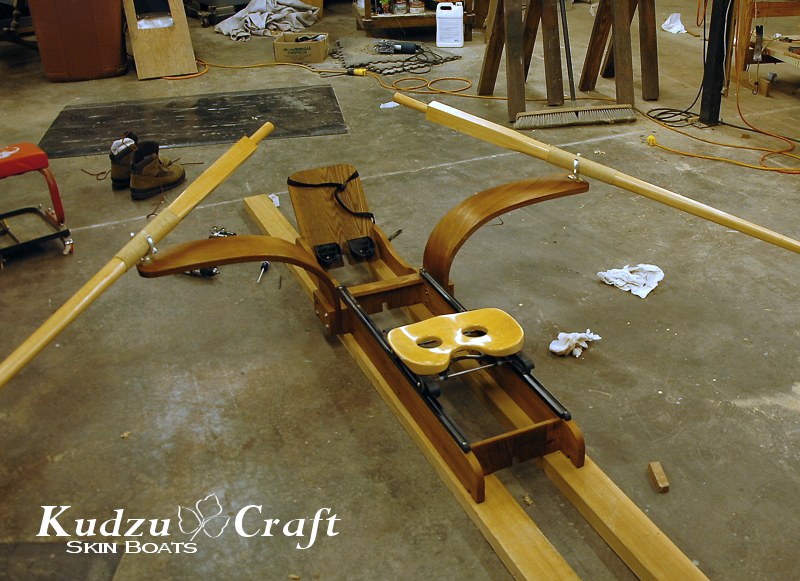
Here is the finished unit. It’s now much stronger. I have installed heel cups, added a temporary foot strap (I think I want some wider webbing) and installed the rails and seat.

Here she is, all finished as far as I can tell. All I need to do is check the transom to make sure it is water tight. I don’t expect a problem but I would rather find it now.  If there are no surprises then she is ready for the water.

We are in the middle of a heat wave so I am not sure when I will be on the water. I have been working on the rowing machine at the gym and I know that rowing can be a strenuous workout, so I may have to go by myself early one morning.

Uh oh! Did I really do that?

3 steps forward and one step back!  No launching this weekend but such is boat building.

And let me apologize for the lousy photos, they are not up to my standards but I didn’t feel like redoing them tonight.

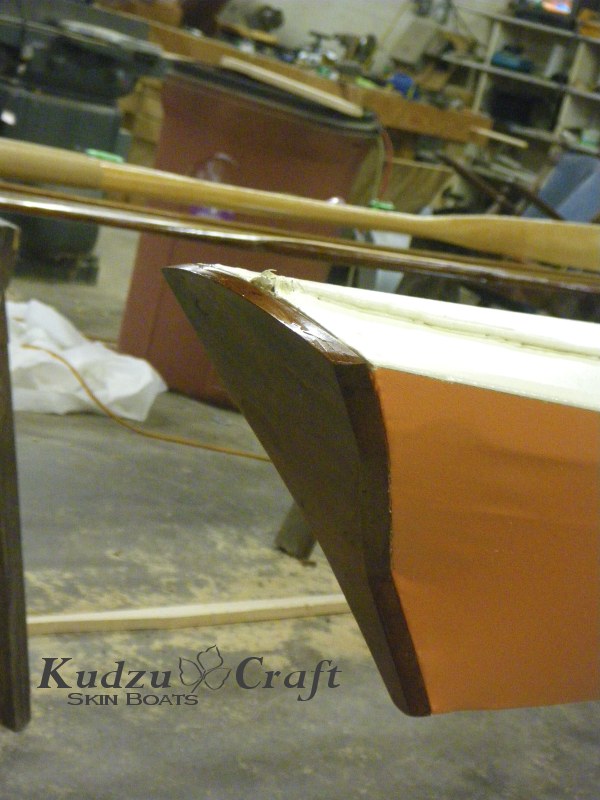
Lets start with the transom. As you can see it is in place and once the caulking sets up it ready for a few more coats of varnish. I had someone tell me I couldn’t do a wine glass transom on a skin boat guess what?  I did. 😉
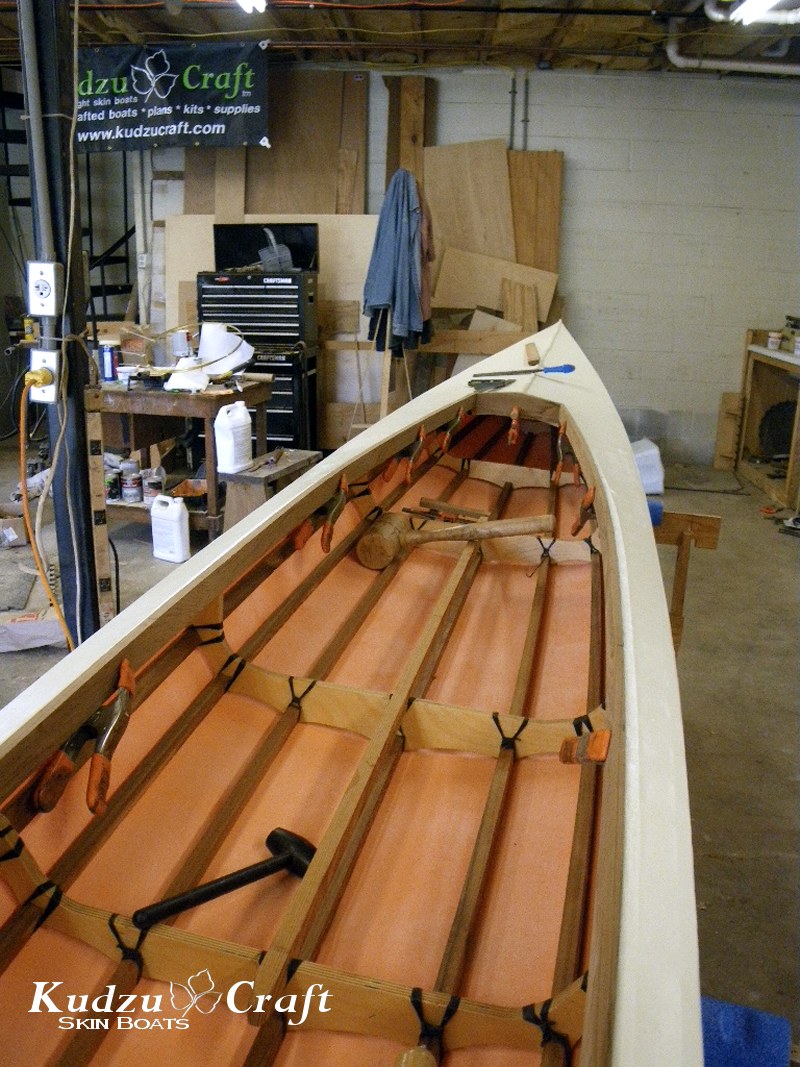
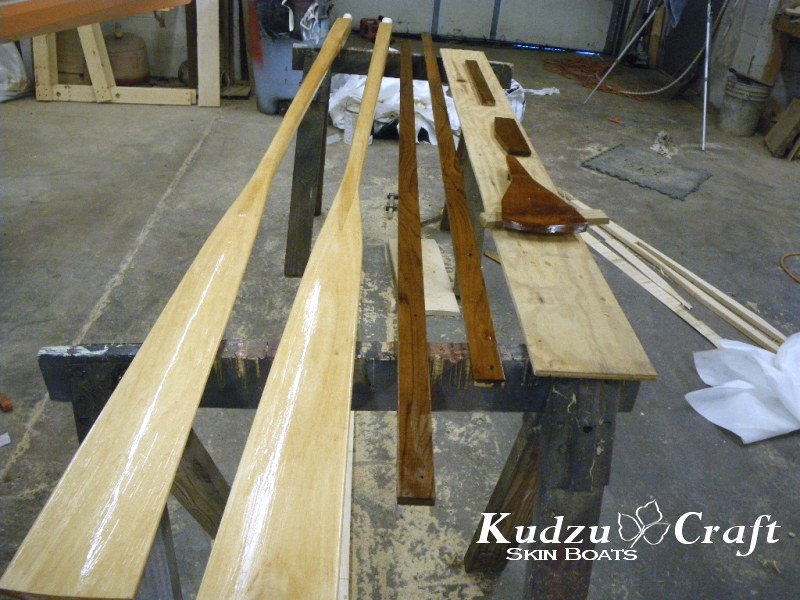
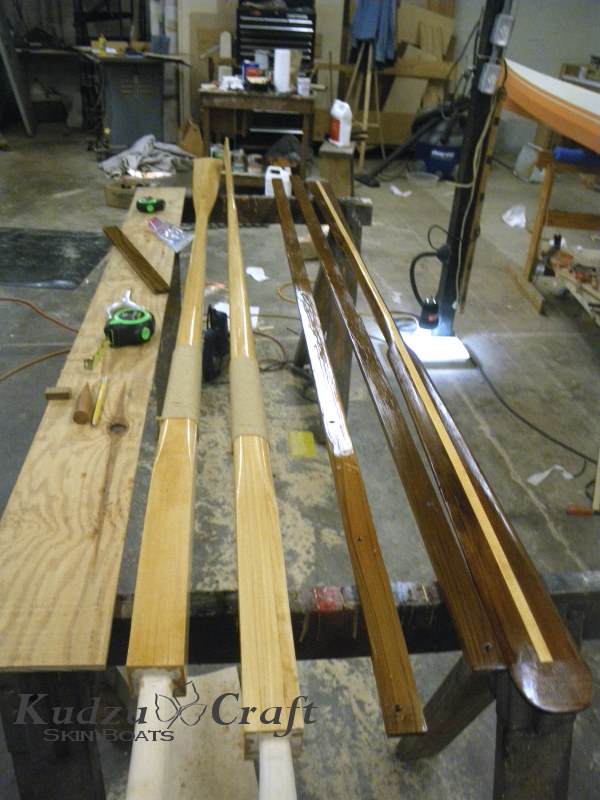
Finished the oars except for the handles. I still have to refine the shape of those and I am going to oil them rather than varnish them. I have never had good luck doing that but I am going try it again. I had the ‘leathers’ or actually masons twine wrapped and varnished in place. If you think sewing hurts your hand try this! First time in two years my hands are really sore.

Hopefully I have applied the last coat of Varnish to everything. While I was at it I repaired a kayak paddle and varnished it. It has nothing to do with this boat though.

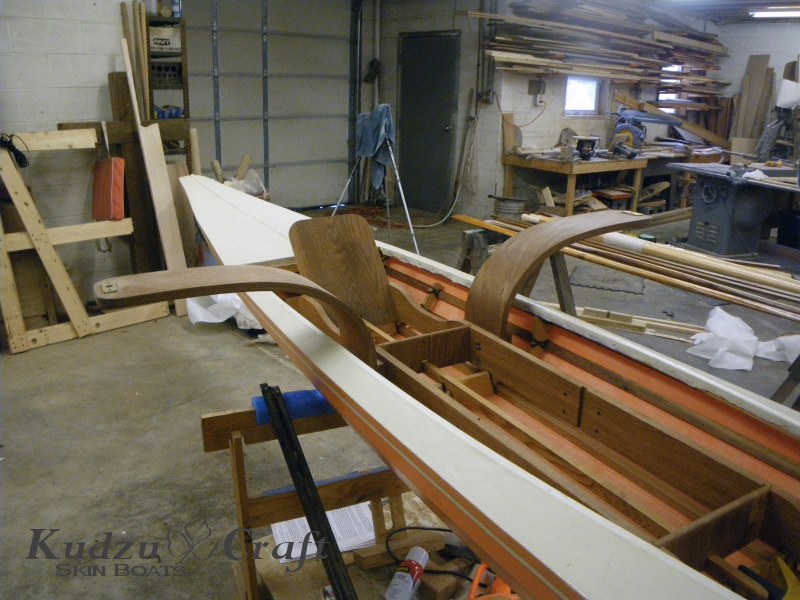
I assembled the outriggers onto the frame and placed them in boat to double-check clearances before I start to install the varnished trim. That is when I saw my serious blunder!

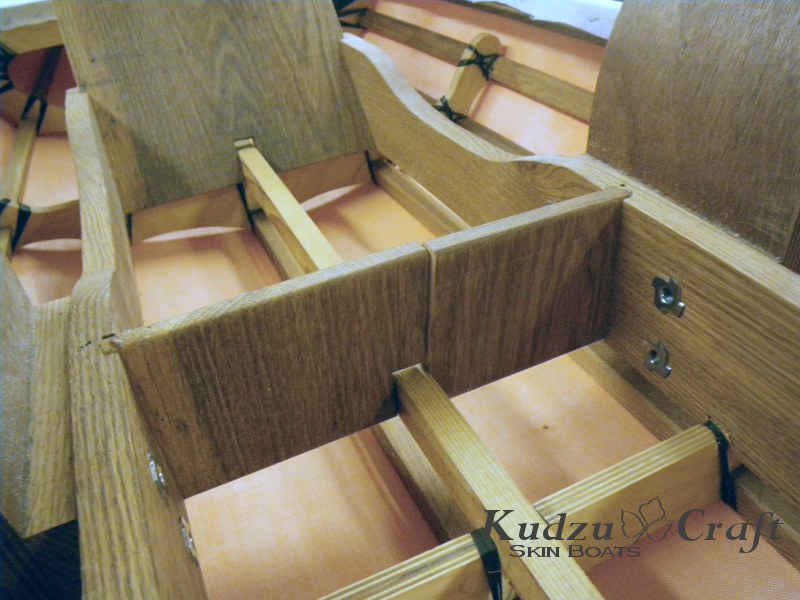
See that big crack in the cross brace? That is not really the problem, notice the grain runs up and down? That is the problem. There is no strength in the joint. It broke from installing the screws that hold the outriggers. This is the most stressed joint on the boat. All of the force from the oars is on this joint., it has to be strong and this is terribly weak. That was a big blunder that I should have noticed.

I have been debating and I am seriously considering just scrapping this one. Keeping the outriggers but building a new frame from plywood. The oak frame should be more than strong enough with the cross brace grain running the right direction. but the time it will take to fix I could probably just build a new one. Plus I think the plywood would be lighter and just as strong, probably a little stronger.

Then again sitting here looking at this picture I have an idea on how I fix this and make it  stronger too. Next post we will see what I decide. As I write this the wheels are turning….

Rounded the corner headed for home!

Getting really close to finishing this one up and I still don’t have a name. I think I will just call it My Boat since I don’t have commercial plans for it.

Lets start with the oars, after a lot of research I decided it didn’t matter what I built them out of as long as they didn’t break and I kept them varnished. So I laminated basswood since it was easy to get and cheap. I am sure I will build another set  in the near future and once I am happy with my design I can use better wood if I find the need.

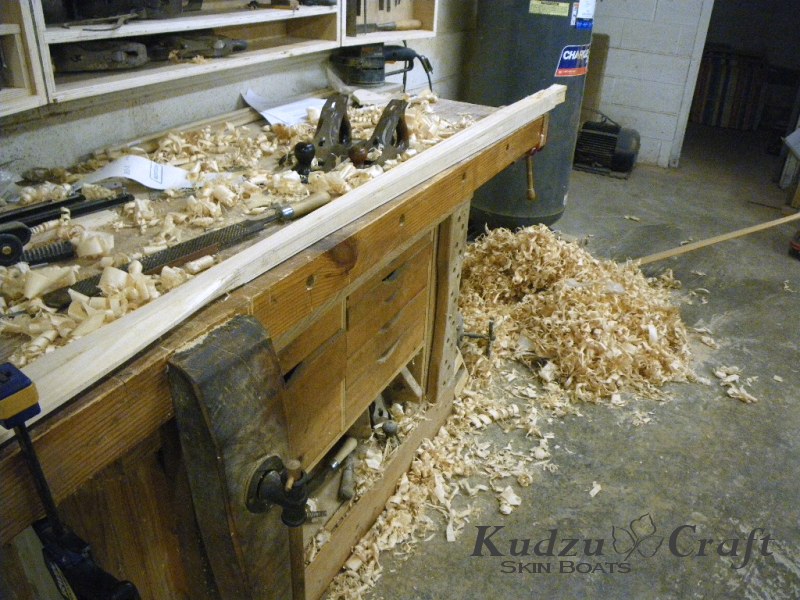
This is the second oar blank being shaped on the bench. As you can see by the pile of shavings there has been a lot of wood removed from the first one. I use hand tools and sandpaper. I know most of you reading probably thing of hand tools as old school but there is nothing better for this job! They are a joy to work with once you learn the tricks.

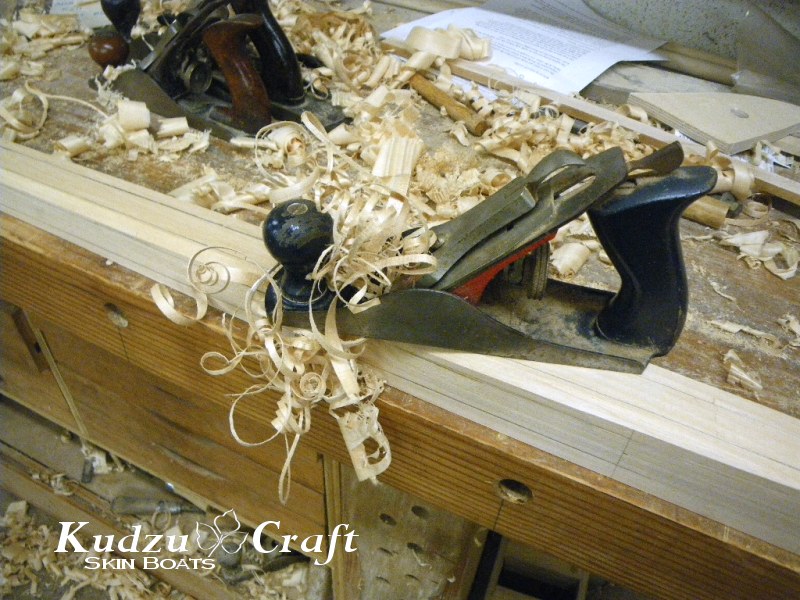
This is a cheap Stanley Handyman plane I picked up somewhere. I have reshaped the blade so that is it rounded and use it as a scrub plane. It leaves a rough surface but it takes a lot of material off fast. This one works great at getting it removing lots of wood and getting it down close, then I finish with the other plans that take small amounts off at a time. Yes it is slower but you have much more control and don’t suddenly find you are way past your mark. You sort of sneak up on the line.

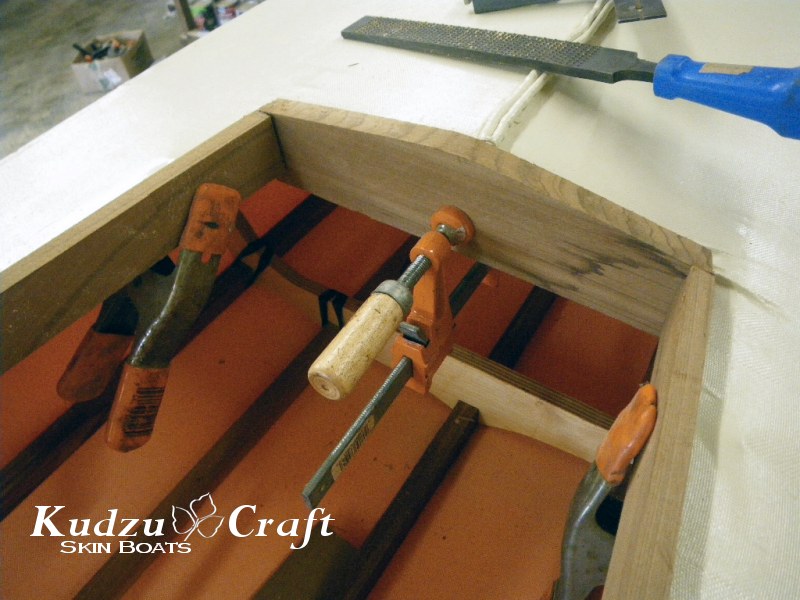
Next it was time to fit the trim or coaming to the boat. This hides the fabric edge and will help keep water from coming in the cockpit.

All the bits and pieces dry fitted in place ready to removed and sanded.

Now we skip past all the hours of sanding and sanding and sanding some more…..  I start to apply the first coat of varnish and then see the places I should have sanding a little bit more.

Hope to start assembling all the bits and pieces some time this week and maybe take it to the water late in the week. MAYBE!

Cremesicle to the rescue!

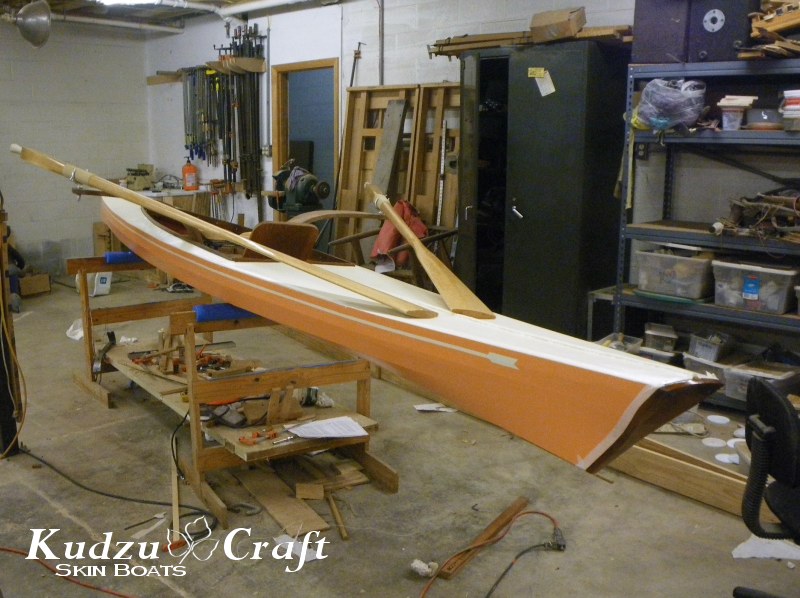
Painting is done, except for the inevitable touch-ups that always seem to be necessary.  For those of you that have been guessing my inspiration was the CreamSicles.

Desperate for something I was looking at all the paint chips in the rack and thought about a tangerine color when it came to me. A Creamsicle! 

I looked at lot of color combinations but I think I nailed this one. I had to get a friend of mine to help with finding the right creamy white but it all turned out just like I had in mind.

Keep in mind your monitor and my dark shop don’t lend themselves to a good color matching photos but it exactly what I had  in mind. A slightly creamy orange and with a creamy white with just a hint of an orange tint. Just looks like a Creamsicle to me!  BTW, I am seriously considering renaming it Popsicle. I am not  happy with the name Cotton Row.