SOF Velomobile

I love getting photos of your finished kayaks. I try to post them on my Facebook page but sometimes I get behind and sometime I loose photos you send me. But I appreciate them and encourage you to send them me. You may not hear from me, but I love them!

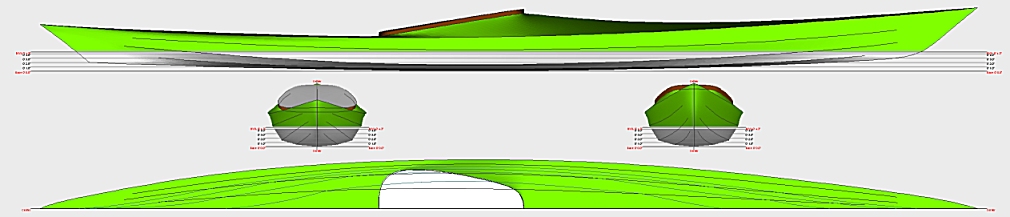
Now this project…. well, lets just say this one is a little different!

I received an email from Kenneth :
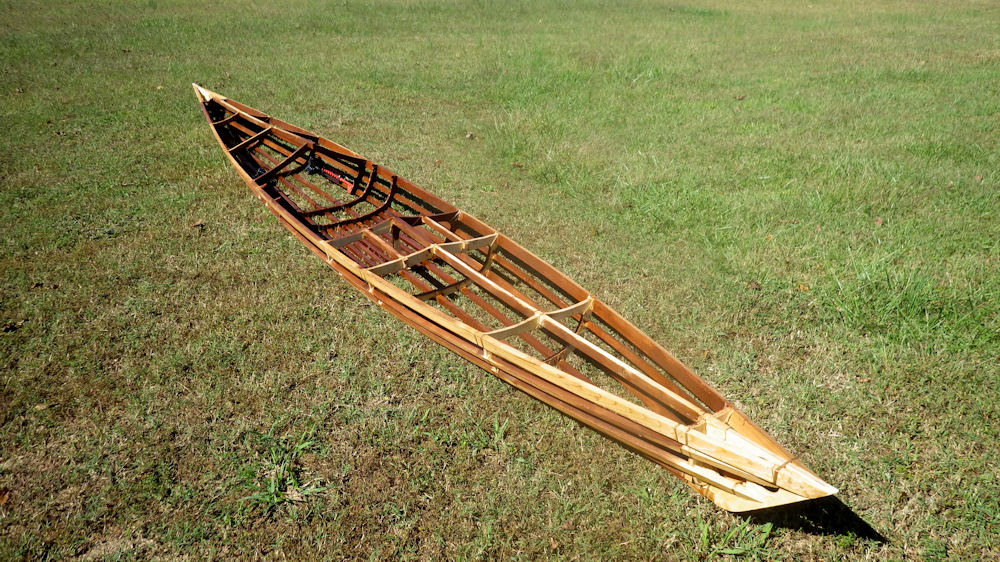
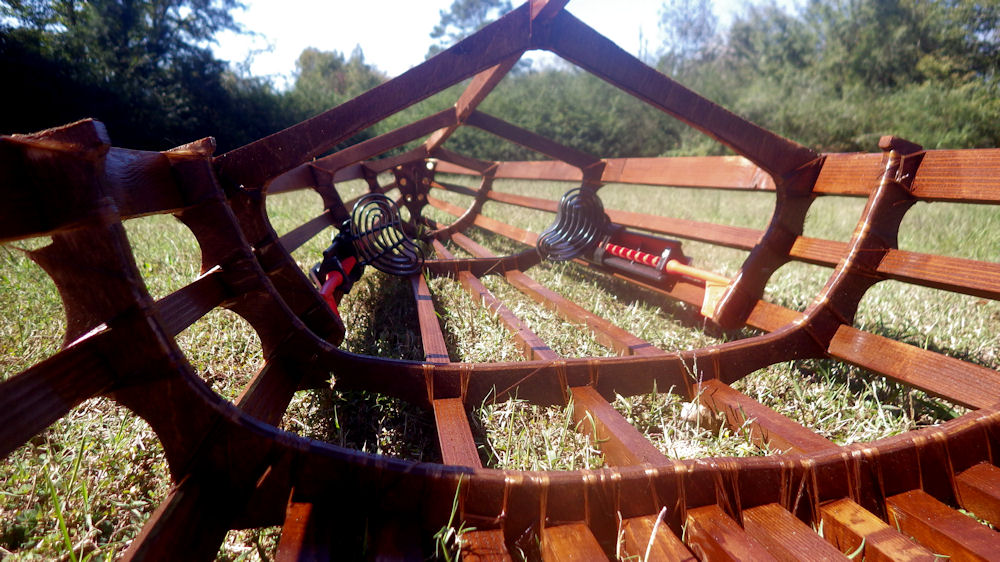
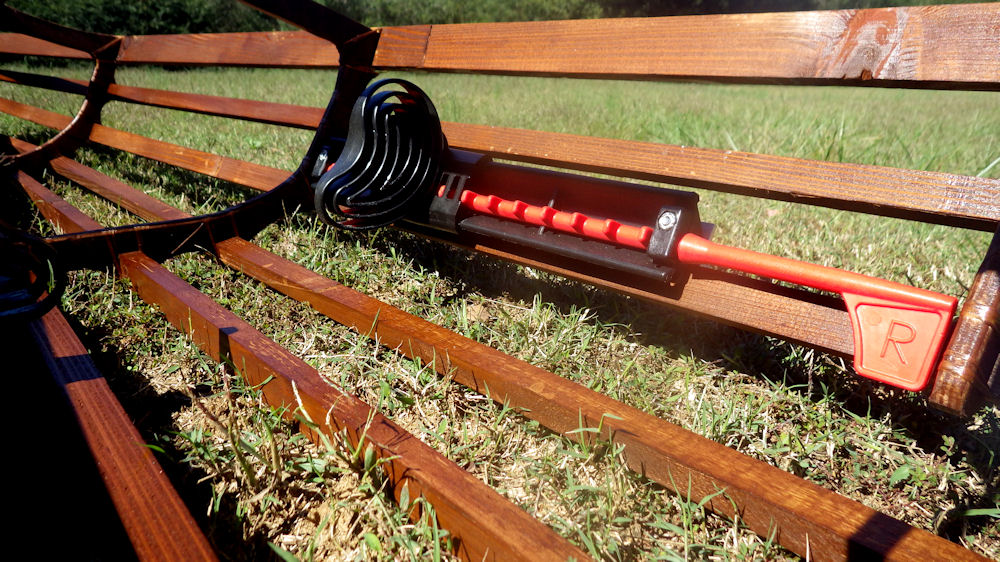
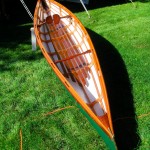
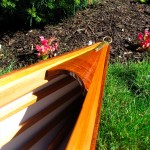
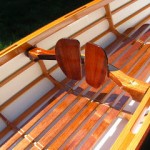
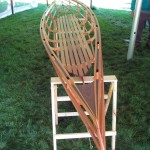
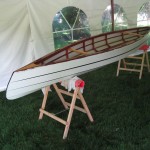
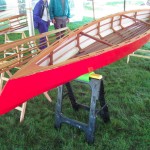
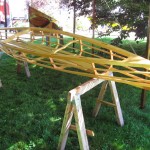
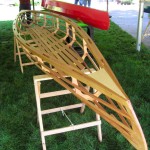
“I used your polyester material to cover a velomobile body, I know it is not a kayak, but the construction details are very similar to Inuit Greenland thinking. The body will be used to cycle round the UK for 4,500 miles.”

Needless to say he had my attention! I spent many an enjoyable hour peddling bicycles around the countryside. No telling how many thousand miles I have ridden but times change, drivers change and not for the good. The thought of cycling with today texting drivers just terrifies me, so my cycling days are pretty much over. But this, I had to see! I quickly wrote him back and wanting to know more.

This was way cooler than I ever expected!!

IMG_3135_2[1]43[1]

41-1800x1200[1]If you want to know more I suggest you go to his blog about he build. I have read it and I am very impressed!!

http://kenstewartartist.com/


Weathercocking for new paddlers

Had an interesting post on Facebook and I wanted to share this with all the newer paddlers. Someone wrote “Finally conditions were right for sea trials. She (a Ravenswood) wants to point up into the wind. Any suggestions?”

When I see posts like these I usually have more questions than answers. Since I can’t see the boat or the paddler, usually the best I can do is make a guess. In this case, the person asking was in my last class at Chincoteague, VA and built his Ravenswood in my class. So I know the boat, it was built correctly, so I can pretty much eliminate the boat being the problem. I also know he is a relatively new paddler so I can make an educated guess as to what is happening.

Kayaking looks easy doesn’t it? You jump in, just paddle left, right, left, right and away you go. While is true, there is more to it than meets the eye.

Controlling your boat or making it go where you want is more involved than it appears at first. A good paddler finesses the boat. Unless you look closely at what the paddler is doing, it appears the boat just goes where he wants. In reality he is using his body, paddle and boat to go where he wants. It is not obvious and takes some instruction and time to learn to do well.

As a new paddler you may not know that a well-designed boat should tend turn into the wind, or weathercock, much like a wind vane points into the wind. The reasoning is, if you stop paddling the boat will turn into the wind and faces the waves head on. It is much safer to be pointing into waves than being sideways or them coming from behind you.

You may read reviews about a boat and complaints about it weathercocking. All boats should weathercock but usually the complaints meant that it does it very strongly and is hard to make go any direction other than into the wind. The trick for the designer, is finding the balance so that the boat does turn but not so strong that it is a struggle to paddle the boat, especially in a stronger wind.

New paddlers start controlling the boat by using their paddle. If you paddle a couple of harder, quicker strokes on the right it will make the boat to turn left. Paddle on the left side to make it go right. This is the first skill you usually learn and then you build on it.

A lot of new paddlers will paddle a little ways then stop paddling and let the boat glide along, then start paddling again. Very few kayaks will go straight on their own for very long. Once you stop paddling, it is going to start to turn to one side. Even when paddling the boat is going to turn off course eventually.

The mistakes most often made is to waiting too long to stop the turn. The longer you wait, the harder it is to stop and the more energy it takes to bring it back on course. As soon as you notice the boat starting to turn you need to apply a little corrective action with the paddle and bring it back in line. The faster you react the easier it is to correct.

Another technique to make the boat turn is to lean the kayak as you paddle. If you want to go left you lean the boat to the right and paddle on the right side. This feels totally wrong because in a car, you lean into the turn but in a kayak you lean the boat the other way. Keep in mind you want to lean the boat with you hips and keep you torso upright. It takes practice to get comfortable with this but it is skill you should develop!

Most paddlers will assume the boat has a problem when things don’t go right but often times they just have not developed their skill set to the point of being able to do what they want it to do. In this case, while I don’t know exactly what was happening I strongly suspect it was just part of the learning curve.

I had to learn kayaking by doing, there were no instructors in my area when I started. I struggled along making lots of mistakes and got frustrated at times. I did eventually meet some people that paddled and learned a few tricks from them which made paddling much more enjoyable.

When a friend of mine became an ACA instructor I photographed an Introduction to Kayaking class he was teaching. Watching his class was an eye opener! His students walked away knowing what had taken me at least a year to figure out on my own. I realized how having someone watch you and show you the tricks was the way to go. First timers walked away knowing more than I knew after my first summer of paddling. I very serious when I say, If you want to learn to kayak, take some lessons, It is money well spent!

Remember, the water is not your friend!
Counting the cost

November,  2015

In case you have not been following along I just finished building a new kayak and I kept close track of the costs and the labor to build it. My wife finally tried  kayaking and discovered just how much fun it can be. Problem was, none of the boats in my stable really suited her, so I needed to build her one..

Short Shot has always been an under appreciate design.  At sixteen and half feet and with better resistance numbers than most of my designs I had expected great things from this design but sales were always slow at best. I felt the styling was part of the problem and I have long thought about redesigning it to look more traditional and this was the motivation I needed.

ss-24As I built Short Shot, I kept close tabs on the time and cost of this boat. I had a lot of scrap plywood and other odds in ends in the shop from other projects I had saved, so my cost to build wouldn’t reflect your cost. Instead of keeping tack of what I spent, I kept track of all the materials and prices for these items. The following is a list of what it took to build this boat.

16.5′ Short Shot kayak Fully
loaded
Minimally equipped
Materials Cost Cost
Plans $      69.00 $           69.00
Plywood for frames $      50.00 $           50.00
Western red cedar for stringers  $     25.00 $           25.00
Sinew-2 rolls $      19.00 $           19.00
Paint 2 quarts and 1 pint, Rustolem $      27.91 $          23.00
2 quarts
2 can spray poly $      21.90
Sewing thread $        9.00
18 feet of 11.7 oz fabric $     126.00 $          81.00
8 oz fabric
Seat $       86.00
Paint supplies $       21.00 $           21.00
Brass 5 feet $       30.00
Bungee 17 feet $         5.95 $             5.95
Backband $       28.00 $           28.00
Black rope $         6.40
Stainless screws for coaming (box-50) $         8.25 $             8.25
TOTAL $     533.41 $         330.20

In the first column is what I used to build the boat. It included a Redfish seat, brass strips on both ends, the 11.7 oz skin and deck rigging. We stained the frame to enhance the look and then we coated it with gloss poly. She wanted a two tone paint job with a black stripe, so that took 3 cans of paint. All this came to just under $550. When you consider this is a 34-35 lb kayak that is not a lot of money! You can’t buy a used composite boat of similar weight  for that.

A lot of people are attracted to these boats because of the low cost.  I wanted to see what the low end would be so I created a column with just the minimum parts. No stain or poly on the frame, no Redfish seat, using sinew instead of sewing thread, etc. By cutting out the extras you could build this boat for $330. With a little care I think you could come in  under $300.

You will pay almost that much for those 10′ or 11′ kayak all the big box stores sell. The difference is any of  my designs will be far easier to paddle and much faster! Yes there is a big difference and it is not the weight of the boat. I don’t design short boats because short boats are barges. There is no way around that either, but that is another story for another day.

And these are not a boat with a 2-3 year life. As long as you take reasonable care and don’t store in the sun or where it will stay wet and rot, your can probably pass it on to you kids or grand kids.

I also kept track of the labor to build Short Shot.  I feel it only fair to point out that I have built a few boats ,so I have the process down and don’t have to spend time thinking about what or how to do something. I have done it enough that it is just instinct, so I am going to be able to build one faster than most people, especially if it is your first time. But the learning curve is short and most people will be able to get reasonable close to these numbers.

Task Task Hours Total Hours
Cutting frames 8:00 8:00
Setting up strongback/cutting – scarfing – gluing stringers 2:43 10:43
Lashing 1:21 12:04
lashing 3:44 15:48
lashing 1:17 17:05
lashing 4:52 21:57
lashing-FINISHED 4:52 26:49
Staining frame 2:23 29:12
Spraying poly on frame-paint coaming 1:00 30:12
Skinning 2:00 32:12
Skinning 1:36 33:48
Skinning 4:20 38:08
Installing coming 0:54 39:02
Painting 1:15 40:17
Painting 1:30 41:47
Painting 1:12 42:59
rigging 3:18 46:17

As you can see I spent just under 46 and 1/2 hours, start to finish on this boat.  In my classes we build a single chine boat, VARDO or Ravenswood in roughly 45 hours and these are typically people who have never built a boat or much else in their life. Short Shot is a multi-chine boat and that takes a little longer to lash all those stringers. I have people tell me quite regular that spend about 60 hours on their boat and this seems like a reasonable number to me.

As I said earlier, I don’t do short boats because they are not good designs. White water boats get away with the short lengths because of the ways they are used. They are pushed along with the current and not paddled long distances on flat water, so the high resistance is not an a problem. But if you are looking for sea kayak to paddle on open flat water you need a little waterline length.

Drop in my web site and check out my designs. Kudzucraft
Talk to people who have built and paddle my boats on our forum.

ss-27


Building Short Shot – part 8- launching

She is finally done and Launch day finally arrived. I hated that it took at least 3 weeks longer than it should have to get it finished, But a nasty sinus infection that took two rounds on antibiotics kept me out of the shop. This is my wife’s new boat and I was trying hard to get it done in time for her to take it for a paddle. But the weather turned cold and so did the water. She is not ready (or willing) to paddle in the cold so unfortunately she will not get to paddle it till next year.

Since the last update I have installed the bronze rub strips, deck bungee and perimeter lines. All of these are pretty basic items but very essential! The color combination was my wife’s and I think it came out really nice.

We took it to the ramp near our house to get some and make a brief paddle. First thing I noticed was the volume. Compared to Shad and Sling Shot, which I paddle most of the time, it seemed quite large. It is not really, it is just those are small boats compared to this one. After adjusting to its size it was actually quite comfortable. Back band feel at a perfect height, new coaming design was very comfortable and despite higher volume, I didn’t bang the paddle as I expected.

Second thing I notice was how quick it turned at low speeds. This is the difference in hard chines and the multi-chines shape. This hull has no abrupt corner and water seems to slide under the hull much easier. The difference was very noticeable! Leaning the boat to turn it felt much different than the hard chine boats. It’s hard to explain but it felt safer and like I could lean a lot more before it would capsize. But I didn’t test that, even in my drysuit I really didn’t want to swim.

I only paddled it around for maybe an hour but I liked it. Past that I will hold off on any judgments till I spend more time in it. We will see if it has any bad habits that hasn’t let me see yet.

ss-25 ss-24 ss-27 ss-26Now for some totals. Labor ended up at  46 hours 17 minutes, Of course I have built a lot of these so you should expect to spend a bit more than that.

Materials were $526.16 Keep in mind This is for a well equipped boat. Not cutting any corners on this boat or wasting any money on unneeded items either.

I am going to do another blog and break down the costs and talk about some of my choices for this boat. Mean time I can tell you I did some quick figuring and by skipping some of the items like the Redfish Seat, brass rub strips, etc. you could cut the cost down to under $350.


Building Short Shot – part 6

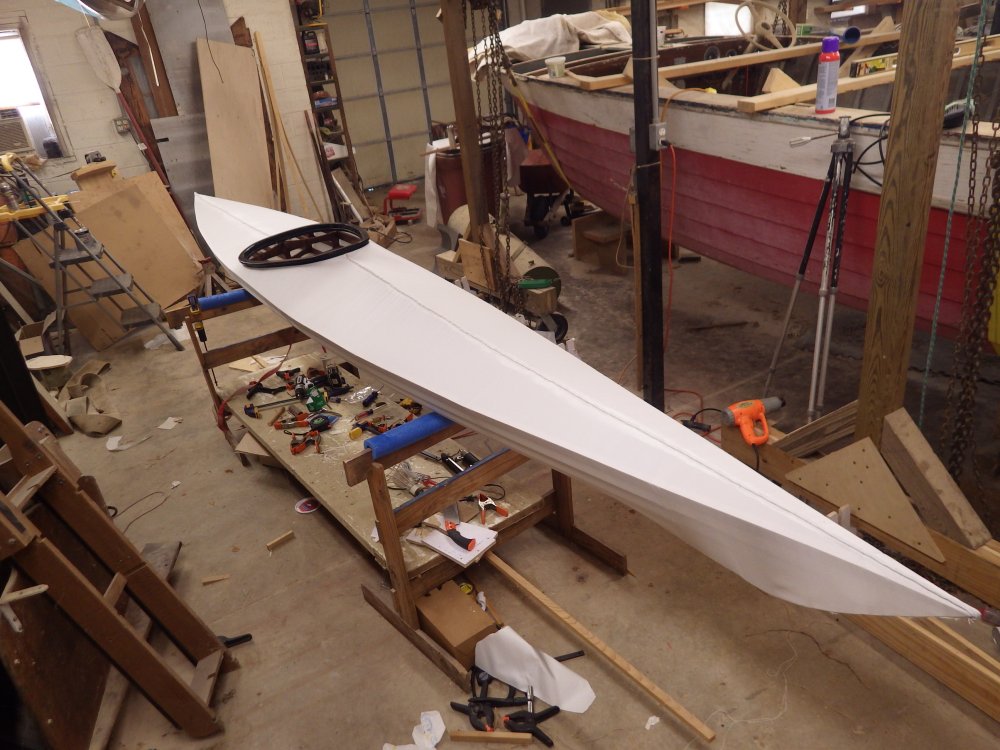
As you can see, it is skinned and ready for paint in 39 hours and 48 minutes. 🙂  I am telling you, these are quick and easy to build.

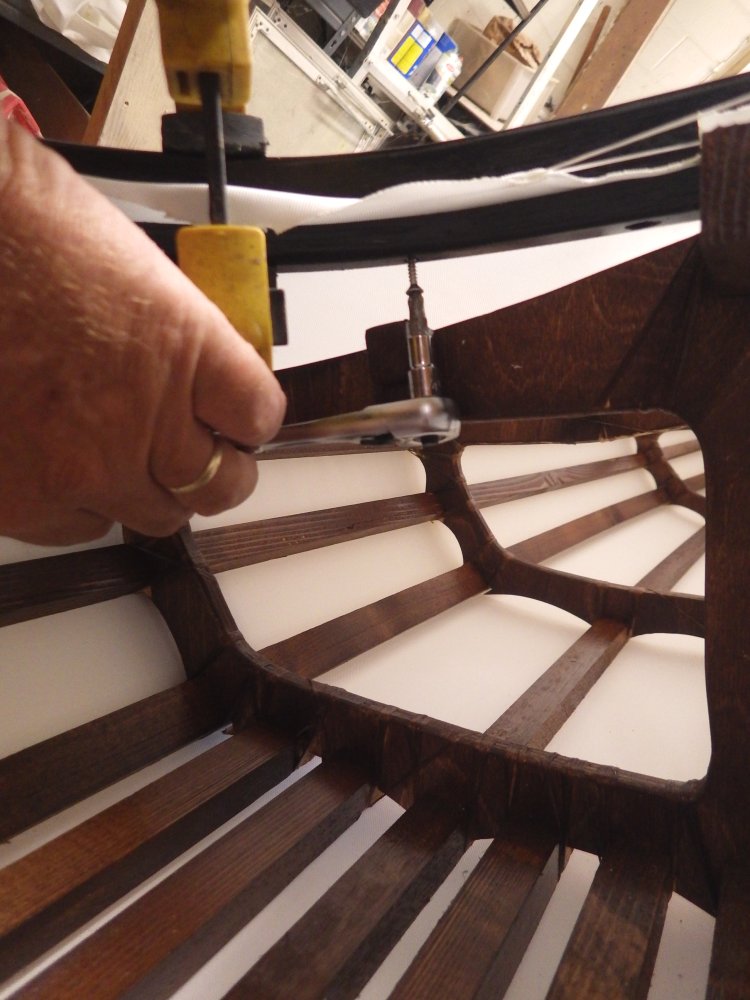
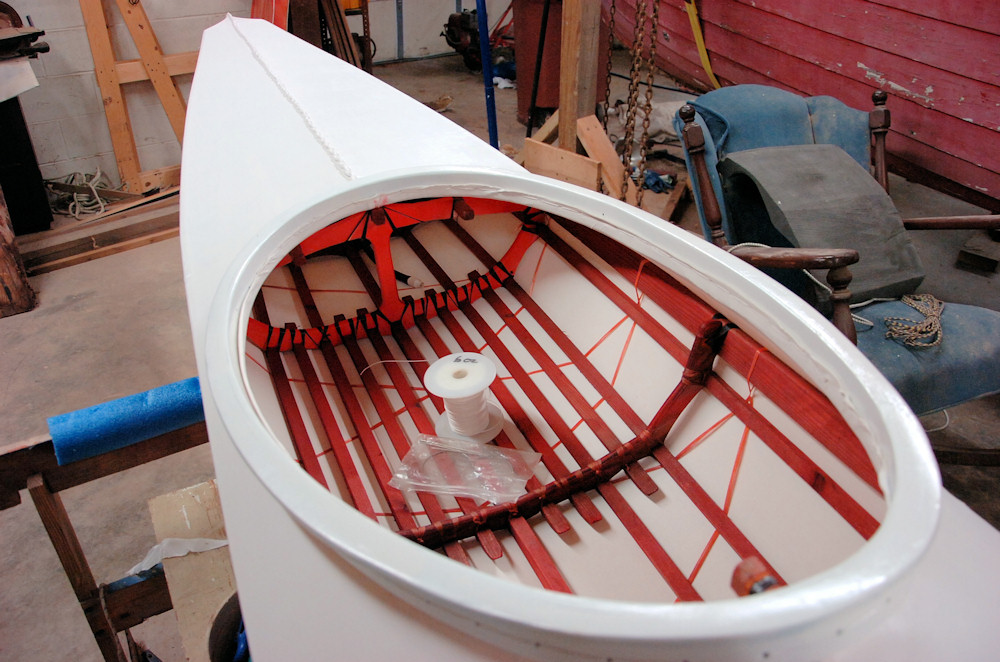
ss-22I decided early on that I wanted to try putting the screws into the coaming from the underside instead of the top. I have always found the screws in the top ugly but it is a lot of work to build a laminated, sewn in coaming.  I knew putting the screws in from the bottom wouldn’t be easy and I was right!  After a little struggling I found the trick!

ss-21Operating a screw driver inside the boat and upside down was very awkward. I had to use a stubby screw driver at the stern and that was even more awkward! After trying a couple of different ways I tried using a ratchet with a screw driver bit. BINGO! I was really surprised at just how well this worked. It made installing the screws so much easier!

Here is a tip if you. Remember to drill a hold large enough for the screw to slip through in the bottom ring!  Without that clearance, the screw is feeding through both pieces and can’t pull the two together. I knew this but apparently I never went back and redrilled the holes so I had to clamp them together before tightening the screws.

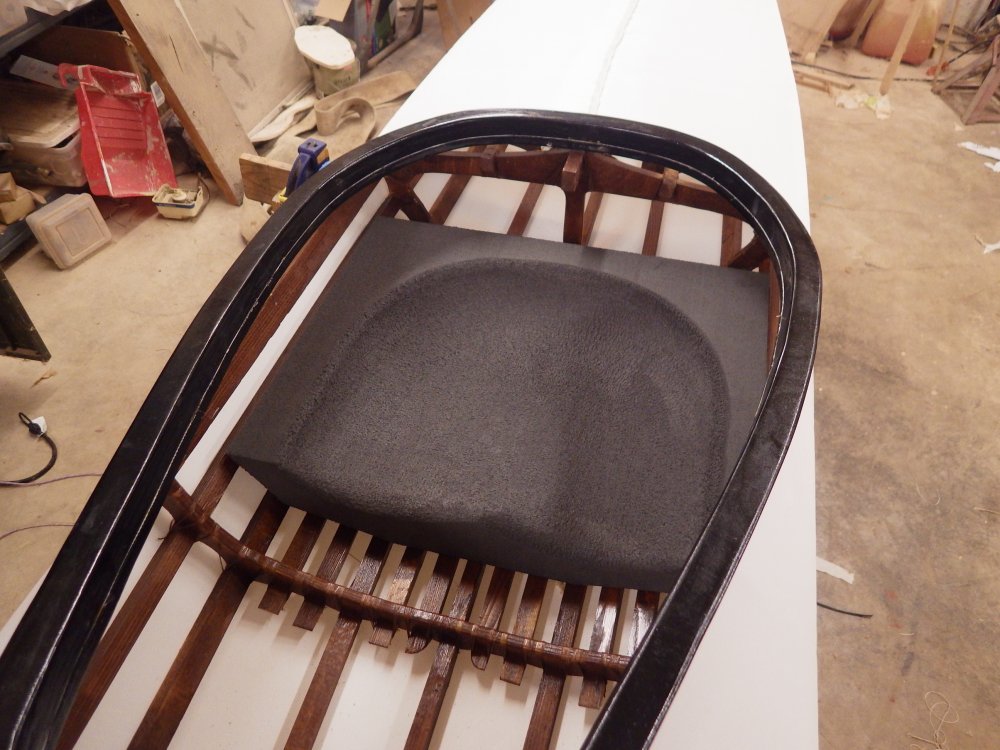
ss-23I wanted to check the fit of the sear. I am a huge fan of these mini-cell foam tractor seats. After trying other seats I have found this by far the most comfortable. I buy mine from Redfish kayak and it is a bit pricey but it well worth it to me.  I send them a template of the boat shape and he cuts it to fit the contour of the boat.

A quick breakdown of the time.

  • 8 hours cutting the frames.
  • 2:45 hours cutting stringers and setting up the strong back.
  • 15:14 hours lashing.
  • 3:23 hours staining and applying poly on the frame
  • 10:28 hours sewing the skin, installing the coaming now ready for paint.

Building Short Shot – part -4 FROG photos

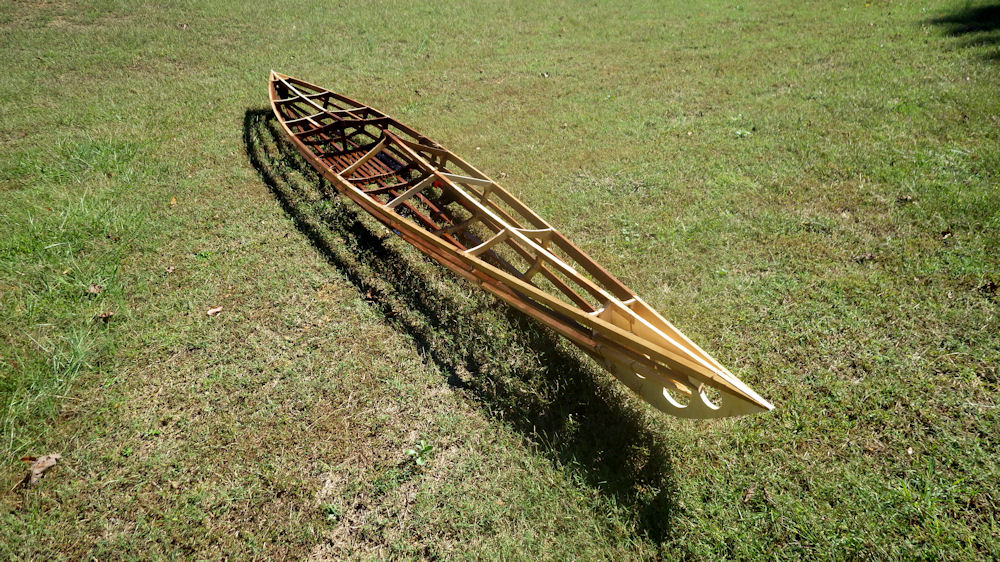
No build is complete with FROG photos. FROG is term I coined because everyone always takes they finished frames out and takes a photo of it in the yard.So much so that is practically a requirement on my forum now. It needed a name so FRame On the Grass photo.

ss-8ss-9If your paying attention, yes, you see sections on the frame with no stain on it. We just stained the areas that will show when you look through the cockpit. It’s such an annoying job we took the easy way out. Next time I will stain everything before assembly or I will spray on an aniline dye. Brushing on stain is no fun!

I decided to take the easy way out and I bought two cans of spray polyurethane rather than have to brush on the poly. The cans are expensive at $10 each but it is well worth it to me!

So far the costs are $229.90. Labor stands at 31 hours (rounded).

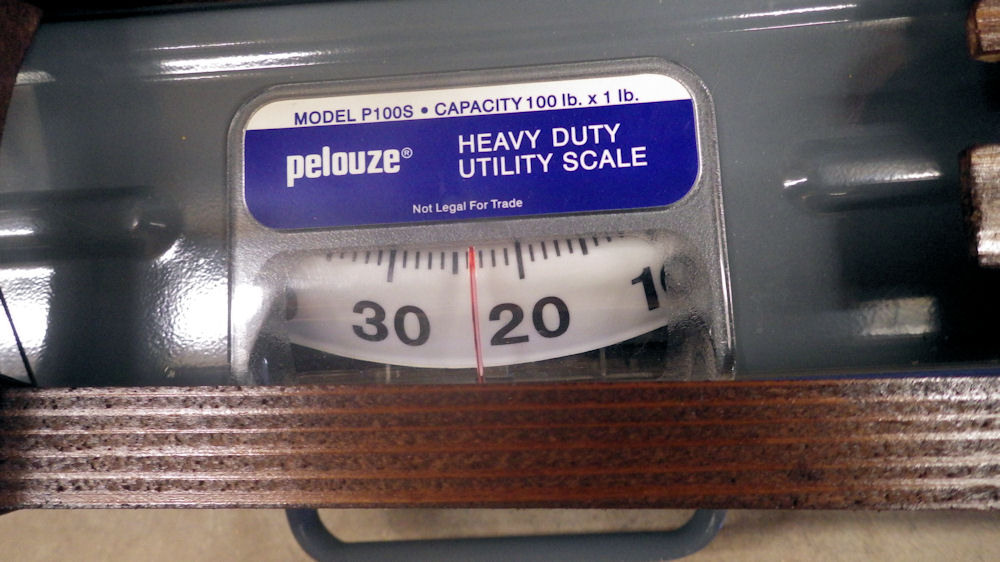
I am about to start skinning and I remembered to weight the frame, I think it is showing 23.5 lbs but I am going to call it 24 lbs. That is heavier than most because of the mult-chine design. Therefore there is a lot more wood in this frame than a typical single chined boat.  By the time it is skinned and rigged I expect it will be pushing 35 lbs. Just for fun I will predict 33 lbs, ready for the water.   ss-10 ss-11 ss-13


New design

I have been playing with a lot of ideas and designs for while now. I have a pretty good line up of boats but there has always been one missing element.

Long Shot and Short Shot are, and I hesitate to use this word, ‘fast” boats. That is their rounded shaped hulls have lower resistance and are easier to paddle, but their styling it not everyones cup of tea. For a long time I have thought about how to fix that and I think I have it.

It’s not a done deal but I have a strong feeling this is my next design. Greenland like styling combined with a more efficient multi-chinned hull. This image is the first draft but I am excited about this one!

LS-greenland-ish2_Linesplan

Stonefly’s everywhere!

It’s been a while since I have written anything. but I promised myself and my readers, never to just post without decent content.  I think you will find it was worth the wait!

I got a message from ‘Canoez’ on the Wooden Boat forum bringing my attention to a posting he made. I have have seen him around the forums but I only know him by his handle, Canoez. Seems ‘Mr Canoez’ works at a school and teaches boat building. I have asked for his name and where the classes are so I can give proper credit but as I write this, his identity and the location of his class room remain a mystery. Hopefully Mr. Canoez will respond so I can give him and his students proper credit. They deserve it!

The story is that the 8 students were offered a choice of 3 boats they could build. 7 of the 8 chose to build my Stonefly canoe from my book Fuselage Frame Boats. While I was flattered that so many choose my canoe,  what these students did with my design is… well you have to see it.

BTW, most of the captions with the photos are Canoez comments.

I have always said that there was potential to make Stonefly into a stunning boat. When I built the prototype I choose the easiest way so that most anyone could build one and I always like the way it looked. But what these guys did is beyond what I thought could be done!

I understand there were other boats that were just not ready to be displayed for various reasons. Really anxious to see the rest of this fleet!


Converting Long Shot * part eight

I got a little behind while I was sick but know now I feel I am making good progress. The (unnamed) boat is now skinned and the base coat is on. At this point it could go to the water actually. But I am not done. I want to work on the rigging and get my holes in place and the lines installed temporarily.

Once I have everything located I am going to remove it and layout the paint the rest of the boat.  These are probably the last photos till I finish it. Traditionalist beware……..

jeffs-31 jeffs-30