Up, over and out.

Book is finished and copies on order. Now I can turn my attention back the Making Waves.  I spent about 3 hours getting the engine disconnected and out of the boat. It feels like a major accomplishment too. It wasn’t hard but just time-consuming. And absolute murder on my knees and that ankle I messed up a while back!

Photos will tell the tell.

Here is free of the boat for probably the first time in 50 years.

About this point I got concerned that it wouldn’t clear the gunwales and I was right.

I had to sit it down. Tight the chain holding the hoist. Tighten the chain holding the motor and with the motor lifted as high as I could get it, it cleared by about 1/8″. That was cutting it too close!

Finally free of the boat. Now to finish stripping the hull and working up a game plan for exactly what I have to do next.

She is grounded to the ground

They say a picture is worth a thousand words and I don’t have many today. Words that is. Too tired, so I will let the photos do most of the talking.

Oh, before I forget, I received my info from Mariners Museum on Making Waves. She is as I thought a 1962, 20′ Sportsman. She went to a dealer in Biloxi, Mississippi from the factory. I always suspected it was a Southern Boat but never had the proof. She came with optional canvas top and frame, side curtains and 283 Chris Craft engine.

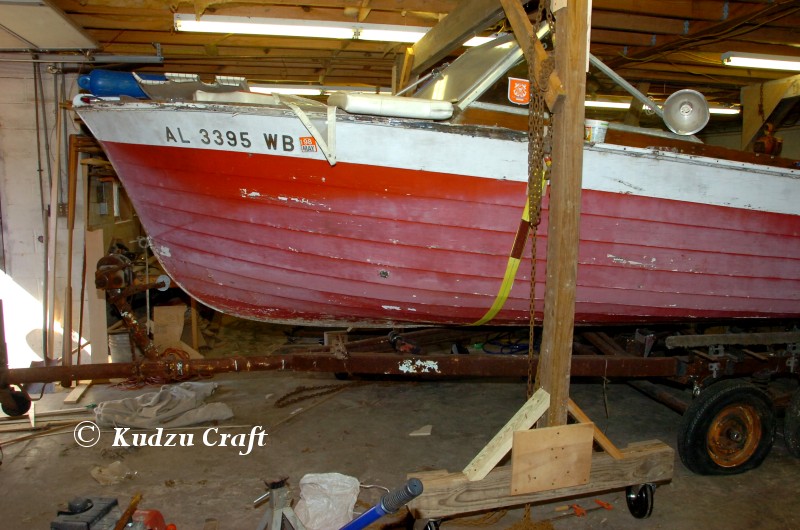
Lifted off the trailer

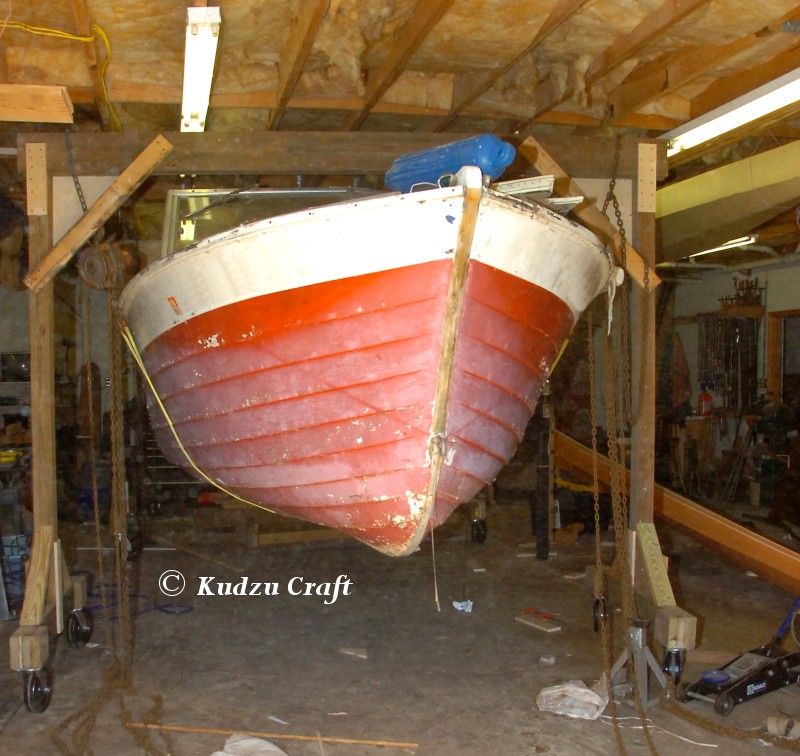
Here she is hanging just a couple inches above the trailer. Kind of scary pulling the trailer out ever though I knew everything was plenty strong.

The flying boat

Again, nothing to worry about but scary too.

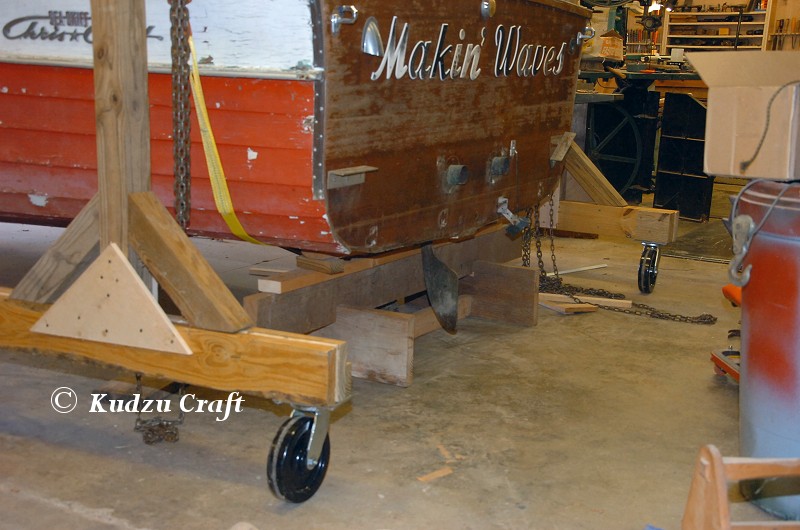
Stern stand in place

I built a stand for the back of the boat. Spent a lot of time thinking on how to do this. As usual it looks pretty simple but it was a bear to come up with.

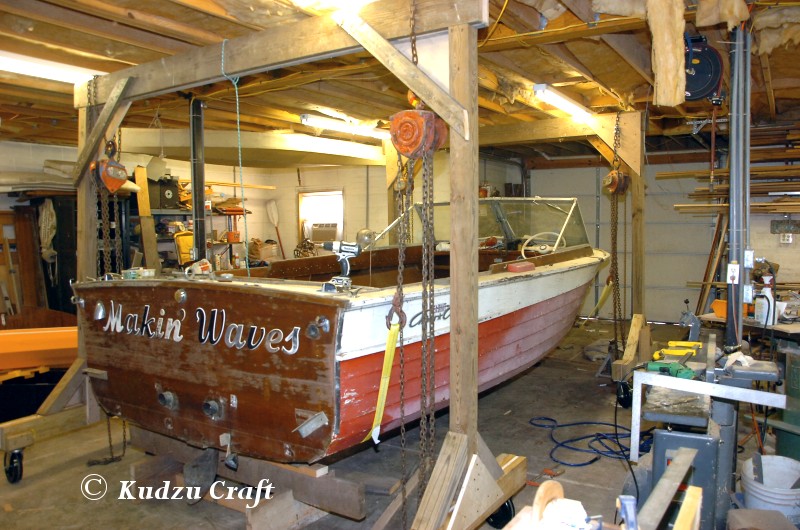
A ground!

Here she is, grounded and ready for the serious work to begin.

It went smooth and painless. I know it was because I put a lot of effort and thought into getting to this point. But, I am still left with the feeling “Why did it to so long to get to do this.”

We have lift off

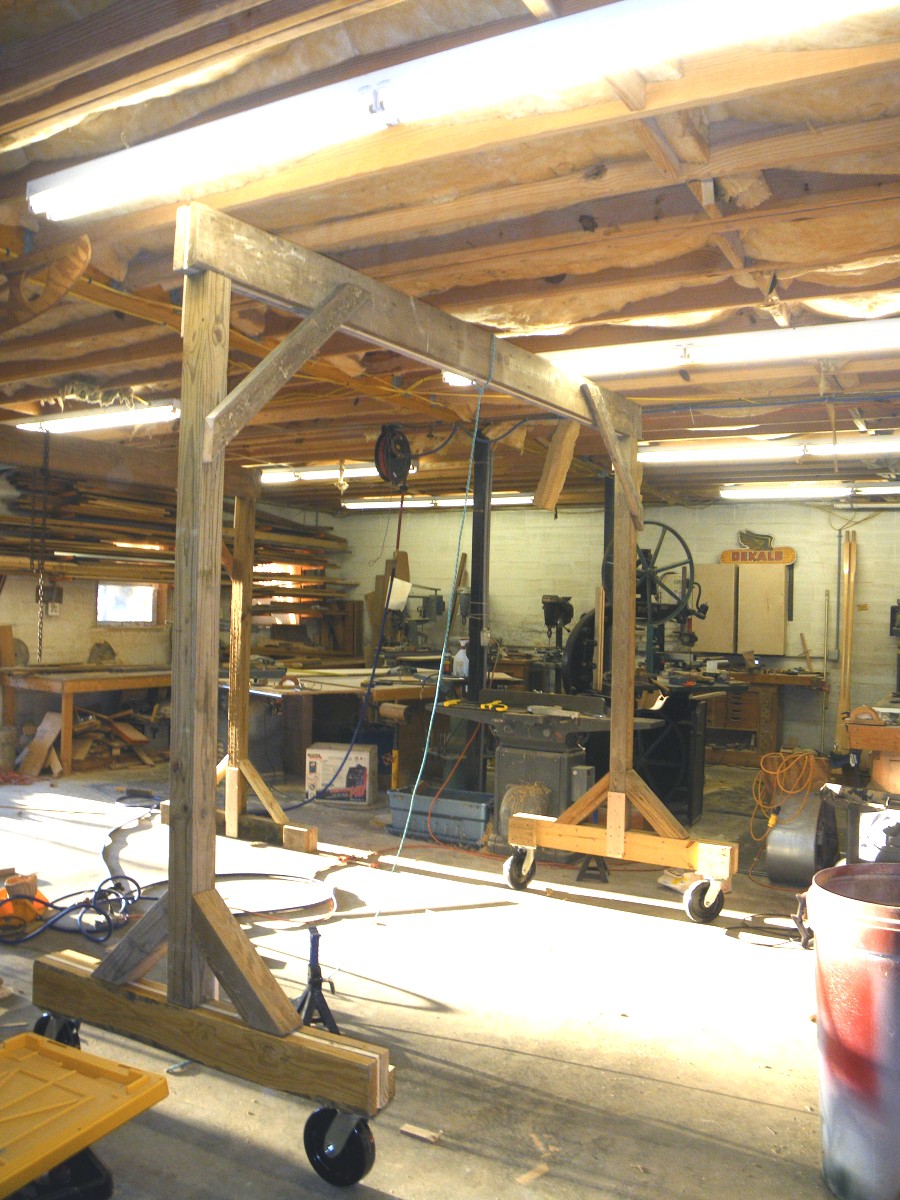
The boat lifted off the trailer that is. In my last post I mentioned it took me a full day to lift the boat off the trailer just an inch or so, I knew I had to have a better way. After much contemplation and racking of the brain, I finally settled on pair of gantries.

While this was a great idea, it turned out it was going to cost a fortune!! I needed 4 hoists and 8 industrial casters and neither of these are cheap. Plus I needed lumber too.

I priced chain hosts first. At least $125 each and I need 4. Casters are at least $40 plus and I need 8 of those. That is $820 plus and that doesn’t count shipping. That could buy a lot of mahogany!

Well, never doubt the power of prayer. I found all the above for a little over $300 and scrounging around my barn I found all but 2 pieces of lumber for the 2 gantry frames. All I can do is say Thank you Lord!

I pulled the boat out of the shop late in the evening to make room to build the gantries. The next morning I started to gather all the parts and lay them out in the shop. The Weatherman was calling for a nice day but storms that night so I had to get these built today and the boat back inside. I knew that once I got started it wouldn’t take that long. But handling all those heavy pieces made for one LONG day.
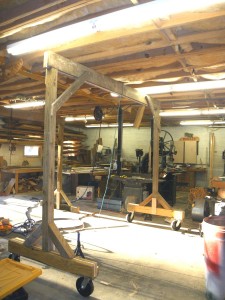
I added another item to my “I will never do that again” list. Trying to stand up a gantry by myself. While I did it, it took more than one attempt and there was some collateral damage the first attempt. But we are not going to talk about that.

If you look close you can see the second gantry is built and upright minus the wheels. The second one, with wheels installed is standing upright too. Wheels can turn a simple one man job into a bloody nightmare! But being the kind of person to learn from his mistakes, I laid the second gantry down, finished assembling it and waited till help showed up before I tried to stand it up. Of course the fact I was teetering on the edge of exhaustion probably had something to do with that choice too. But about 7 pm it was done and boat was safely back in the shop.

Jumping ahead a couple of days my new strap, not straps, came in. Being the patient person I did take the time to read the invoice and find out why I only had one strap when I had order two. It seems they only had one in stock in Atlanta and the other one was coming from the warehouse somewhere up North in Yankee land. With my luck, it will take a week to clear customs at the Mason-Dixon line.

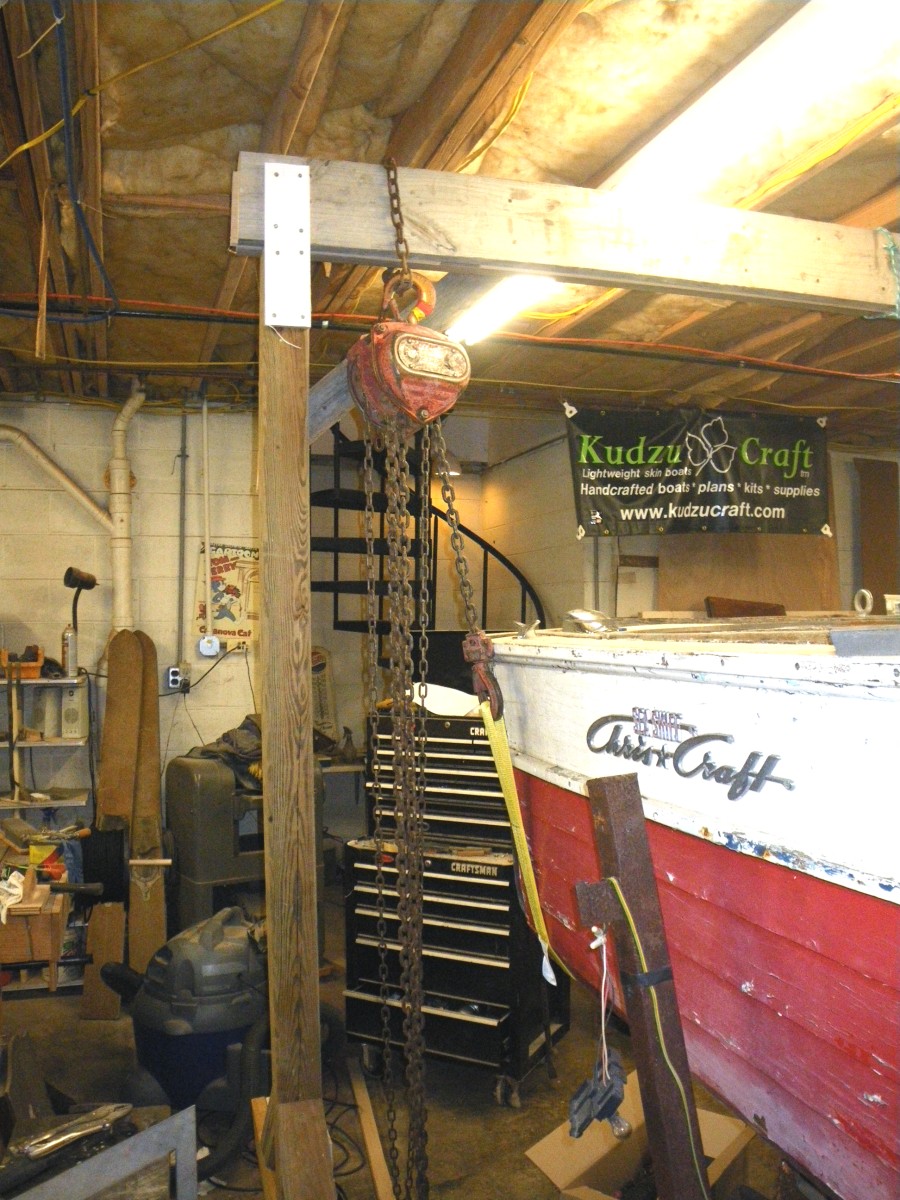
I wanted to see what happened to the gantries when I put a load on them. I hung two chain hoists, pulled the strap under the boat and tried to lift the back of the boat.
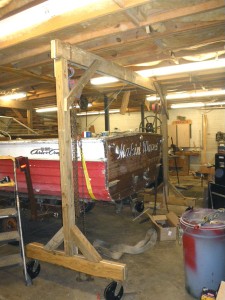
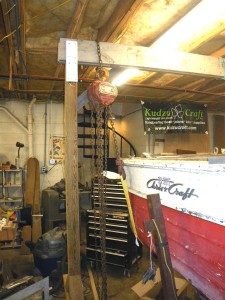
Exciting photos huh? Even though you can’t see it, the boat is just clear of the bunks on the trailer and I can see day light between them. Lifting the boat was almost effortless. I measured the gantry to see if was trying do the splits but found it had just barely moved.

One thing I see I need to change is the braces at the top. Now that I see everything in place I see a better way to brace it. I can give the hoists more clearance and spread the load out more.

While I wait on the second strap I am going to leave it hanging on the hoists. I will measure it before and after I take the load off the boat and see what if anything moves. Assuming no surprises, it won’t be long before I can start getting serious about tearing it apart.

Making Waves * Take Two

Back a while ago I said I was starting on the restoration of Making Waves. Well, that changed about as quick as it started. God had other ideas and instead I have been writing my the new book. With the book nearing completion I have some time to actually start on this project.
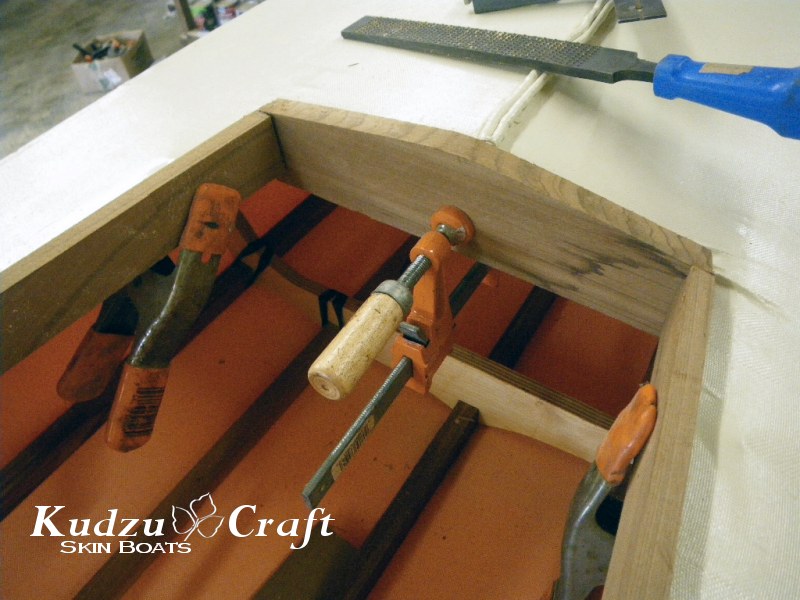
The first big step was to start removing her ‘furniture’ and see exactly what I have to deal with.
Inside

Event though it has been covered while it was stored it is still amazing at the amount of dirt and trash inside. It was more amazing at all the ‘things’ that ended up in the bilge too! In the photo I can see a flip flop, ski glove, and cup. Trust me I have pulled a lot more than that our all ready!

seats out

floors out

Earlier I found a Bumble Bee nest in the bow. The drain plug is in the bow and had been left open so if water got in it could drain out of the boat. Great idea but it seems the Bee’s found this opening inviting and built a nest under the floor boards! Their nest was keeping the area damp and now we have rot to deal with where the nest was.

Next big problem is that the boat was not sitting on the trailer properly and that has led to a deformation of the hull and some broken ribs. There is one area where the planking will have to be replaced for sure on the hull. I expect there is more that will show up as I get into it.

Bilge will have to be painted, that zinc chromate green has to go! Who thought that was a good idea??

Earlier this week my project was spending a full day jacking up the boat and getting it centered and back down on the trailer. This was a harder task than I had expected. Since I have a lot of work to do on the bottom of the boat, I see I need a better way to lift and shore it.

After all the effort to get the boat off the trailer I have decided that the only real option is build a gantry and use chain hoists. So this weeks project to built two gantries and find some chain hoists. Then the real work can begin.

Eli Whitney Museum kids programs

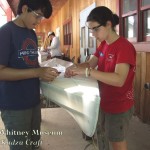
I feel like a proud father! I received this email along with the attached photos today. Love seeing kids getting involved in boating, especially boat building, at an early age.

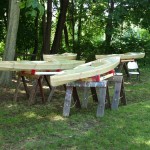
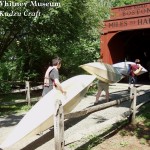
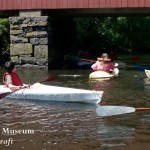
Jeff , This summer at the Eli Whitney Museum we built 10 – !2′ kayaks, with kids 12 to 14 years old, based on your Free B 12 design. I supplied kits comprised of 1/2″ MDO frames, keels marked for frame location, stringers,combing parts, sinew and skin. Frame assembly and skinning took five days. Applying finish, combing, seats, paddles, etc, took another four and a half days, leaving a half day to play. The boats,as you can see from the photos sat nicely on the water, tracked well and were handy enough for kids to negotiate the creek behind my shop. I have gotten lots of great feedback about how much the kids are enjoying showing off and using their boats. We have been building boats here for about 12 years and these boats seem to be getting much more use than any design previously built. I believe there is an inverse relationship between how much a boat weighs and how much it gets used. Parents were so taken with the boat we are offering an adult class this winter. we will be build a 14′ 6” boat similar to your Free B 14. I would like to thank your book and videos which made this project possible. Your generous sharing of your Free B designs and reasonable prices on materials are greatly appreciated at a non-profit such as ours. I look forward to doing business with you again. Happy paddling

Mike Dunn

The photos are what made it for me. So I have included all that Mike Sent.
I am still grinning!!

Paddle #2

Just got in from a 5 minute paddle and learned a lot more.

Raising the oars 2″ made a dramatic difference. No bloody knees! Plenty of clearance and did not bang my knees once. So that was a huge improvement and one issue resolved.  I had searched and searched the web but could never find any recomendation on this height so I guessed and guessed wrong. But now I have a good starting point from now on.

As a side note I am thinking I made this boat to low. It should have been at least an inch taller and maybe even two. I don’t want to get caught out in rough water in this thing. Maybe with some experience it will OK but that leads to the other issue, stability…..

There is more to stability than just keeping a boat upright. I have no problems there, I can sit in the boat with or without oars no problem. It’s tender but I guess from paddling lower stability kayaks is why I don’t find it a big problem. Phil however struggled with the stability which sort of surprised me.

https://www.facebook…469379416407085

But today, since I wasn’t focused on keeping my knees out of the way I started to confront the next issue. I keep dipping one oar in the water which could be a really bad thing at higher speed. Right now it is just a major annoyance and frustrates the heck out of me!!!! I was assuming it was just me letting one side droop and hit the water. But being able to focus on this, I realize that was not the case.

I am wobbling as I paddle, leaning the boat to one side or the other and with the lenght of the oars it doesn’t take much for an oar to dip into the water. So it is a stability issue, not turning over but rocking from side to side. That will improve with experience I am sure but since I can’t paddle worth a darn now I am going to try to lower the seating position.

I tried sitting on top of the seat frame (very uncomfortable!!) with the sliding seat all the way back but that made a big difference. It would not be very hard to add a board across the frame to use as a fixed seat. That will lower me an inch and half and that will make a marked difference. And it’s easier than making a new frame. So I will probably start with that.

Stay tuned!

To the water we go!

I finished the boat and took it to the water. I have a small leak at the transom, no idea where but that’s fairly easy to fix (I hope). I got on the water and found the stability about what I expected. It’s definitely tender, but not as bad as I was afraid it would be. A newbie or someone who hasn’t paddled lower stability boats would not be comfortable in it.

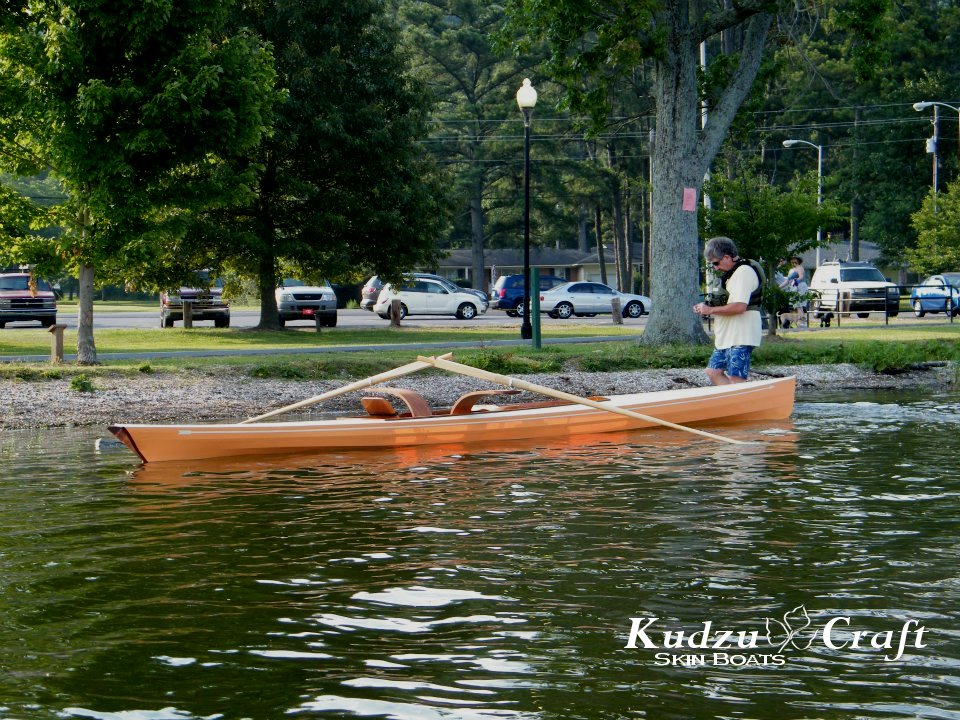
Phil came along for the laughs I provided. He was kind enough to snap photos too. I had tried the boat with no oars and now I was headed to the boat for the first try.

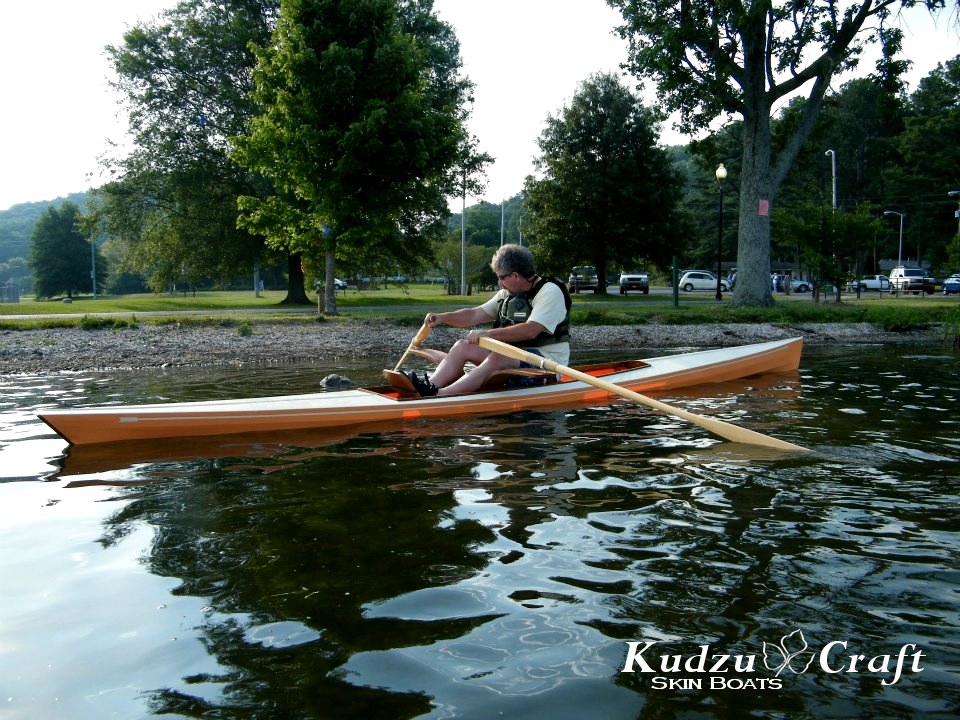
First stroke trying to get away from the shore. Note to self: Turn the boat toward open water!! I really struggled to get going.

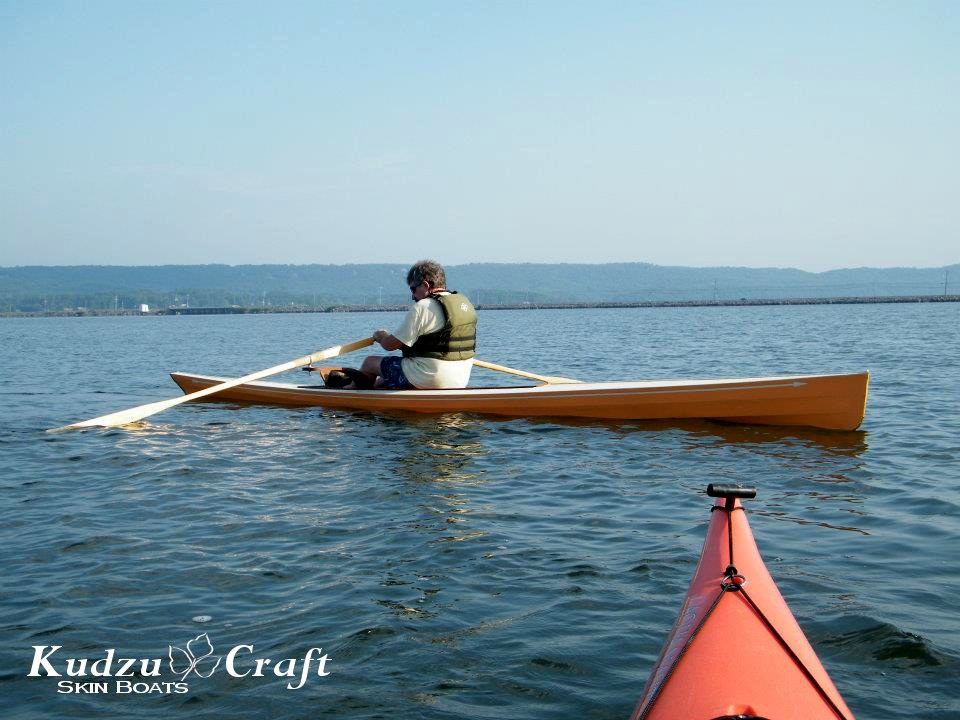
This photo is just to show I did make it on the water and actually row it a little. But it was a study in frustration! Rowing is not easy. There is a rhythm and timing between oars, arms and legs and I didn’t have it together. But I am sure that comes with time.

Another big issue was I found the outrigger were not high enough. When I lifted the oars out of the water, I kept hitting my knees. If I didn’t hit my knees I drug the oar in the water and that is a BAD thing! Part of that was my timing, I kept lifting my knees to quickly, but a large part was the oars were just too low and I have the scars on top of my leg to prove it!

So, I have rigged up some temporary blocks to raise the oars locks and clamped them in place with some clamps. I want to take it to the water to see how much difference this makes and assuming no bloody knee caps I will figure the best way to raise them up.


The fix is in!

I kept pondering on this and really want to try to fix the rower frame. I knew that just gluing it together would not work. The thoughts of having to chisel out the dados to  replace the broken cross piece was not appealing, at all.

Then I had the thought, I could add a cross piece making the cross brace into a T shape. That would make the whole frame much stronger I couldn’t just glue it on top because thew wood was oiled and glue wouldn’t stick. Secondly it would be in the way for the sliding seat  hardware so I need to mill a dado and cut down the broken piece too.

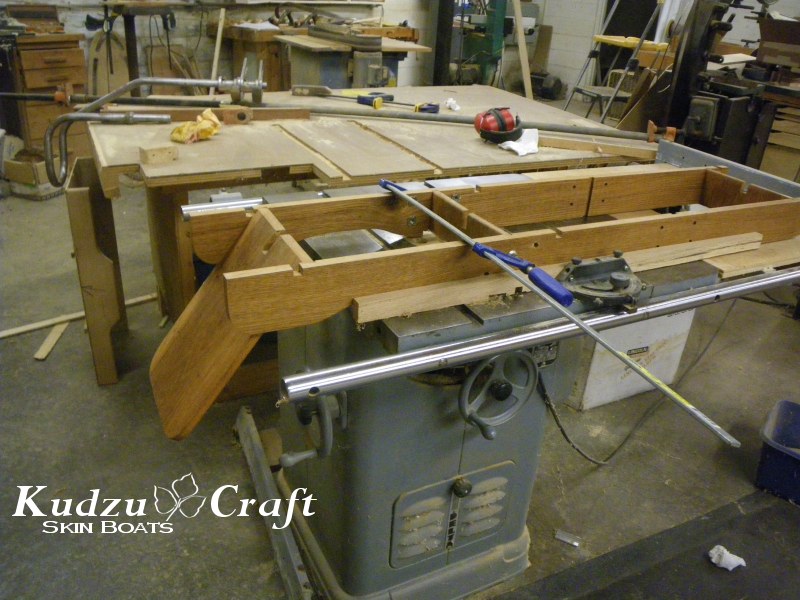
Thinking on how I was going to this I leaned toward making a router jig, but I kept thinking how much faster a dado stack on the table saw would be. Problem was, I was certain it wouldn’t fit on the table.

I was right, it wouldn’t fit but I discovered if I removed the left side extension on the table it would. It was going hit the fence rail at the back but there was just enough space to finish the cut. So I removed the extension. Clamped some scrap the miter gauge and clamped the broken frame together so it couldn’t move.

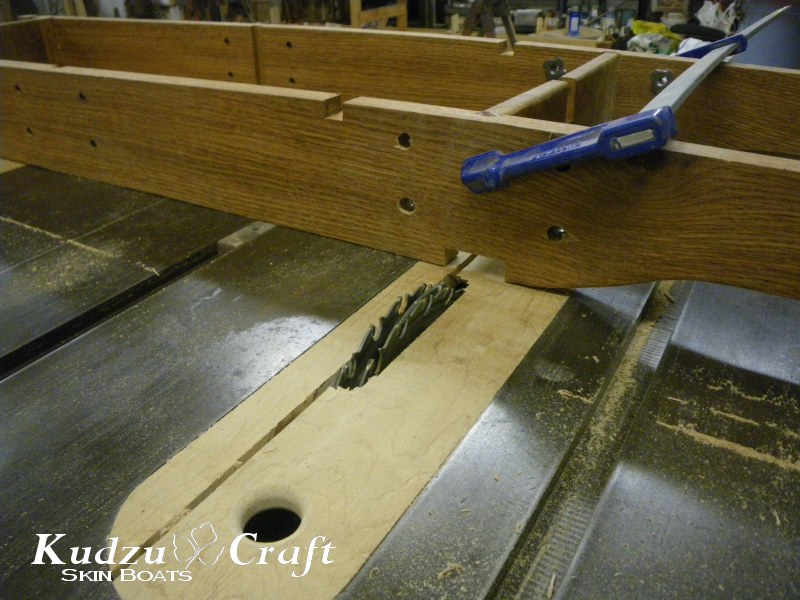
I am not quite finished with the cut in this photo. I cut it  1-1/2″ wide and centered on the cross brace. By doing this I cut off the top of the broken brace that was oiled. Now I have clean wood across the top to glue too.

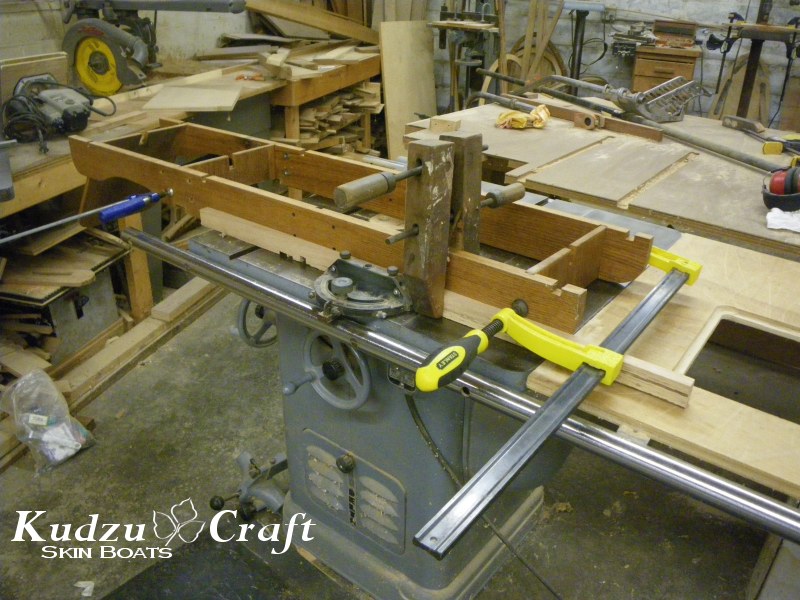
I decided I had better add a second piece further back to help prevent any racking. When I slid it over to make the cut it really wanted to tip over without the extension table in place. I didn’t want to replace extension just yet so I grabbed one of the big cast iron clamps and placed it on the end as a counterweight to help balance it. Then I clamped it to the miter gauge and that worked.

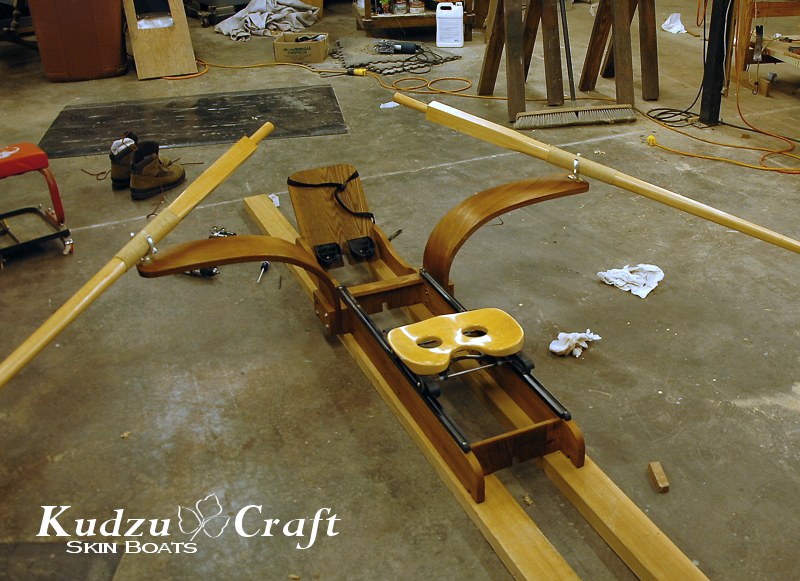
Here is the finished unit. It’s now much stronger. I have installed heel cups, added a temporary foot strap (I think I want some wider webbing) and installed the rails and seat.

Here she is, all finished as far as I can tell. All I need to do is check the transom to make sure it is water tight. I don’t expect a problem but I would rather find it now.  If there are no surprises then she is ready for the water.

We are in the middle of a heat wave so I am not sure when I will be on the water. I have been working on the rowing machine at the gym and I know that rowing can be a strenuous workout, so I may have to go by myself early one morning.

Uh oh! Did I really do that?

3 steps forward and one step back!  No launching this weekend but such is boat building.

And let me apologize for the lousy photos, they are not up to my standards but I didn’t feel like redoing them tonight.

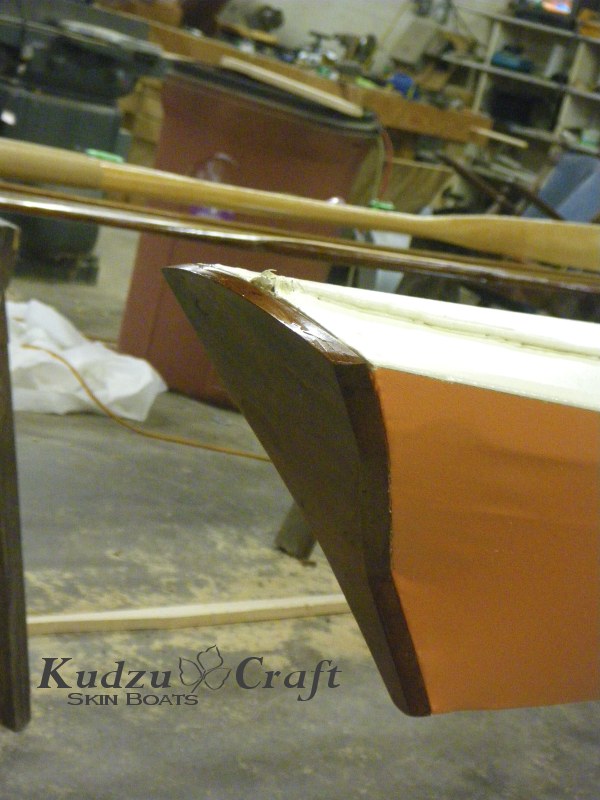
Lets start with the transom. As you can see it is in place and once the caulking sets up it ready for a few more coats of varnish. I had someone tell me I couldn’t do a wine glass transom on a skin boat guess what?  I did. 😉

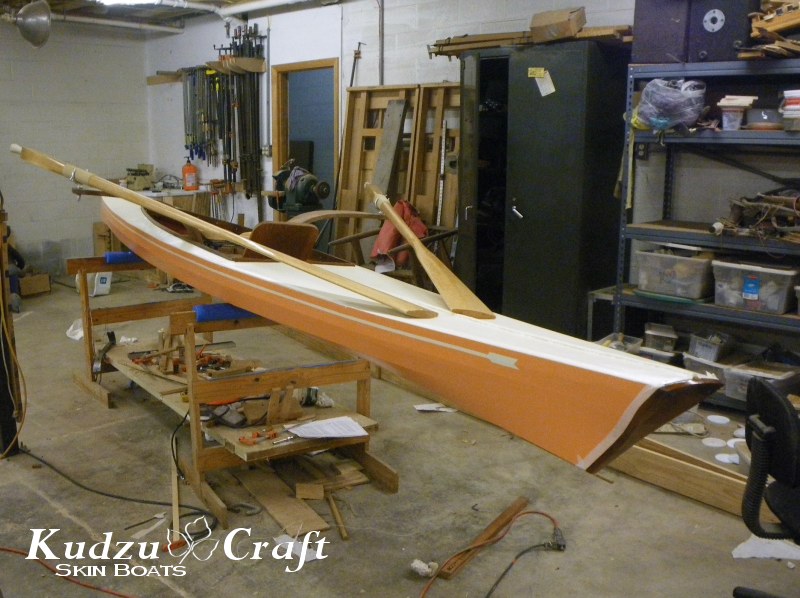
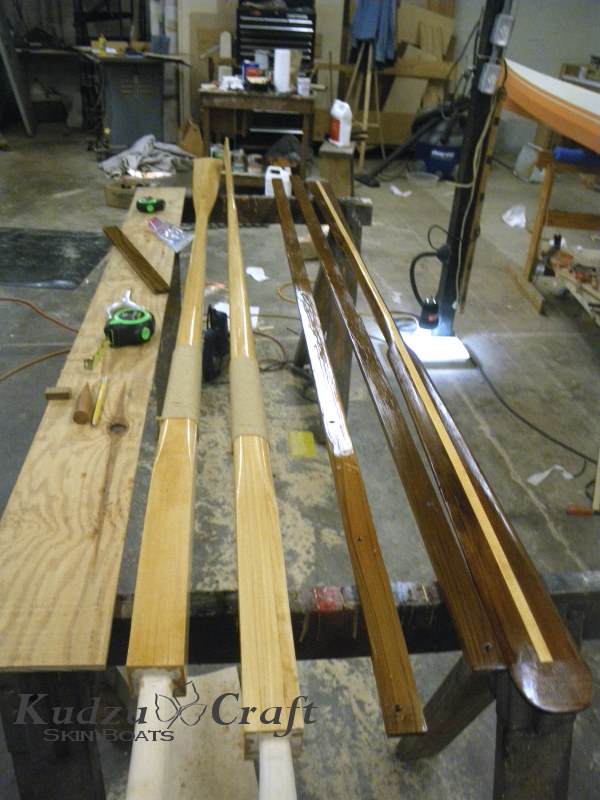
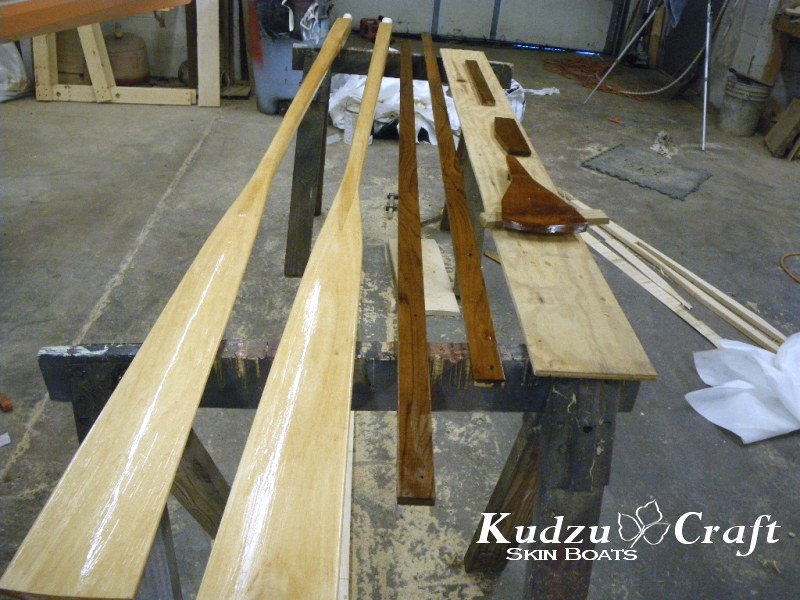
Finished the oars except for the handles. I still have to refine the shape of those and I am going to oil them rather than varnish them. I have never had good luck doing that but I am going try it again. I had the ‘leathers’ or actually masons twine wrapped and varnished in place. If you think sewing hurts your hand try this! First time in two years my hands are really sore.

Hopefully I have applied the last coat of Varnish to everything. While I was at it I repaired a kayak paddle and varnished it. It has nothing to do with this boat though.

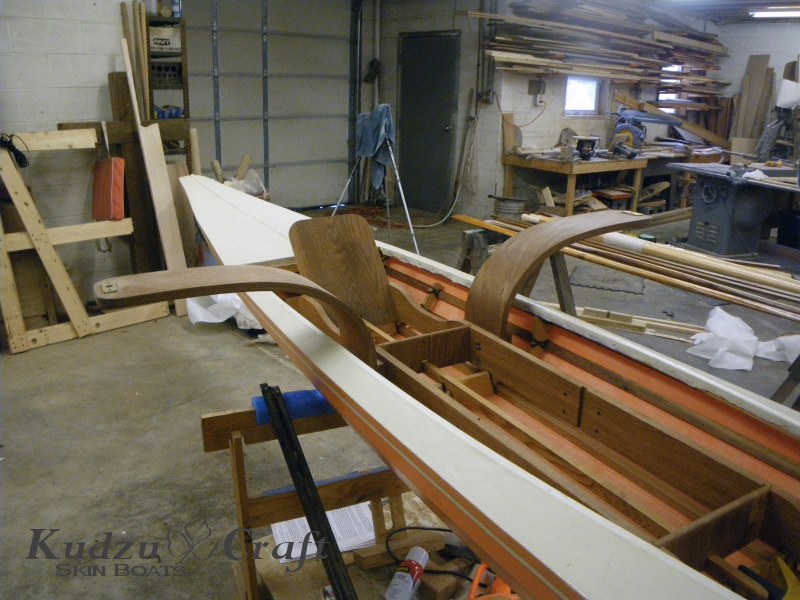
I assembled the outriggers onto the frame and placed them in boat to double-check clearances before I start to install the varnished trim. That is when I saw my serious blunder!

See that big crack in the cross brace? That is not really the problem, notice the grain runs up and down? That is the problem. There is no strength in the joint. It broke from installing the screws that hold the outriggers. This is the most stressed joint on the boat. All of the force from the oars is on this joint., it has to be strong and this is terribly weak. That was a big blunder that I should have noticed.

I have been debating and I am seriously considering just scrapping this one. Keeping the outriggers but building a new frame from plywood. The oak frame should be more than strong enough with the cross brace grain running the right direction. but the time it will take to fix I could probably just build a new one. Plus I think the plywood would be lighter and just as strong, probably a little stronger.

Then again sitting here looking at this picture I have an idea on how I fix this and make it  stronger too. Next post we will see what I decide. As I write this the wheels are turning….

Rounded the corner headed for home!

Getting really close to finishing this one up and I still don’t have a name. I think I will just call it My Boat since I don’t have commercial plans for it.

Lets start with the oars, after a lot of research I decided it didn’t matter what I built them out of as long as they didn’t break and I kept them varnished. So I laminated basswood since it was easy to get and cheap. I am sure I will build another set  in the near future and once I am happy with my design I can use better wood if I find the need.

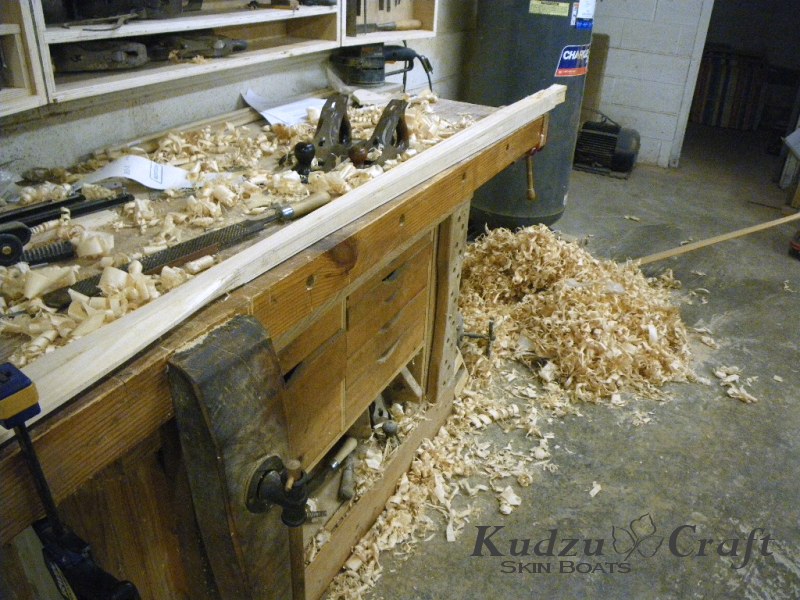
This is the second oar blank being shaped on the bench. As you can see by the pile of shavings there has been a lot of wood removed from the first one. I use hand tools and sandpaper. I know most of you reading probably thing of hand tools as old school but there is nothing better for this job! They are a joy to work with once you learn the tricks.

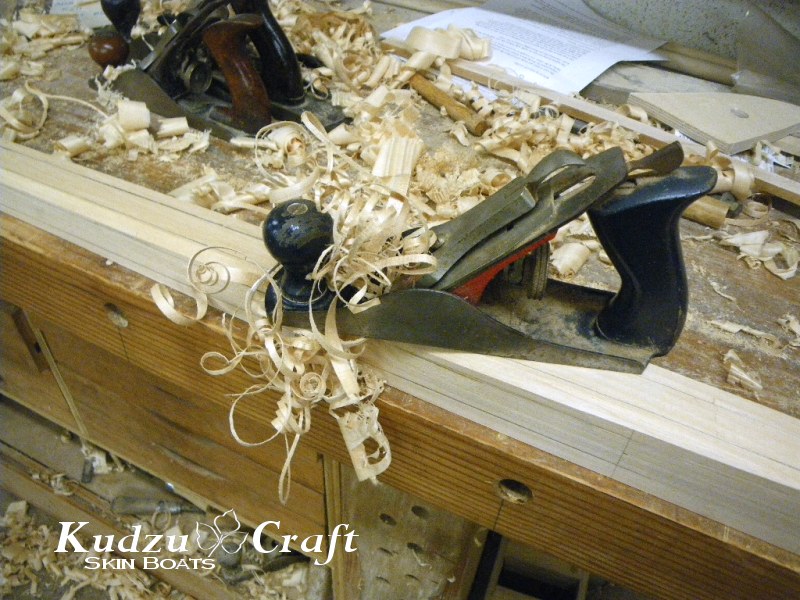
This is a cheap Stanley Handyman plane I picked up somewhere. I have reshaped the blade so that is it rounded and use it as a scrub plane. It leaves a rough surface but it takes a lot of material off fast. This one works great at getting it removing lots of wood and getting it down close, then I finish with the other plans that take small amounts off at a time. Yes it is slower but you have much more control and don’t suddenly find you are way past your mark. You sort of sneak up on the line.

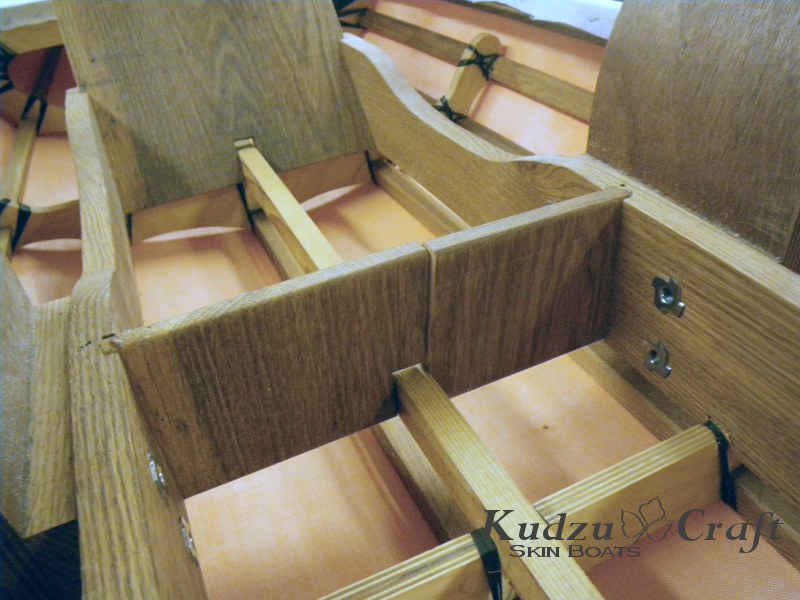
Next it was time to fit the trim or coaming to the boat. This hides the fabric edge and will help keep water from coming in the cockpit.

All the bits and pieces dry fitted in place ready to removed and sanded.

Now we skip past all the hours of sanding and sanding and sanding some more…..  I start to apply the first coat of varnish and then see the places I should have sanding a little bit more.

Hope to start assembling all the bits and pieces some time this week and maybe take it to the water late in the week. MAYBE!