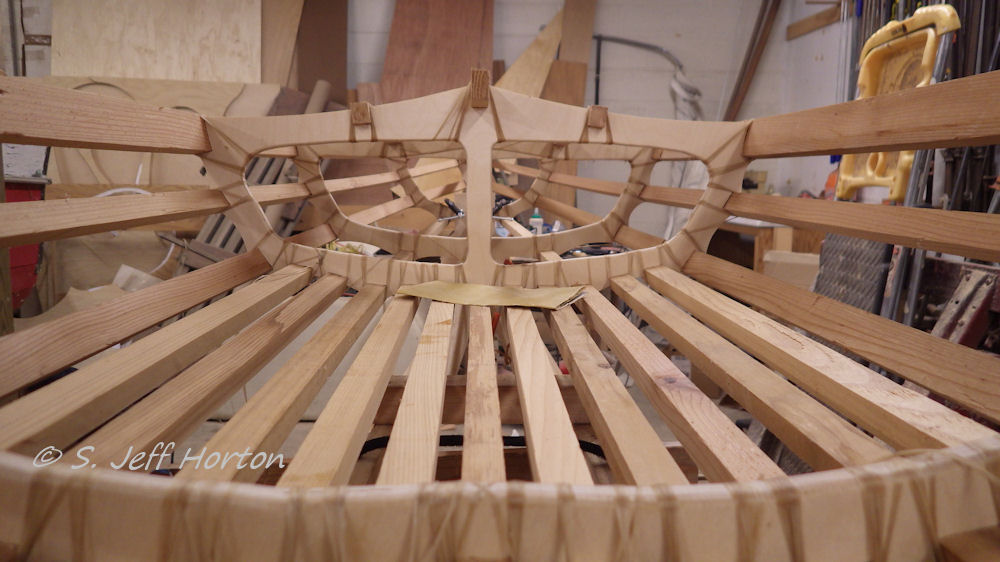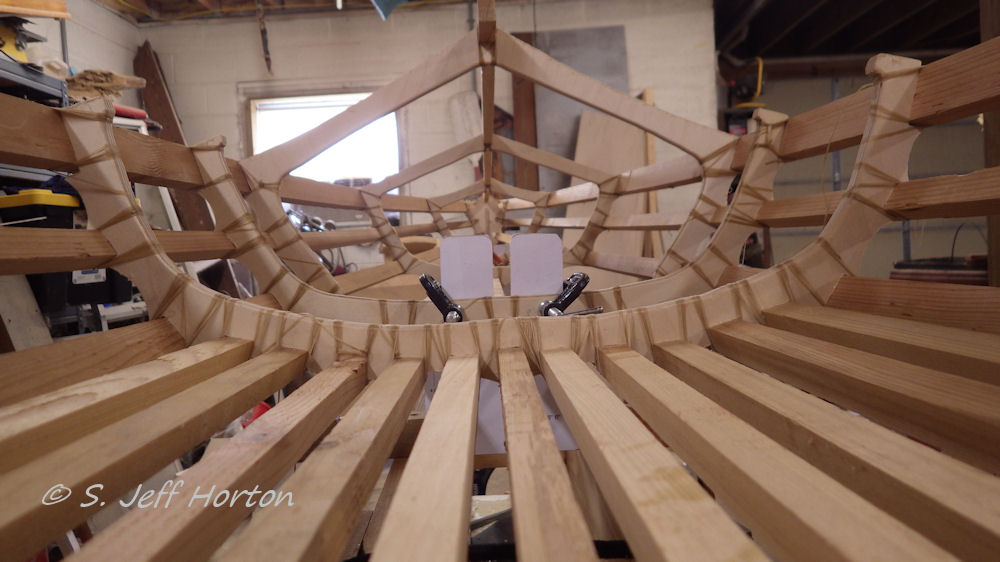
Counting the cost

November,  2015

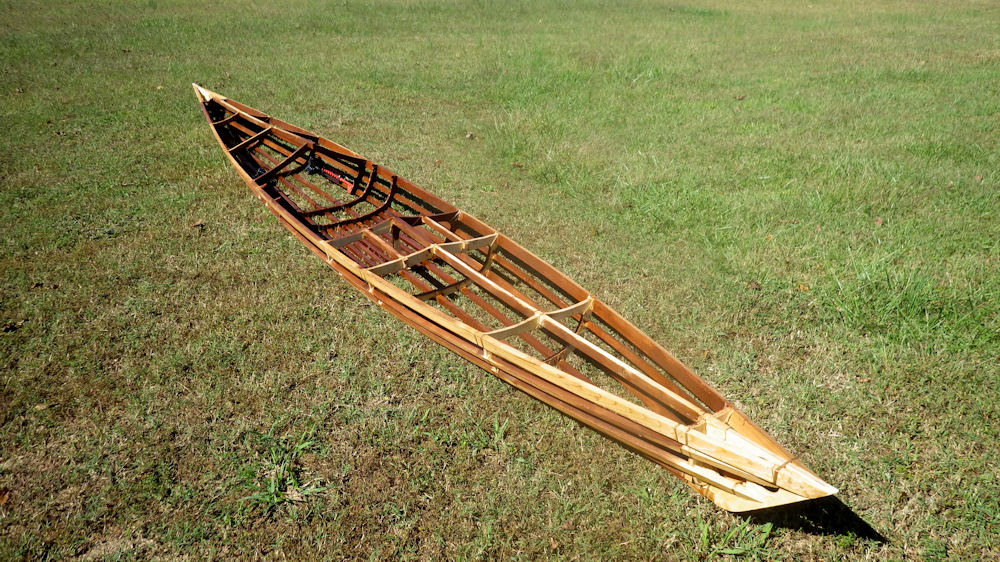
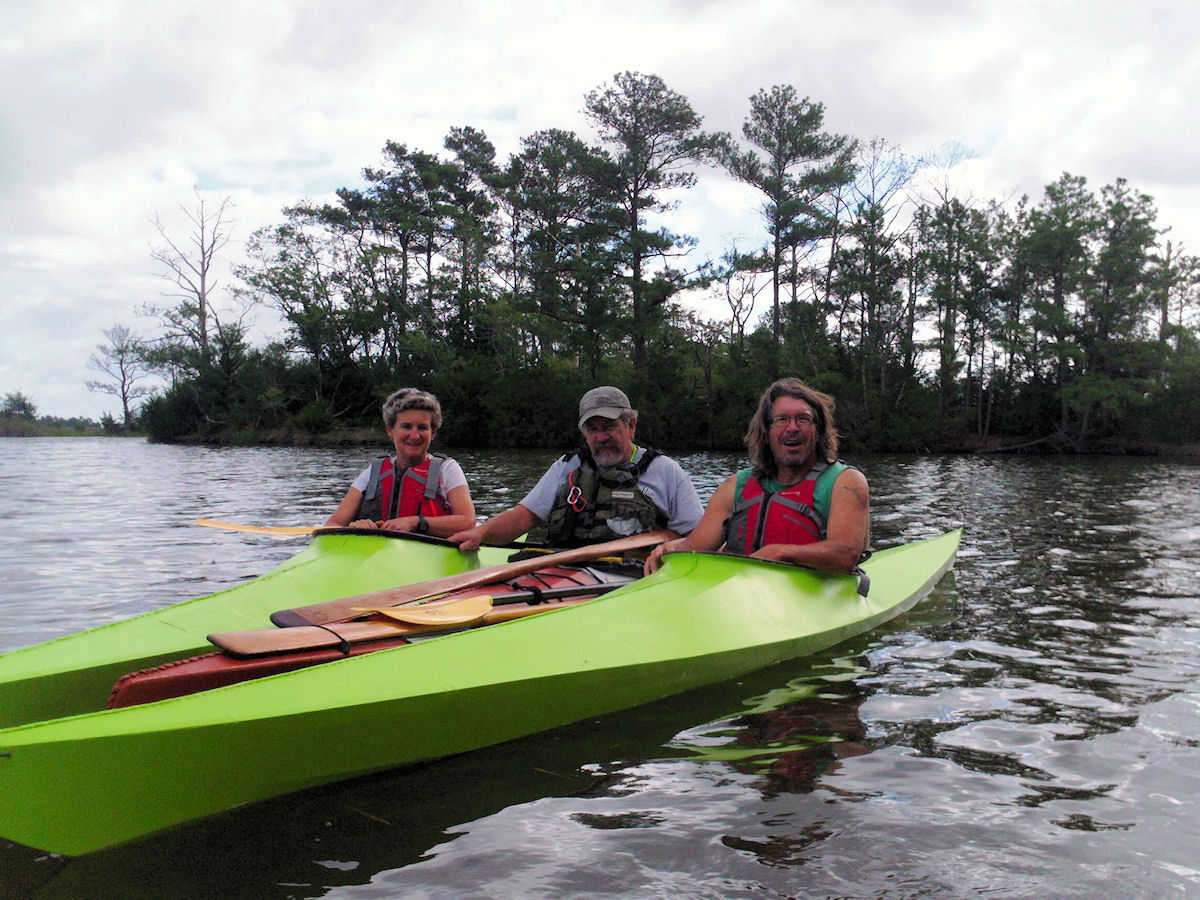
In case you have not been following along I just finished building a new kayak and I kept close track of the costs and the labor to build it. My wife finally tried  kayaking and discovered just how much fun it can be. Problem was, none of the boats in my stable really suited her, so I needed to build her one..

Short Shot has always been an under appreciate design.  At sixteen and half feet and with better resistance numbers than most of my designs I had expected great things from this design but sales were always slow at best. I felt the styling was part of the problem and I have long thought about redesigning it to look more traditional and this was the motivation I needed.
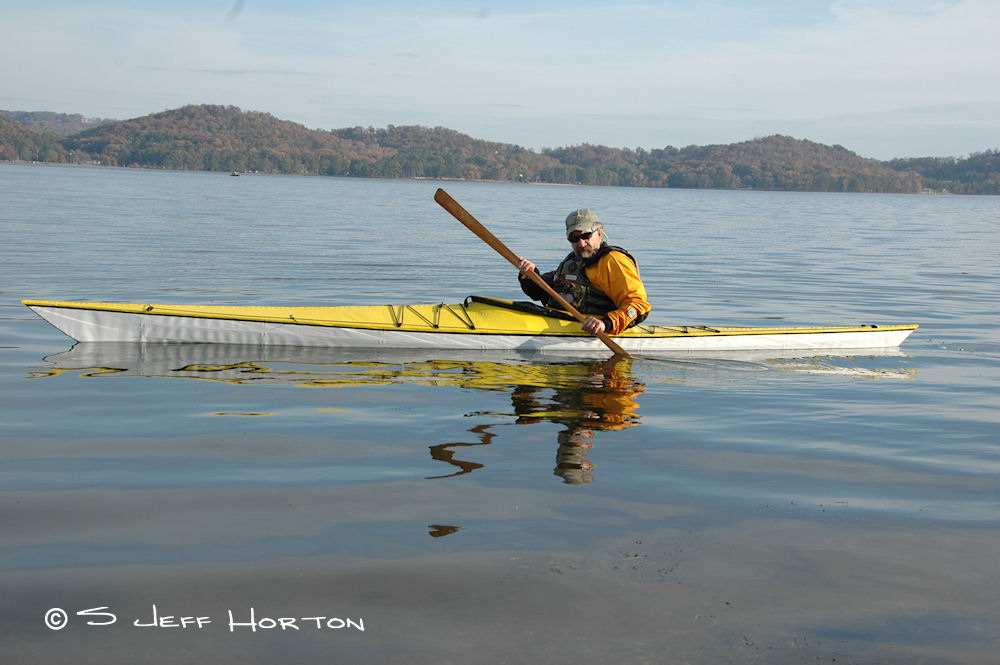
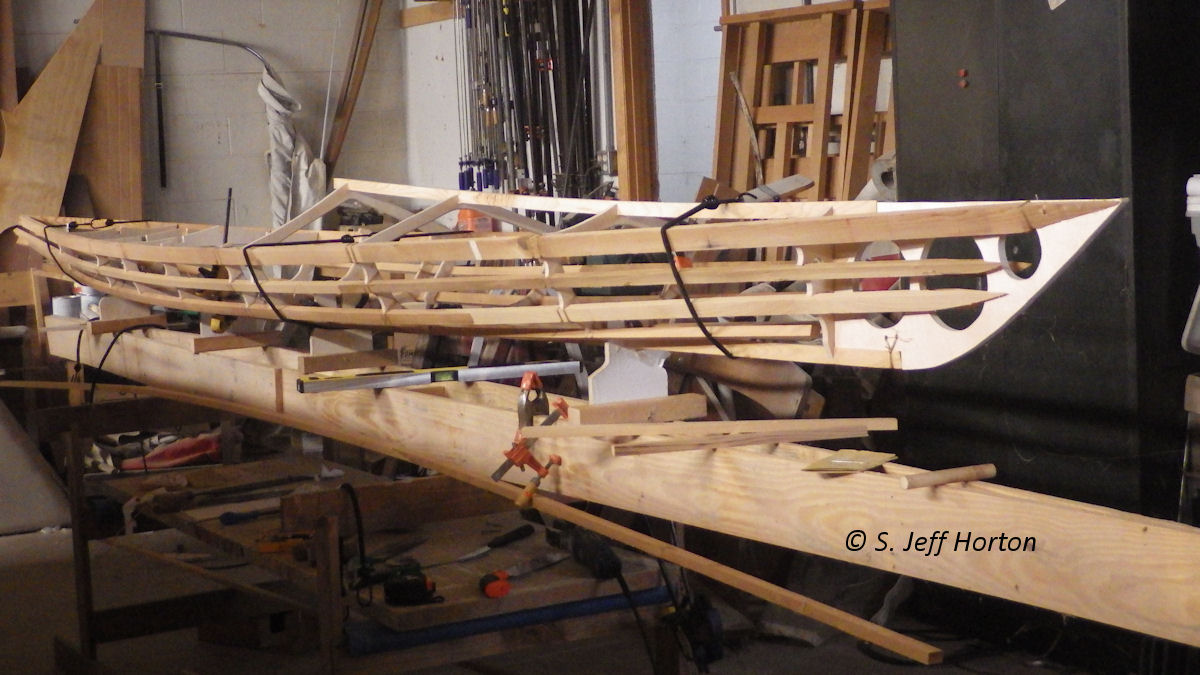
ss-24As I built Short Shot, I kept close tabs on the time and cost of this boat. I had a lot of scrap plywood and other odds in ends in the shop from other projects I had saved, so my cost to build wouldn’t reflect your cost. Instead of keeping tack of what I spent, I kept track of all the materials and prices for these items. The following is a list of what it took to build this boat.

16.5′ Short Shot kayak Fully
loaded
Minimally equipped
Materials Cost Cost
Plans $      69.00 $           69.00
Plywood for frames $      50.00 $           50.00
Western red cedar for stringers  $     25.00 $           25.00
Sinew-2 rolls $      19.00 $           19.00
Paint 2 quarts and 1 pint, Rustolem $      27.91 $          23.00
2 quarts
2 can spray poly $      21.90
Sewing thread $        9.00
18 feet of 11.7 oz fabric $     126.00 $          81.00
8 oz fabric
Seat $       86.00
Paint supplies $       21.00 $           21.00
Brass 5 feet $       30.00
Bungee 17 feet $         5.95 $             5.95
Backband $       28.00 $           28.00
Black rope $         6.40
Stainless screws for coaming (box-50) $         8.25 $             8.25
TOTAL $     533.41 $         330.20

In the first column is what I used to build the boat. It included a Redfish seat, brass strips on both ends, the 11.7 oz skin and deck rigging. We stained the frame to enhance the look and then we coated it with gloss poly. She wanted a two tone paint job with a black stripe, so that took 3 cans of paint. All this came to just under $550. When you consider this is a 34-35 lb kayak that is not a lot of money! You can’t buy a used composite boat of similar weight  for that.

A lot of people are attracted to these boats because of the low cost.  I wanted to see what the low end would be so I created a column with just the minimum parts. No stain or poly on the frame, no Redfish seat, using sinew instead of sewing thread, etc. By cutting out the extras you could build this boat for $330. With a little care I think you could come in  under $300.

You will pay almost that much for those 10′ or 11′ kayak all the big box stores sell. The difference is any of  my designs will be far easier to paddle and much faster! Yes there is a big difference and it is not the weight of the boat. I don’t design short boats because short boats are barges. There is no way around that either, but that is another story for another day.

And these are not a boat with a 2-3 year life. As long as you take reasonable care and don’t store in the sun or where it will stay wet and rot, your can probably pass it on to you kids or grand kids.

I also kept track of the labor to build Short Shot.  I feel it only fair to point out that I have built a few boats ,so I have the process down and don’t have to spend time thinking about what or how to do something. I have done it enough that it is just instinct, so I am going to be able to build one faster than most people, especially if it is your first time. But the learning curve is short and most people will be able to get reasonable close to these numbers.

Task Task Hours Total Hours
Cutting frames 8:00 8:00
Setting up strongback/cutting – scarfing – gluing stringers 2:43 10:43
Lashing 1:21 12:04
lashing 3:44 15:48
lashing 1:17 17:05
lashing 4:52 21:57
lashing-FINISHED 4:52 26:49
Staining frame 2:23 29:12
Spraying poly on frame-paint coaming 1:00 30:12
Skinning 2:00 32:12
Skinning 1:36 33:48
Skinning 4:20 38:08
Installing coming 0:54 39:02
Painting 1:15 40:17
Painting 1:30 41:47
Painting 1:12 42:59
rigging 3:18 46:17

As you can see I spent just under 46 and 1/2 hours, start to finish on this boat.  In my classes we build a single chine boat, VARDO or Ravenswood in roughly 45 hours and these are typically people who have never built a boat or much else in their life. Short Shot is a multi-chine boat and that takes a little longer to lash all those stringers. I have people tell me quite regular that spend about 60 hours on their boat and this seems like a reasonable number to me.

As I said earlier, I don’t do short boats because they are not good designs. White water boats get away with the short lengths because of the ways they are used. They are pushed along with the current and not paddled long distances on flat water, so the high resistance is not an a problem. But if you are looking for sea kayak to paddle on open flat water you need a little waterline length.

Drop in my web site and check out my designs. Kudzucraft
Talk to people who have built and paddle my boats on our forum.
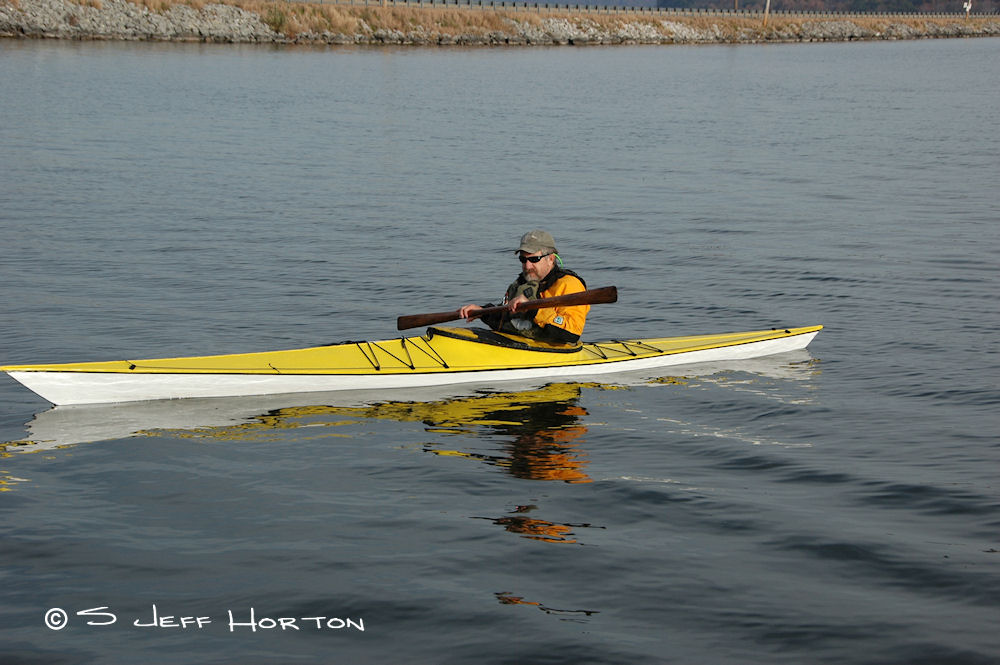
ss-27


Building Short Shot – part 8- launching

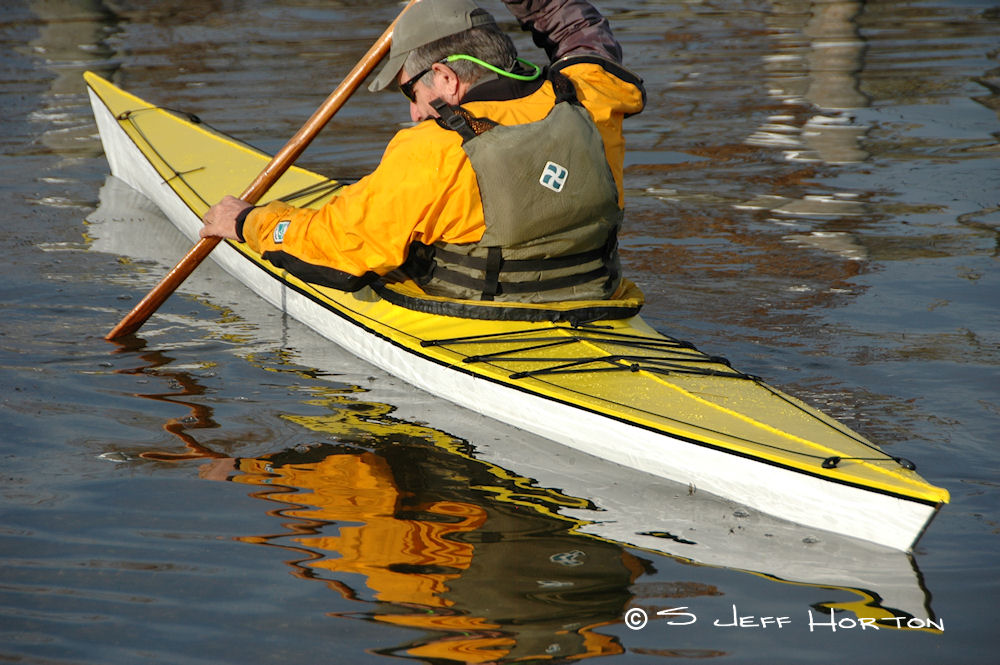
She is finally done and Launch day finally arrived. I hated that it took at least 3 weeks longer than it should have to get it finished, But a nasty sinus infection that took two rounds on antibiotics kept me out of the shop. This is my wife’s new boat and I was trying hard to get it done in time for her to take it for a paddle. But the weather turned cold and so did the water. She is not ready (or willing) to paddle in the cold so unfortunately she will not get to paddle it till next year.
Since the last update I have installed the bronze rub strips, deck bungee and perimeter lines. All of these are pretty basic items but very essential! The color combination was my wife’s and I think it came out really nice.

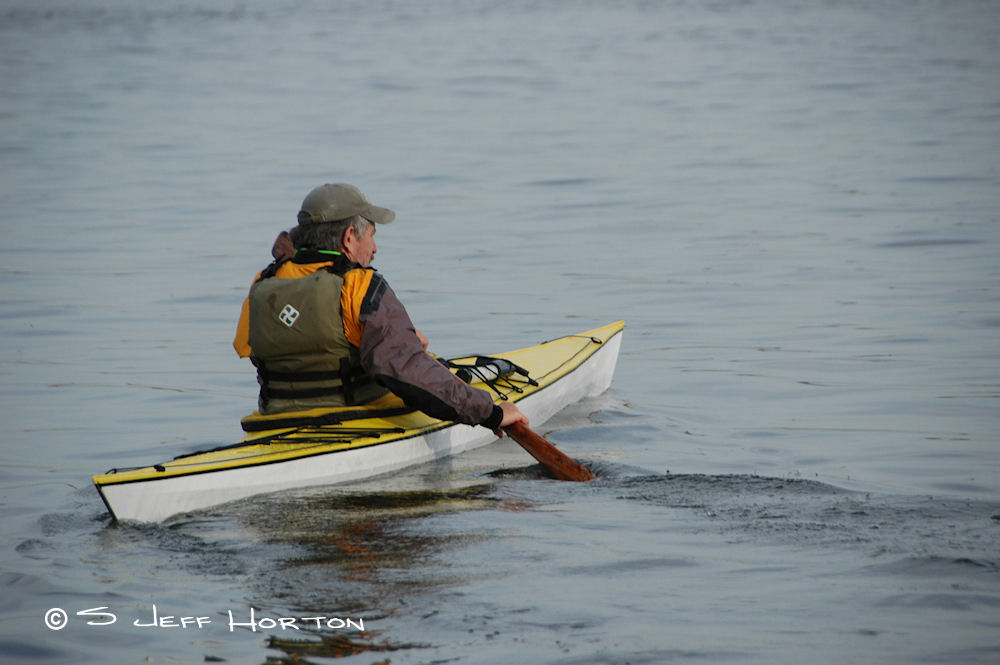
We took it to the ramp near our house to get some and make a brief paddle. First thing I noticed was the volume. Compared to Shad and Sling Shot, which I paddle most of the time, it seemed quite large. It is not really, it is just those are small boats compared to this one. After adjusting to its size it was actually quite comfortable. Back band feel at a perfect height, new coaming design was very comfortable and despite higher volume, I didn’t bang the paddle as I expected.

Second thing I notice was how quick it turned at low speeds. This is the difference in hard chines and the multi-chines shape. This hull has no abrupt corner and water seems to slide under the hull much easier. The difference was very noticeable! Leaning the boat to turn it felt much different than the hard chine boats. It’s hard to explain but it felt safer and like I could lean a lot more before it would capsize. But I didn’t test that, even in my drysuit I really didn’t want to swim.

I only paddled it around for maybe an hour but I liked it. Past that I will hold off on any judgments till I spend more time in it. We will see if it has any bad habits that hasn’t let me see yet.

ss-25 ss-24 ss-27 ss-26Now for some totals. Labor ended up at  46 hours 17 minutes, Of course I have built a lot of these so you should expect to spend a bit more than that.

Materials were $526.16 Keep in mind This is for a well equipped boat. Not cutting any corners on this boat or wasting any money on unneeded items either.

I am going to do another blog and break down the costs and talk about some of my choices for this boat. Mean time I can tell you I did some quick figuring and by skipping some of the items like the Redfish Seat, brass rub strips, etc. you could cut the cost down to under $350.


Building Short Shot – part 7

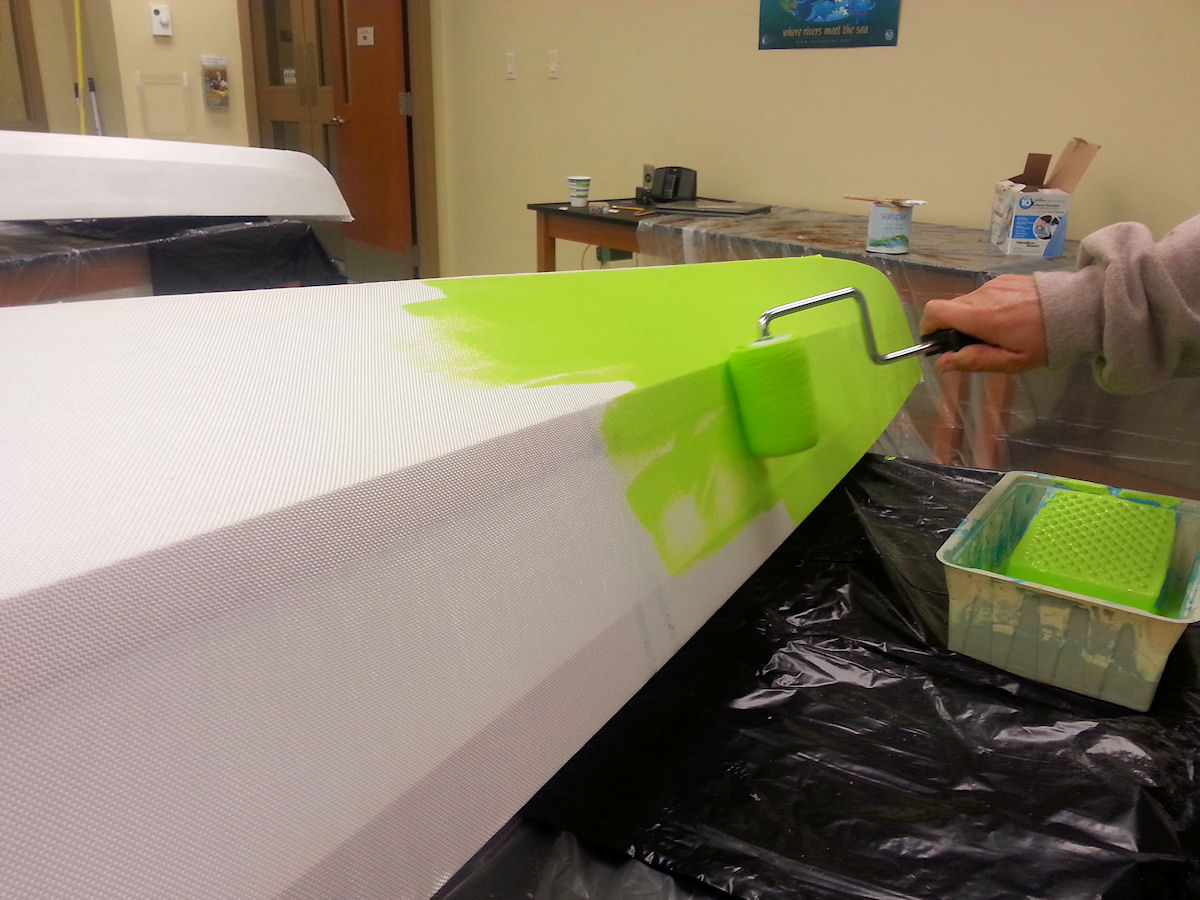
We are in the final stages of this build! The client (my wife) wanted a two-tone paint job which is no big deal, done several of those. But then she told me she wanted a third color, a black stripe between the yellow and white. This could get interesting!
10155175_10152857752083637_3146700171828702359_n[1]

I was concerned about laying out the stripe and keeping it even. I debated over ways to do this and finally decided that I would try just doing it by eye. I have always had a good ‘eye’ for proportions and styling. Worst case was I pulled off the tape and tried something else.

I taped it off and stood back to check my work and was really impressed. There was one section right at the coaming that was slightly off but overall it looked great and that one section was an easy fix.

With the painting now done all that is left is deck rigging and adding the brass rub strips.

10407065_10152868674548637_7053745604893262592_n[1] 1467336_10152868674633637_4366544975802705400_n[1]

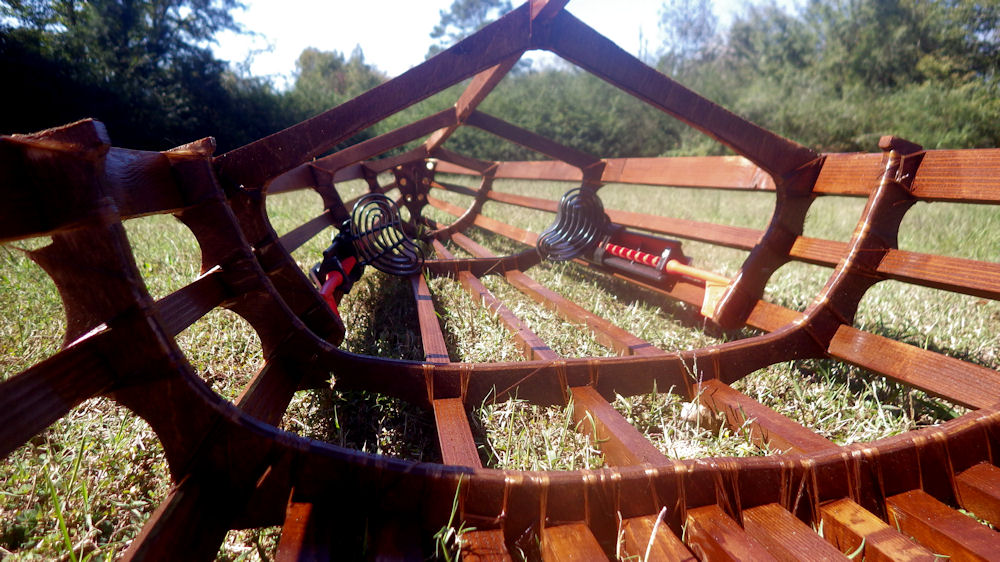
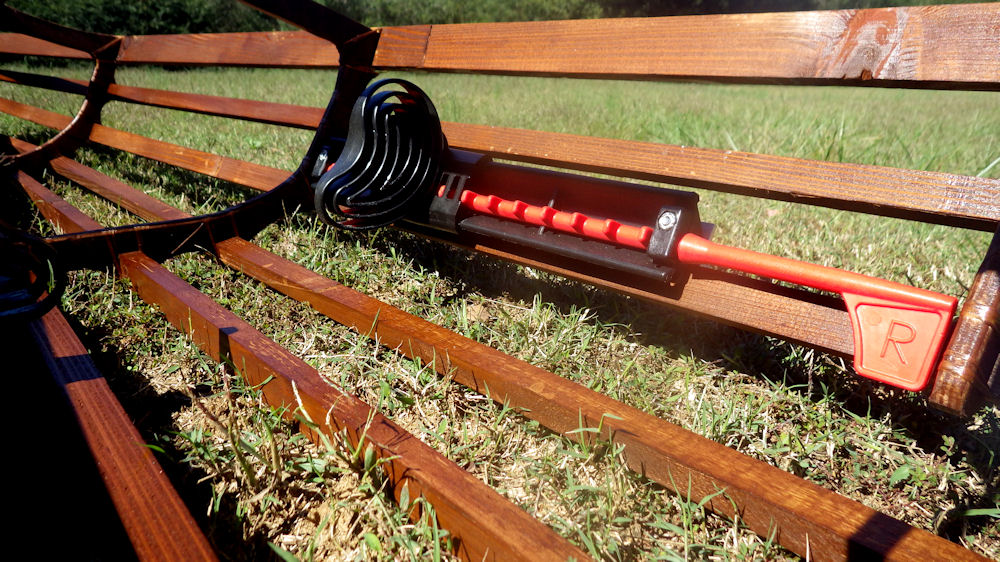
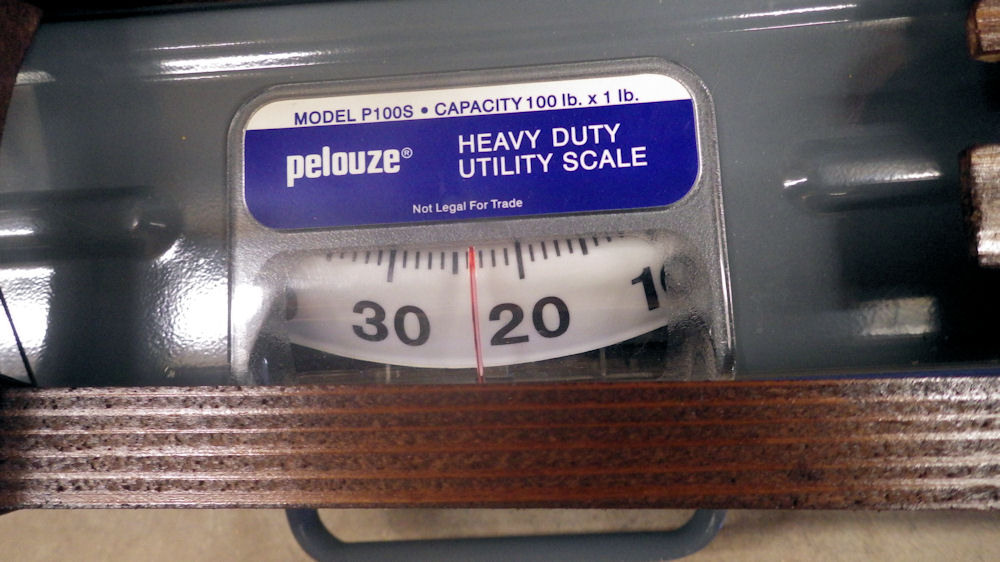
At the moment I have 42 hours and 59 minutes…. lets just call it 43 hours labor. The cost stands at 480 dollars. I still need the brass rub strips and the deck rigging. So it looks like I will be under 50 hours and  just a little over $500 in this one. I just put it on the scales and it weighs 33 lbs. You can’t buy a 33 lb, 17′ kayak for $500!

If you remember I predicted this one would weight 33 lbs when it was finished. Looks like I will miss that, I am going to add about another pound with all the rigging but that is still pretty close to what I was hoping for.


Building Short Shot – Part 5 – Skinning

I am at least a week and  a  half behind on this project. Yet another sinus infection has stolen any strength or will to work I have had. Today was the first time in well over a week I have been able to be productive. I have gotten in an hour here and 30 minutes there, but you don’t get much accomplished that way.

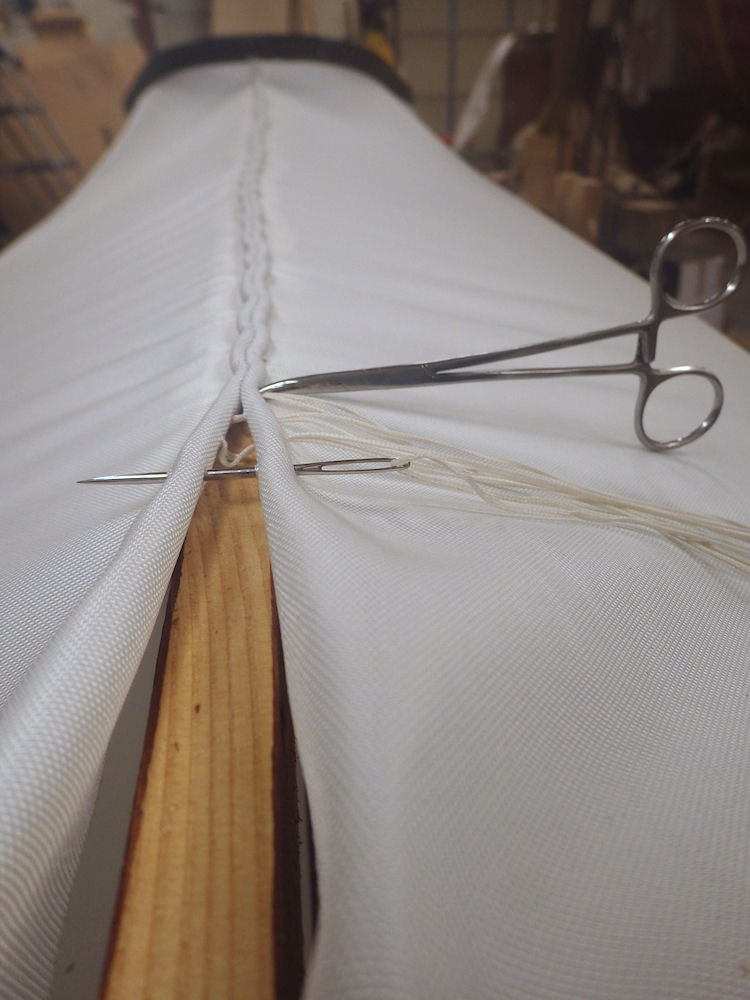
As of tonight I have about 75% of the skinning completed. I am using the Double Corded stitch with the 11.7 oz fabric. This has become my go-to fabric/stitch combo. As I have said before, the fabric is a little stiff and a little hard to get the needle through but the weave is so tight you can really pull it tight around the frame.

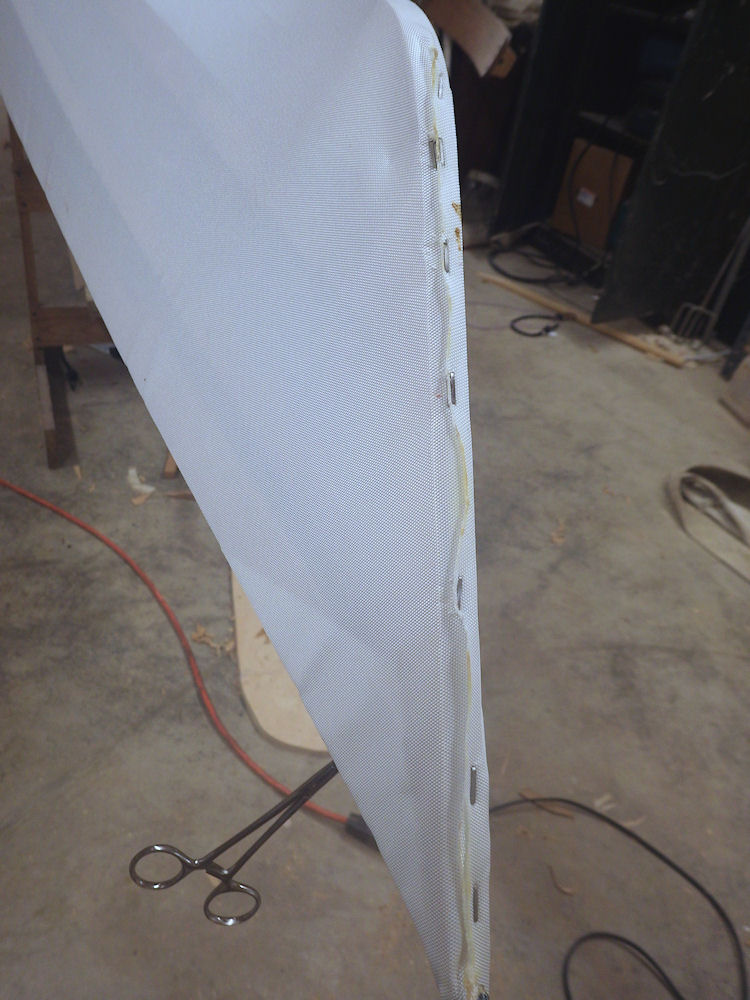
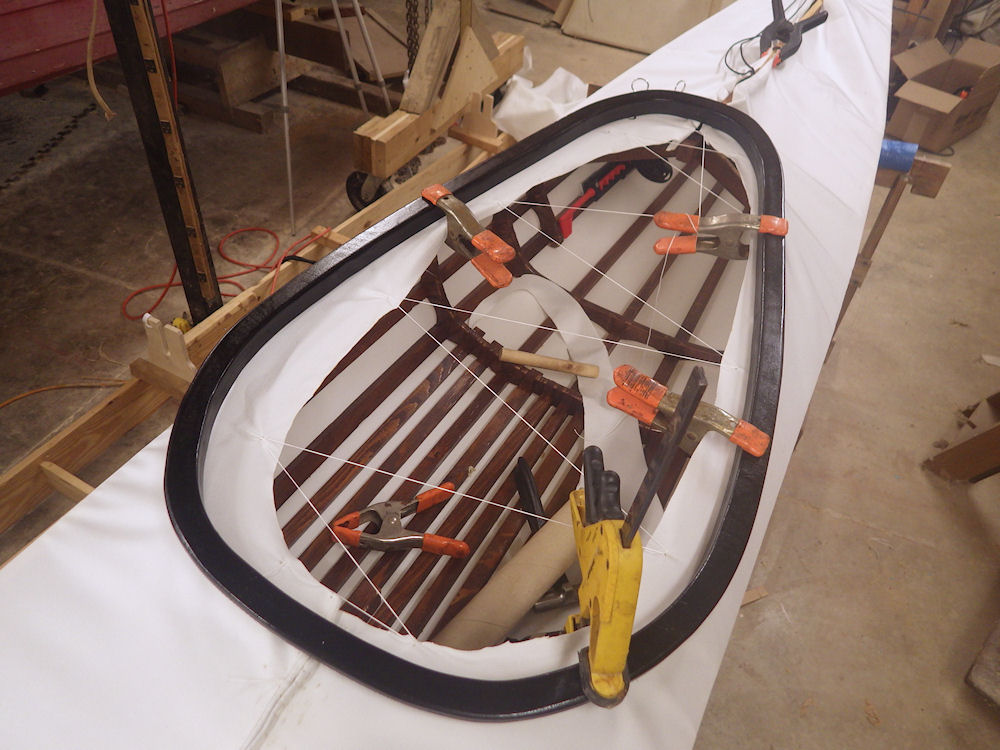
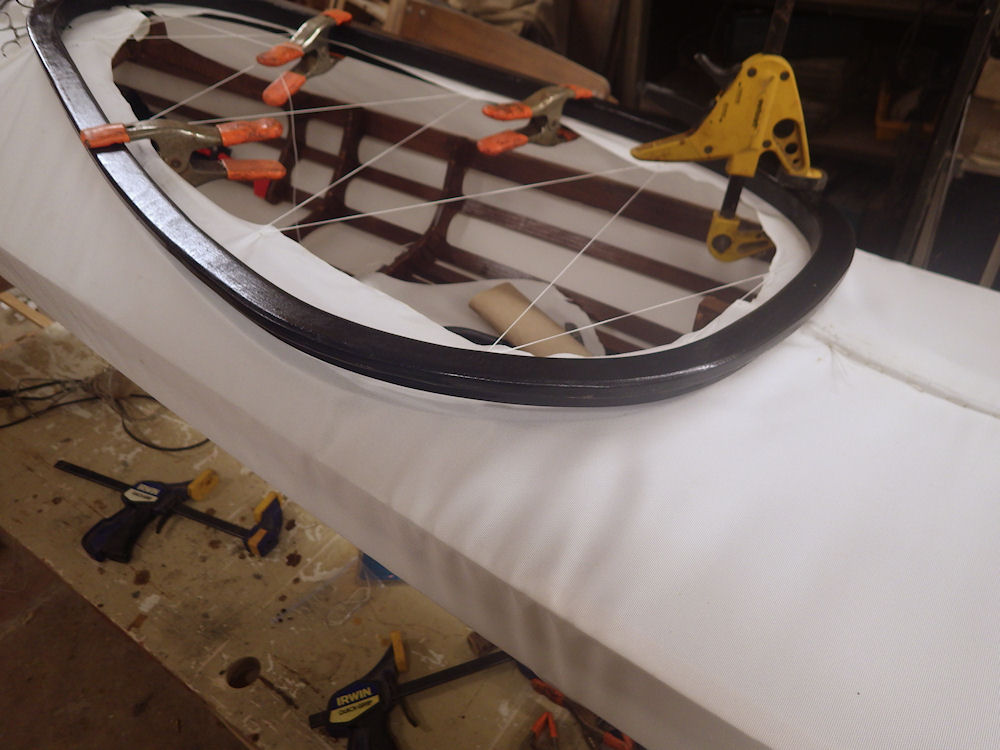
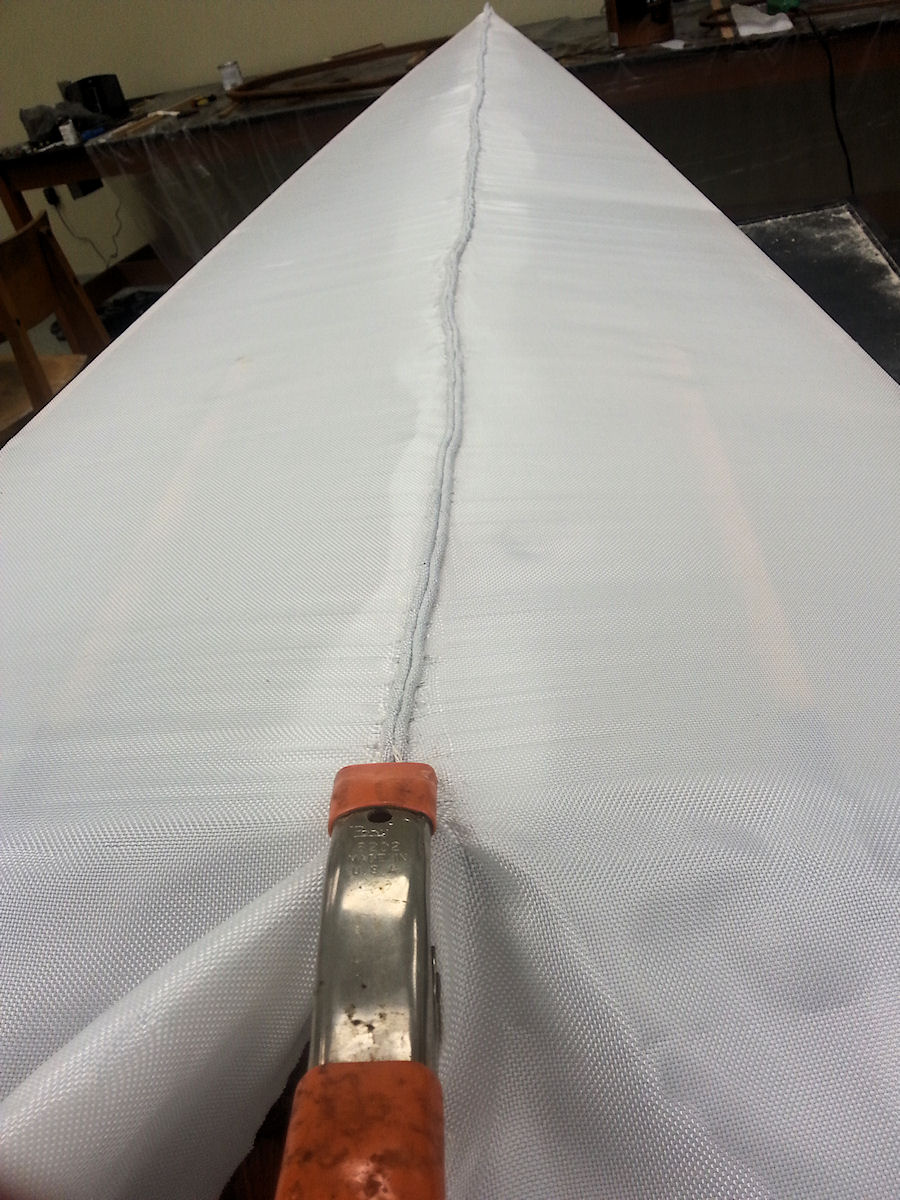
ss-17I ended the stitching by just wrapping it around the end of the boat so that is just out of sight. Sorry, I didn’t get a photo. On the ends I trim the fabric and staple it in place with stainless staples.  This will all be covered the with bronze rub strip (stemband) screwed in place. ss-14Because the fabric has such a tight weave I was able to try something new. I laced the fabric inside the coaming and then pulled it tight. I could easily over tighten it and deform the lower coaming ring so I clamped the top ring of the coaming in place and then tightened it. With it tight, I could how everything fits and if I have any problems.

ss-15The only problem I have is some wrinkles at the back corner. This fabric doesn’t shrink like the 8 oz. does, so I want to keep wrinkles to an absolute minimum. These shouldn’t be a problem.  What I can’t pull out I should be able to shrink.

ss-16

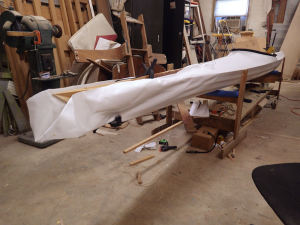
Here she is when I quit. Assuming no relapse of my sinuses I expect to finish skinning tomorrow.ss-18

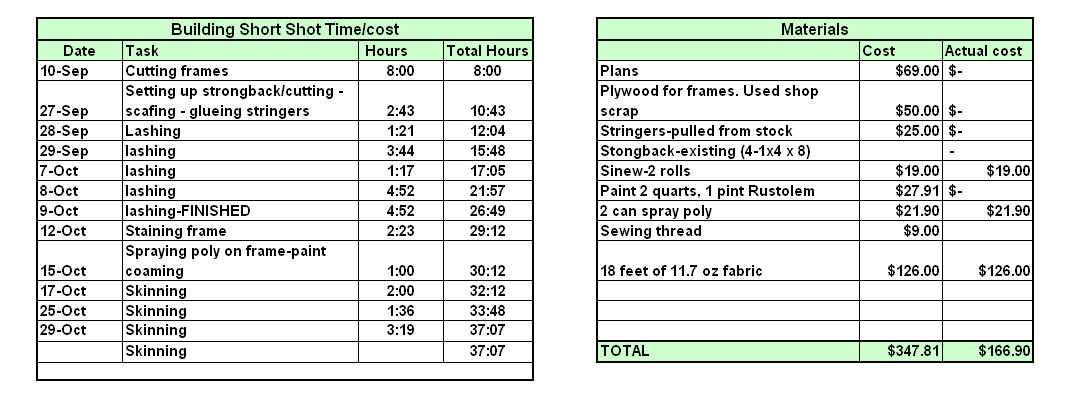
I wanted to post my chart of the time and cost so far.  I still have to adjust a couple of the cost figures, so this will change a little bit. But the time stands at 37 hours so far.  I expect to be in the low 50’s when all is said and done.

ss-19

Building Short Shot – part -4 FROG photos

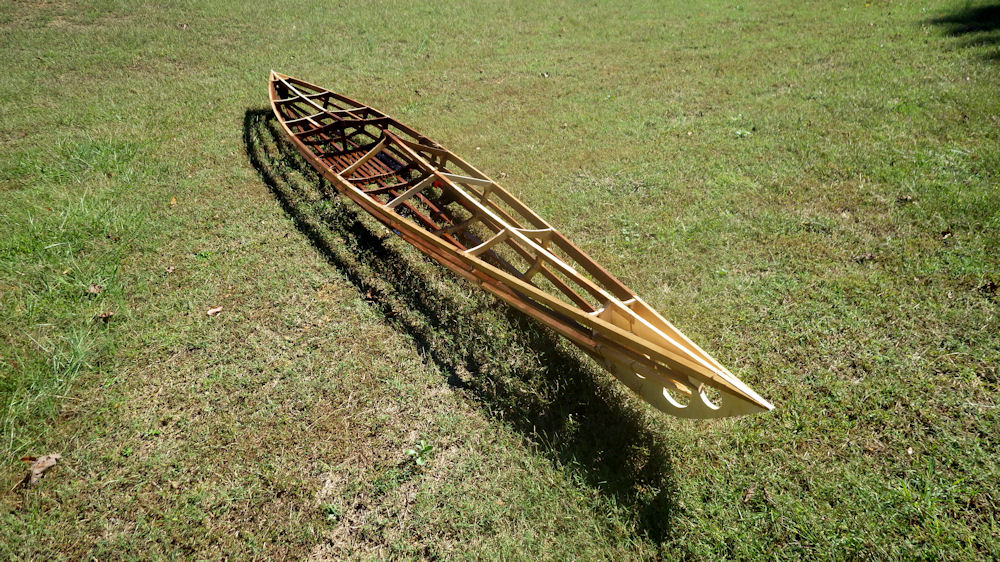
No build is complete with FROG photos. FROG is term I coined because everyone always takes they finished frames out and takes a photo of it in the yard.So much so that is practically a requirement on my forum now. It needed a name so FRame On the Grass photo.

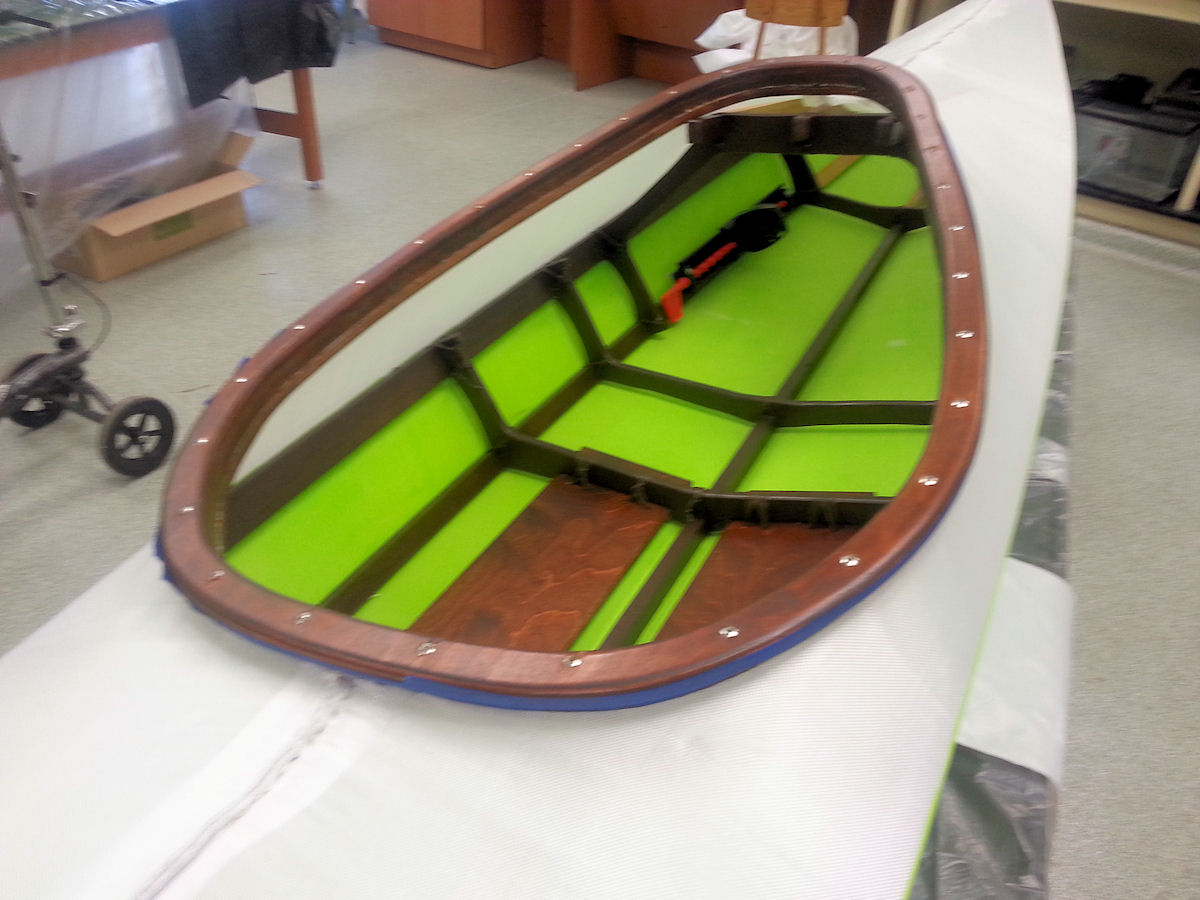
ss-8ss-9If your paying attention, yes, you see sections on the frame with no stain on it. We just stained the areas that will show when you look through the cockpit. It’s such an annoying job we took the easy way out. Next time I will stain everything before assembly or I will spray on an aniline dye. Brushing on stain is no fun!

I decided to take the easy way out and I bought two cans of spray polyurethane rather than have to brush on the poly. The cans are expensive at $10 each but it is well worth it to me!

So far the costs are $229.90. Labor stands at 31 hours (rounded).

I am about to start skinning and I remembered to weight the frame, I think it is showing 23.5 lbs but I am going to call it 24 lbs. That is heavier than most because of the mult-chine design. Therefore there is a lot more wood in this frame than a typical single chined boat.  By the time it is skinned and rigged I expect it will be pushing 35 lbs. Just for fun I will predict 33 lbs, ready for the water.   ss-10 ss-11 ss-13


Building Short Shot – part 3

I want to start by clearing up something. I have received a lot of suggestions, comments, ideas, etc. about how to fix the problem with lashing all the stingers at once. Obviously I was not clear in my last post because I don’t see a problem. I used to be concerned about ‘What if’ a lashing broke, but in all the boats I have built I have never had a lashing fail. So, there is no need to glue the sinew. Tie of a knot between the lashings or any other fail safe. It should work just fine the way I have done it. So everyone calm down and stop worrying. 😉

Now, back to business. I finished lashing the frame today.It is ready to come off the strongback but I was tired and didn’t want to fool with it. And it is easier to do some things with it still tied down.

When I quit tonight I had 27 hours of labor into the frame. Materials costs are around $160. As I said in my last post this price is close but will change a bit. I had a lot of the materials in my shop and I have to check on current prices and adjust these.

Speaking  of costs, I ran out of sinew and had to ‘buy’ a second roll. I started with an open roll so I probably could have gotten by with one roll. But most people use to much and end up buying a second roll. so that was included in the cost. But I bet I didn’t use more than 30′ off the second roll.

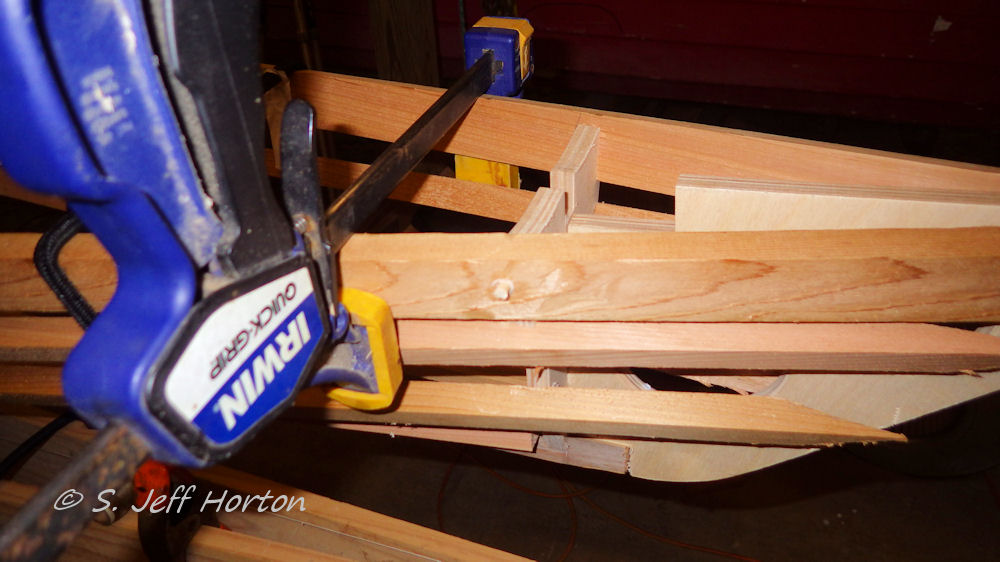
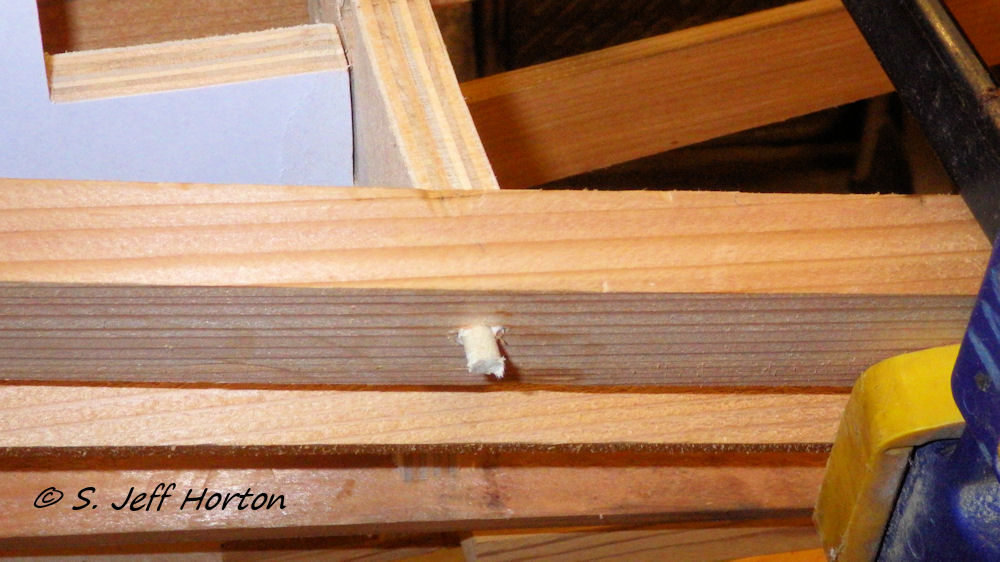
ss-4 ss-5I ran into a problem at the stern. The keel decided that it wanted to do an impression of a banana. It was causing the stern to twist out of alignment. It wasn’t to hard to push it back into shape but I was concerned it would, over time it would get out of alignment. I decided the simplest way to stop this was to insert a couple of dowels through the stringer and into the frame. This would keep it from sliding around and twisting out of shape. Then I lashed it all together as normal.

This will not fix with all alignment issues but it was a good solution for this one. Here are a couple of photos. And just to be clear, I DO NOT recommend this for all joints. There is no reason to do it unless you just have an unruly stringer as I did.

ss-6 ss-7After these photos were taken, the dowel was cut flush and the joint was lashed as normal.


Building Short Shot – part 2

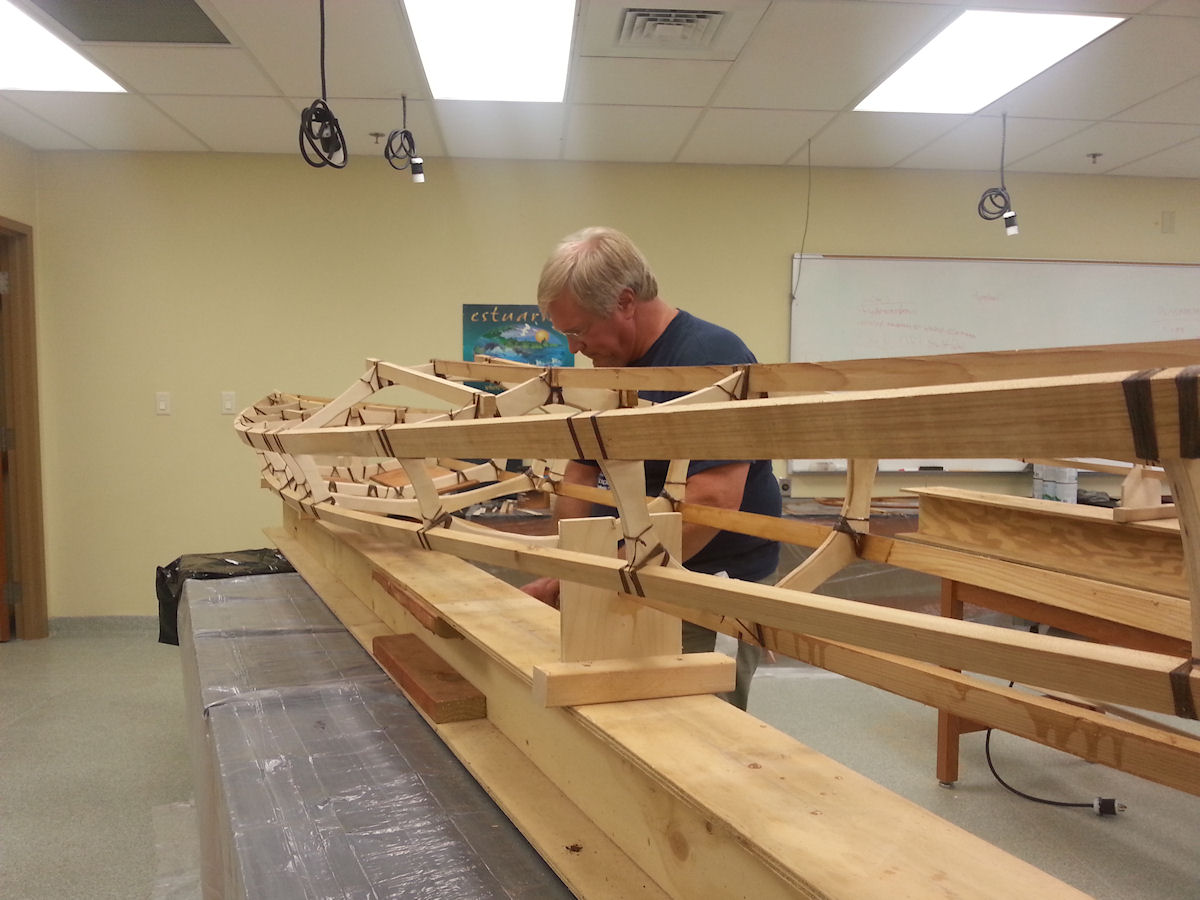
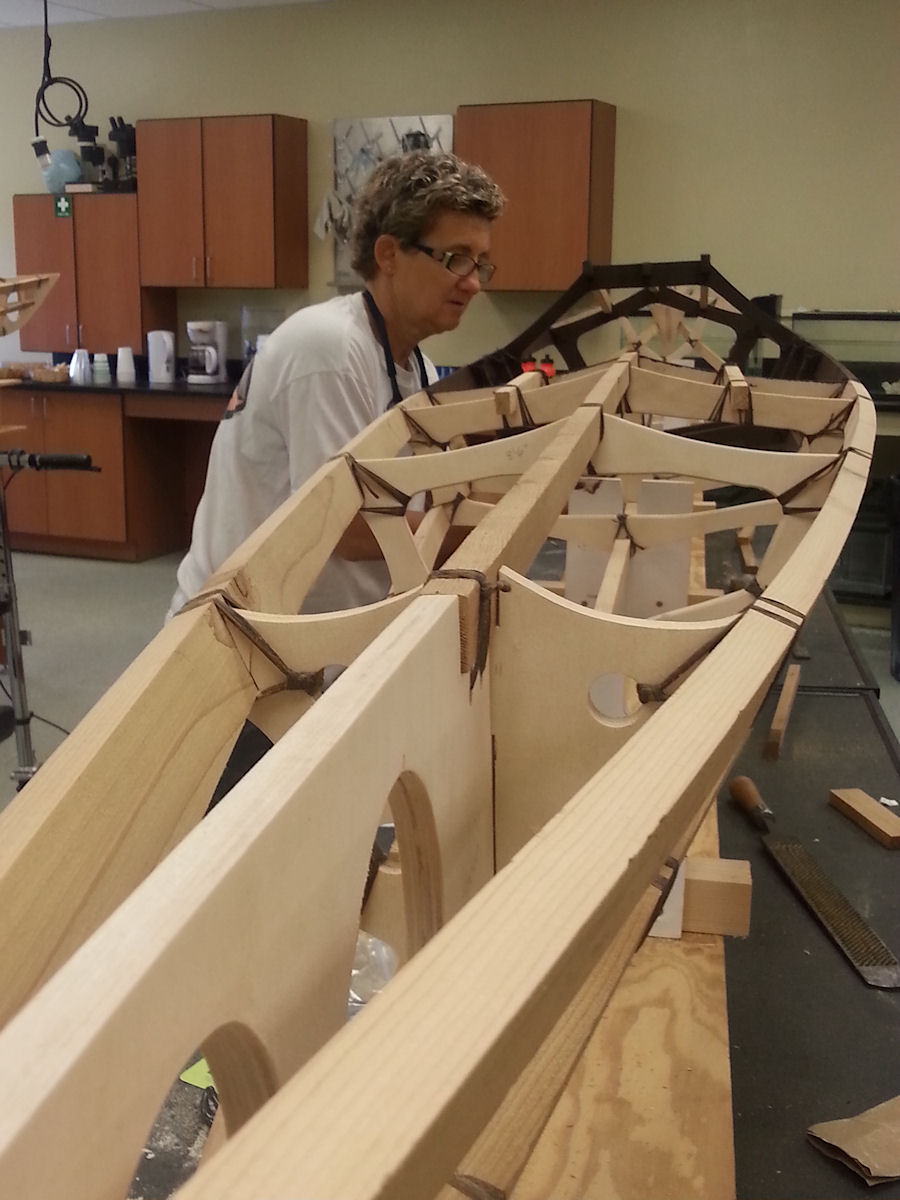
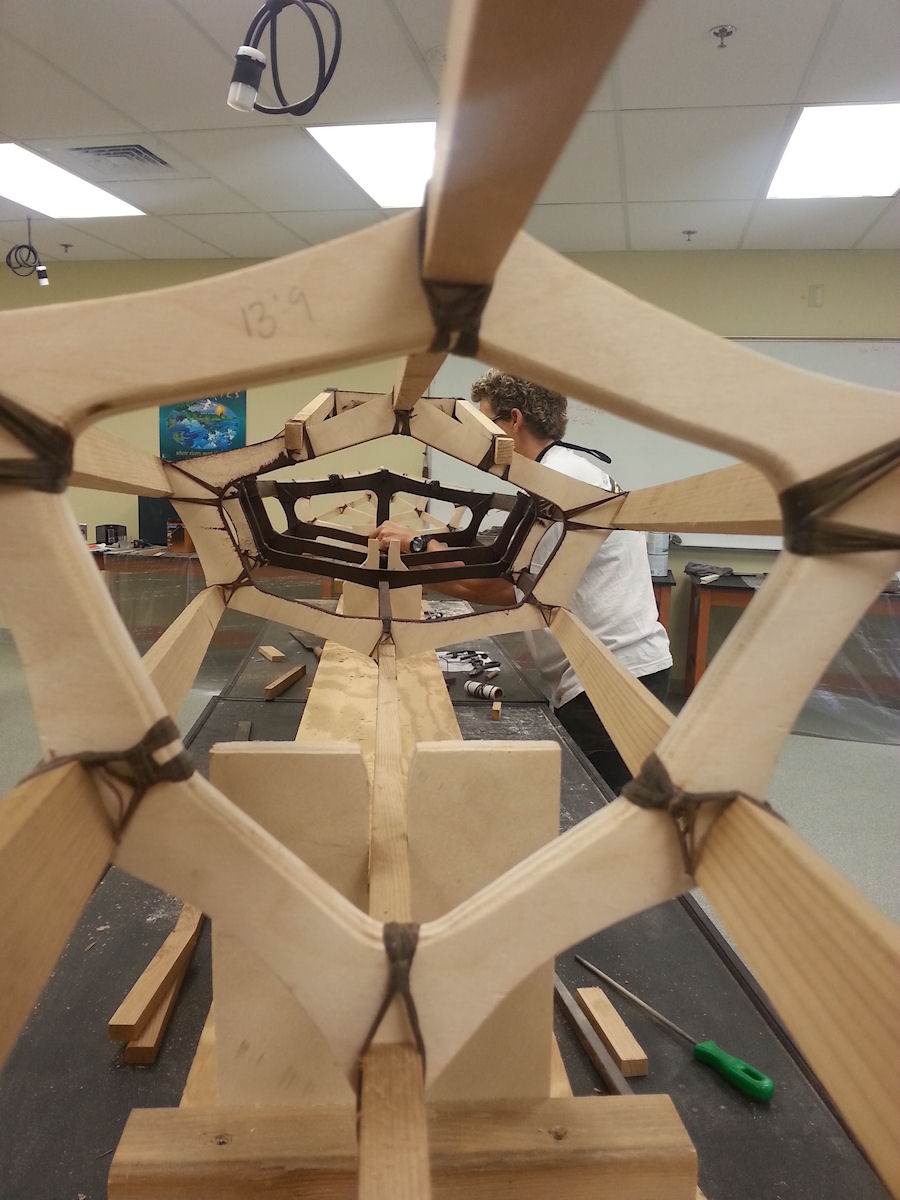
This boat is going together quickly. Part of this I attribute to stumbling on a much faster way to lash the joints. I have always done them one joint at a time. Since this boat is multi-chined there are a lot of joints. Matter of fact, there are 9 going from one gunwale to the other. I have always been a little concerned about lashing all the joints instead if lashing them one at a time but I decided to give it try.

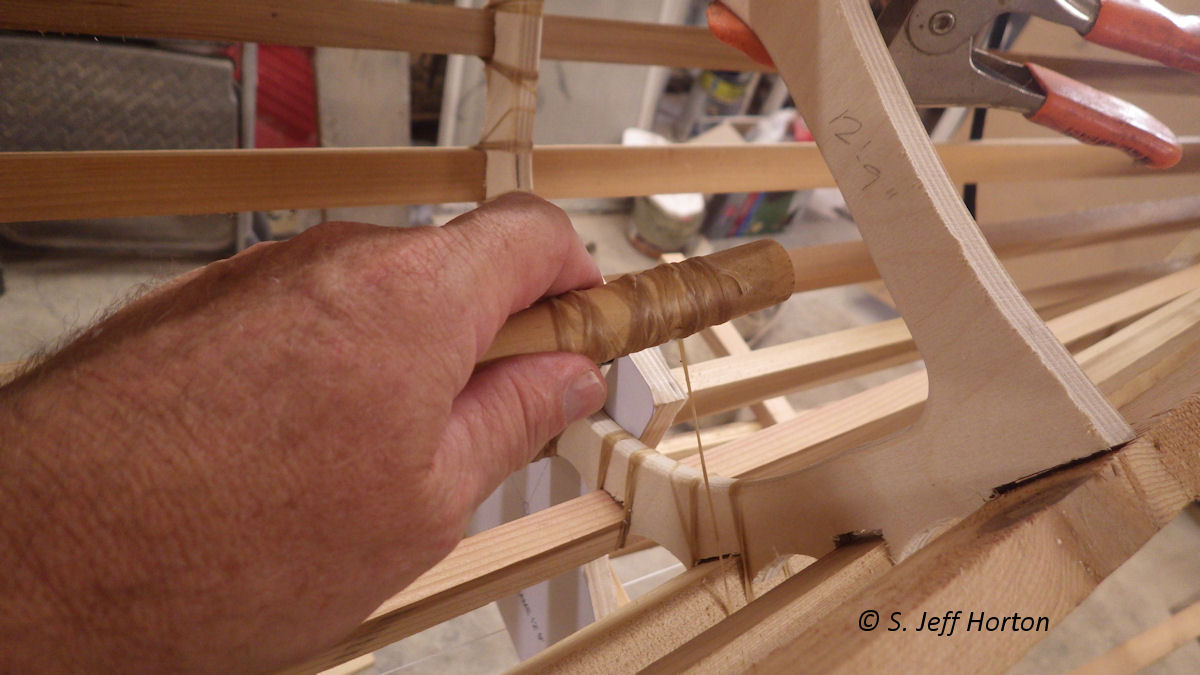
I pulled off nine times as much sinew as I normally do. I quickly realized this was going to be a mess so I cut a piece of 1″ dowel and wrapped the sinew around it. Once I tied off the end I started feeding the dowel with sinew around the gunwale. Right off the bat I found it saved a little time because I didn’t have to find my dowel or a block of wood to wrap the sinew around to pull it tight. I just used the the spool I had the sinew wrapped around.

Since I don’t have to tie it off, cut a new length of sinew, tie the stopper knot and then start lashing 9 times I have found it is MUCH faster. I suspect it is at least  twice as fast as doing individual lashings. My only concern was if a lashing breaks or is damaged and having nothing to stop it from coming undone. Of course, I have never had a lashing break in all the boats I have built so I don’t really see this as being a problem.

So far I have 16 hours labor in it and the cost to this point is $150 (rounded off). I estimated a couple of those figures so that may change a little.  That includes so far, plans, plywood, cedar for the stringer and sinew. I don’t count the strongback because it is not part of the boat and it can be taken apart and recycled for another use.

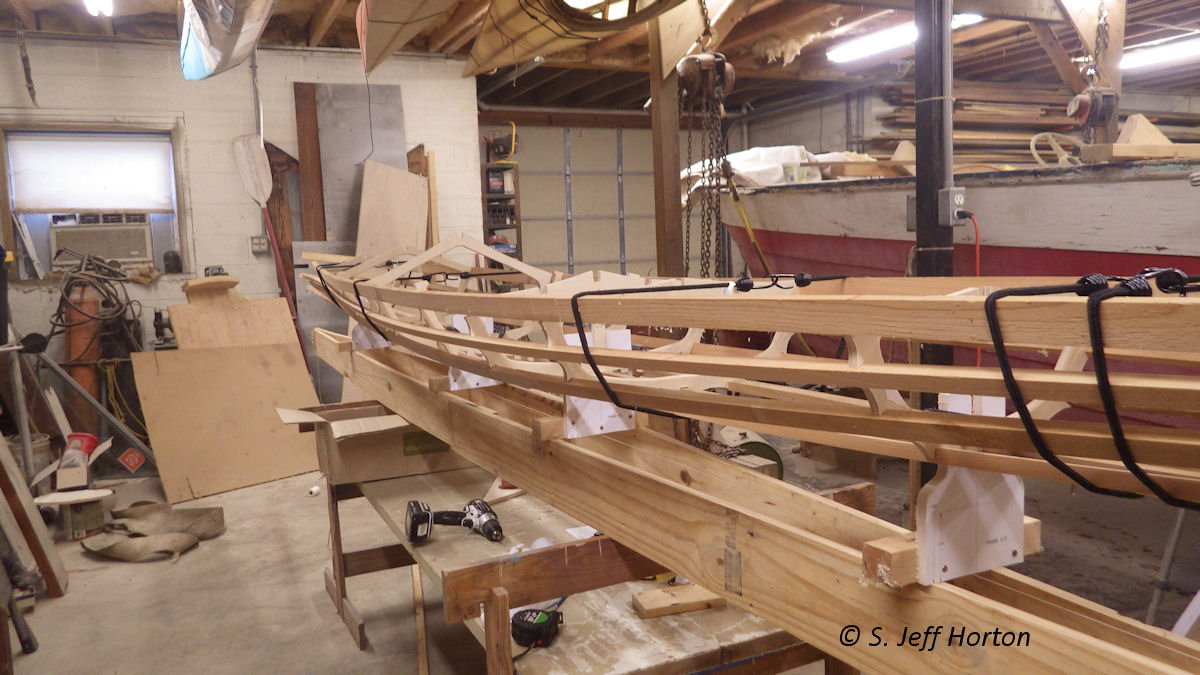
Stringers and frames held together with bungees.

Stringers and frames held together with bungees.

Lashing the frames

Lashing the frames

Frame starting to take shape.

Frame starting to take shape.

Building Short Shot – part 1

Recently I had a discussion with a client in the forum about the cost of building a boat. His values seemed high to me and I realized he was counting some things other than just his materials. In the course of the discussion I realized that prices have raised enough that my low end figure of $300 was probably not realist for most people. Thinking about costs I started wondered what a ‘well equipped’ kayak, like I typical build for myself costs?

I just started a building a redesigned Short Shot, for my wife, so I have decided to keep track of the time and costs of building this boat and document the building process too. I have a lot of spares and scraps lying around I can use that cost nothing. So, I decided to keep track of two costs, actual costs and what it would have cost me if I had to buy it.

For example I managed to cut all the frames from scraps lying around the shop I have been saving. If you have to go buy it, a sheet of plywood is about $50 in most places so I will use that figure. Stringers, I had the wood in the shop and just pulled it from the rack. It is hard to find so I whenever I see good wood, I buy it. I will have to call the lumber yard and get a price for what the wood costs is.

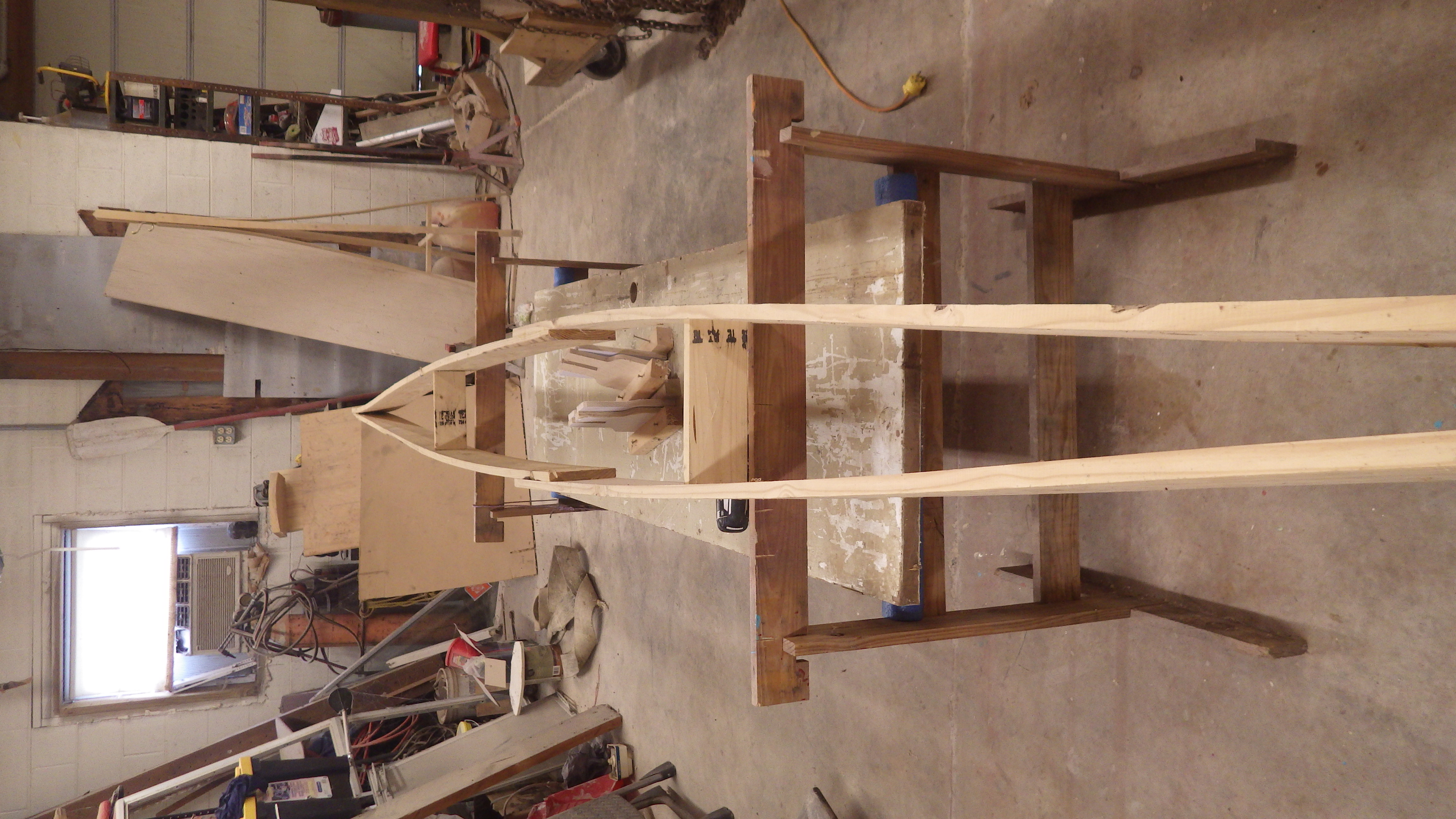
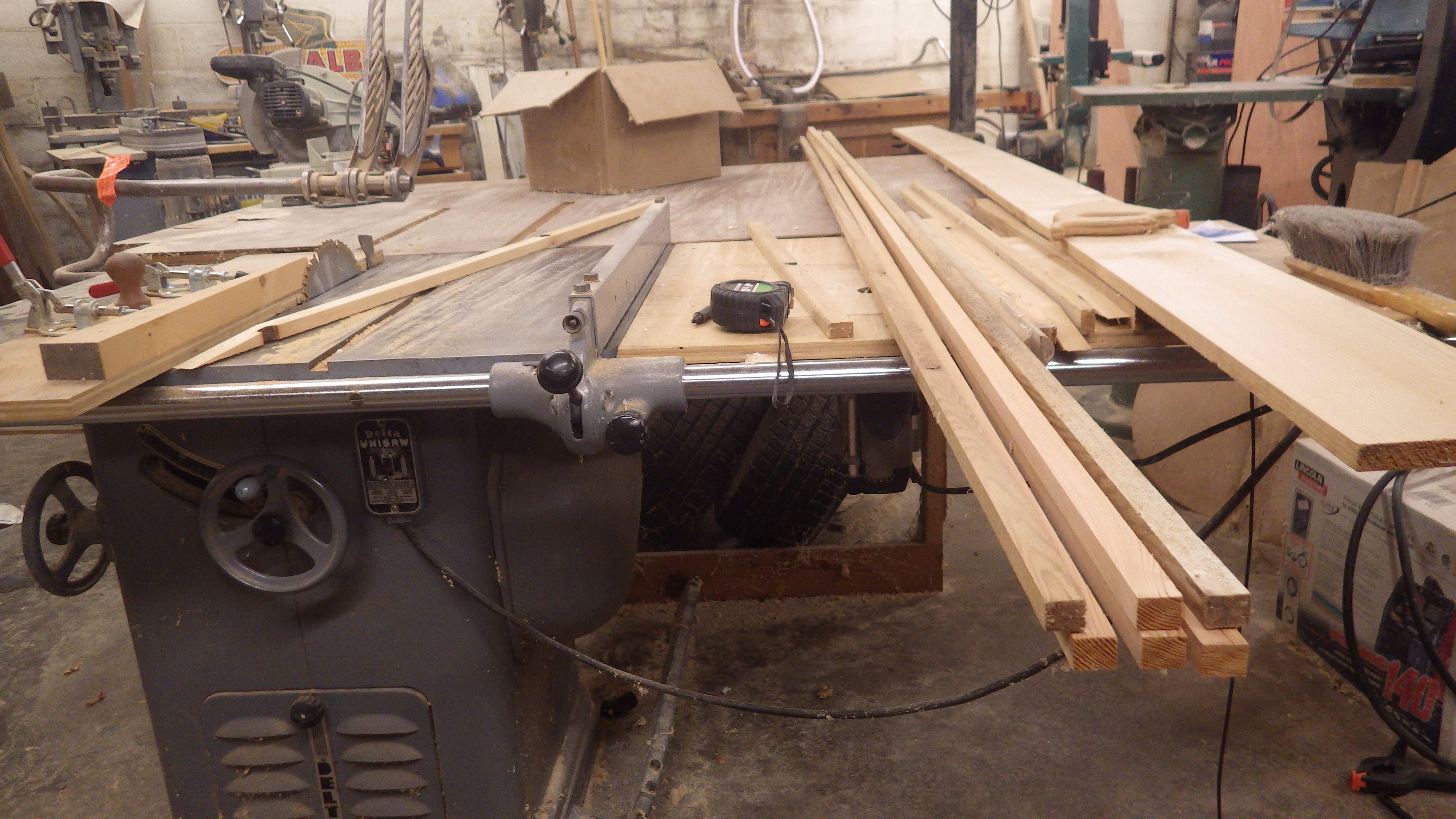
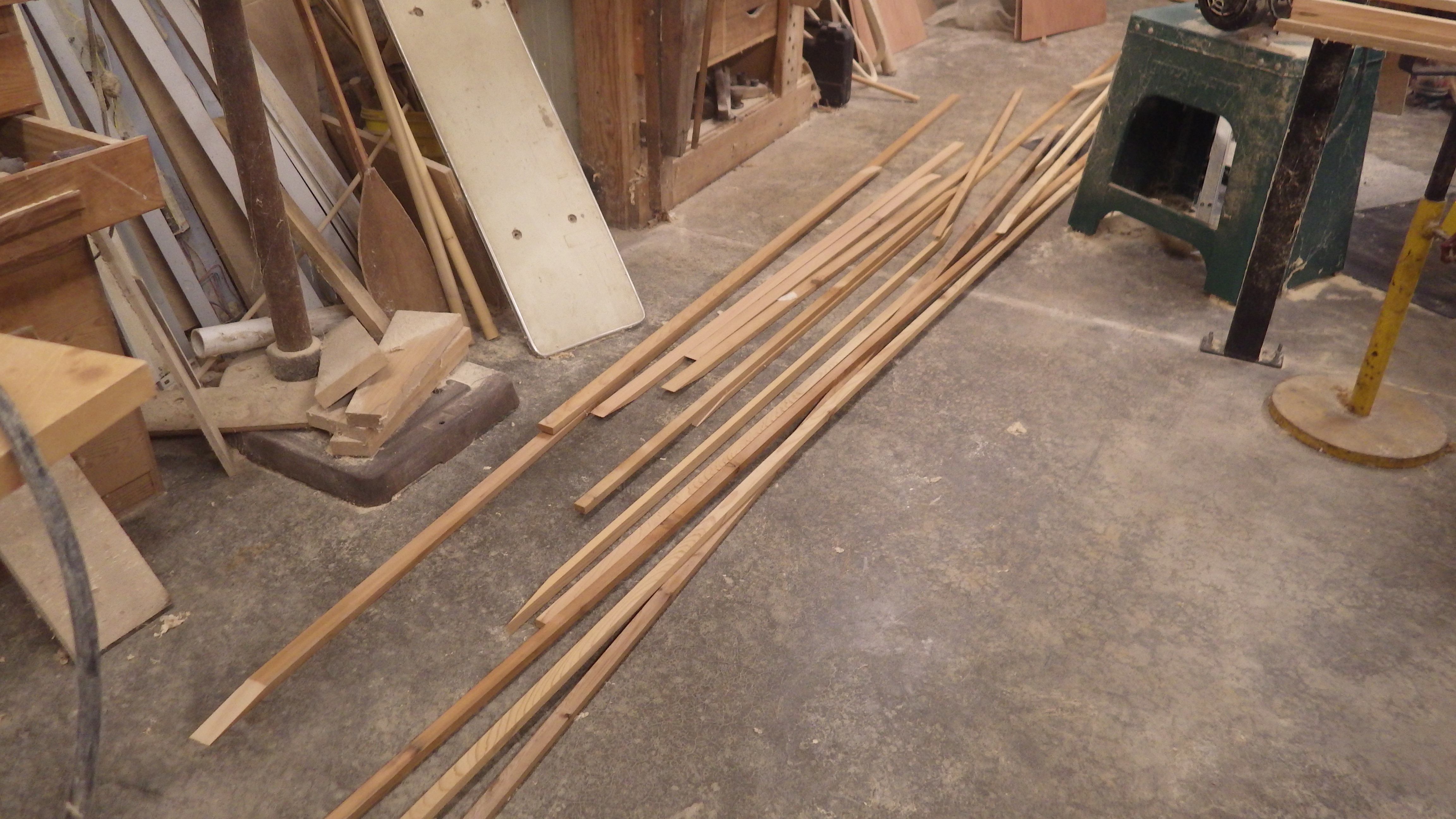
As you can see from the photos, I have the frames made, the stringers cut and scarfed and glued. At this point I have 11 hours (rounded) in it. I didn’t keep track of my time cutting the frames since I did those a couple of weeks ago but because I cut so many I have gotten really quick at it. To be realistic I used 8 hours for the frames. That is about what it took me when I started. Then 2 ¾ hours to cut the stringers, cut the scarfs, glue them and set up the strong back.
Once the glue dries I can start actually building the frame.

Clamshell strong back

Clamshell strong back

Cutting the scarf joints on my table saw with my scarfing jig.

Cutting the scarf joints on my table saw with my scarfing jig.

IMGP1336

Jigsaw puzzle, ready to be glued up into something useful.

Jigsaw puzzle, ready to be glued up into something useful.

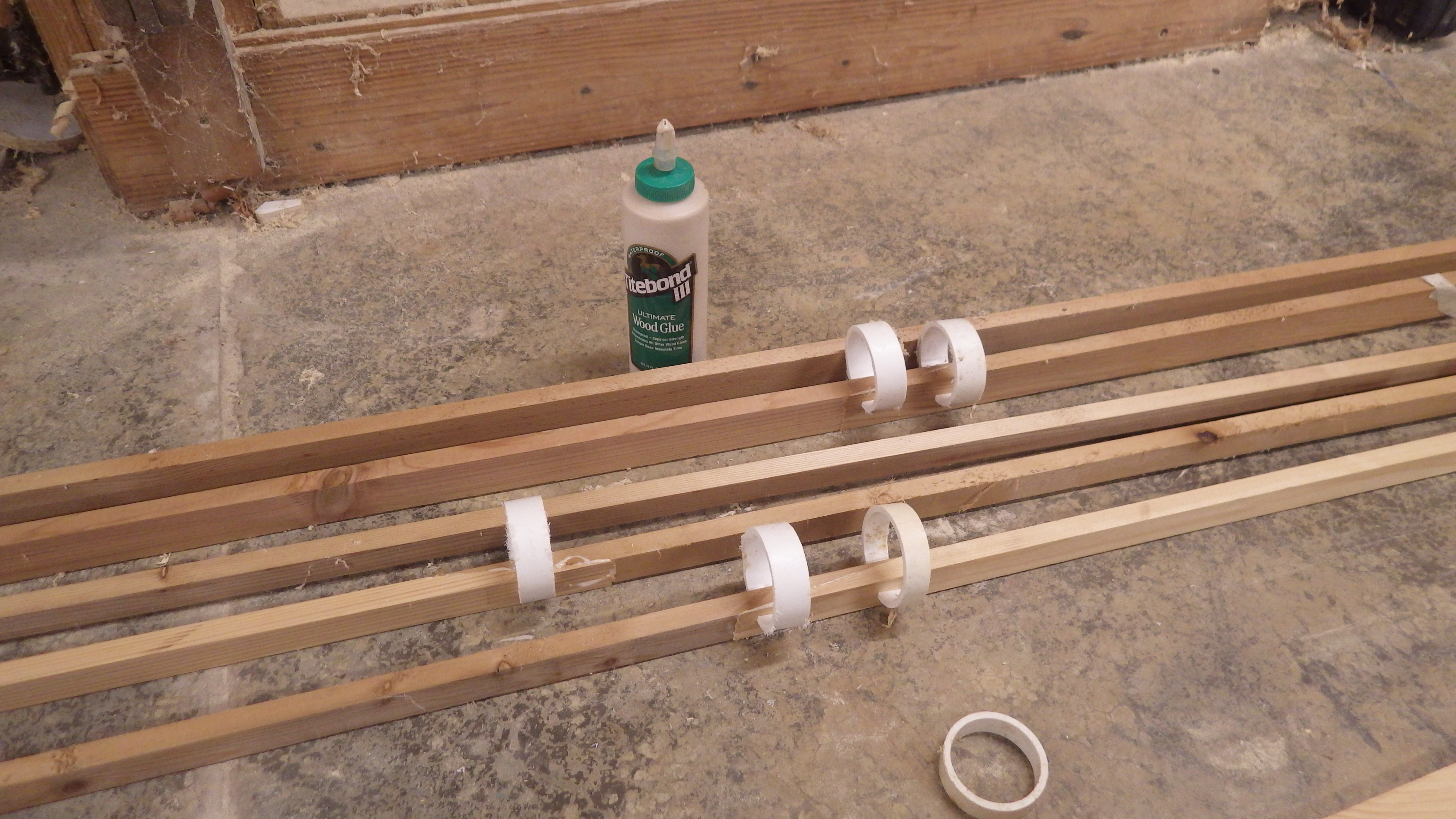
My favorite clamps for this job is PVC pipe.

My favorite clamps for this job is PVC pipe.

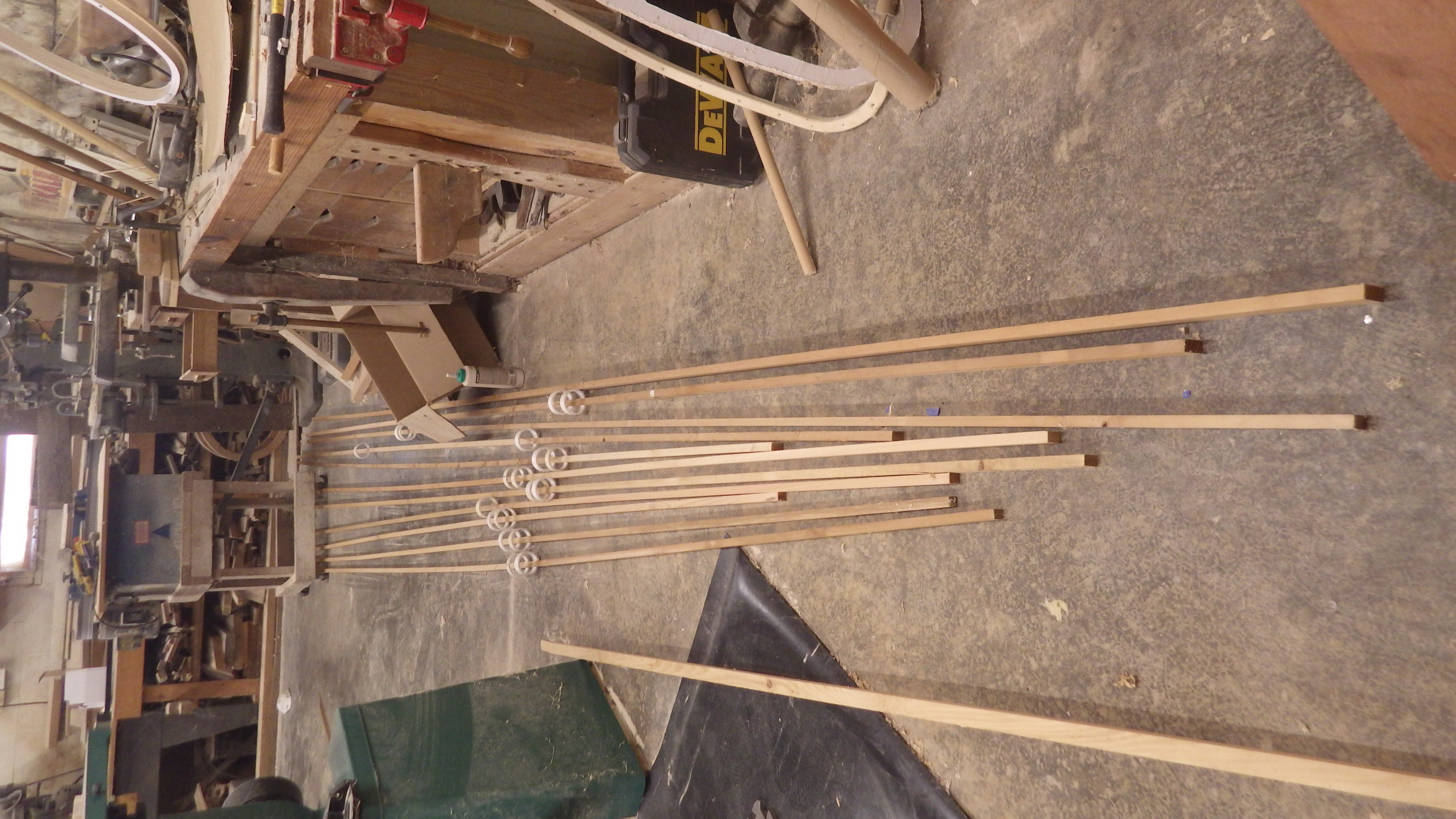
Waiting on the glue to dry.

Waiting on the glue to dry.


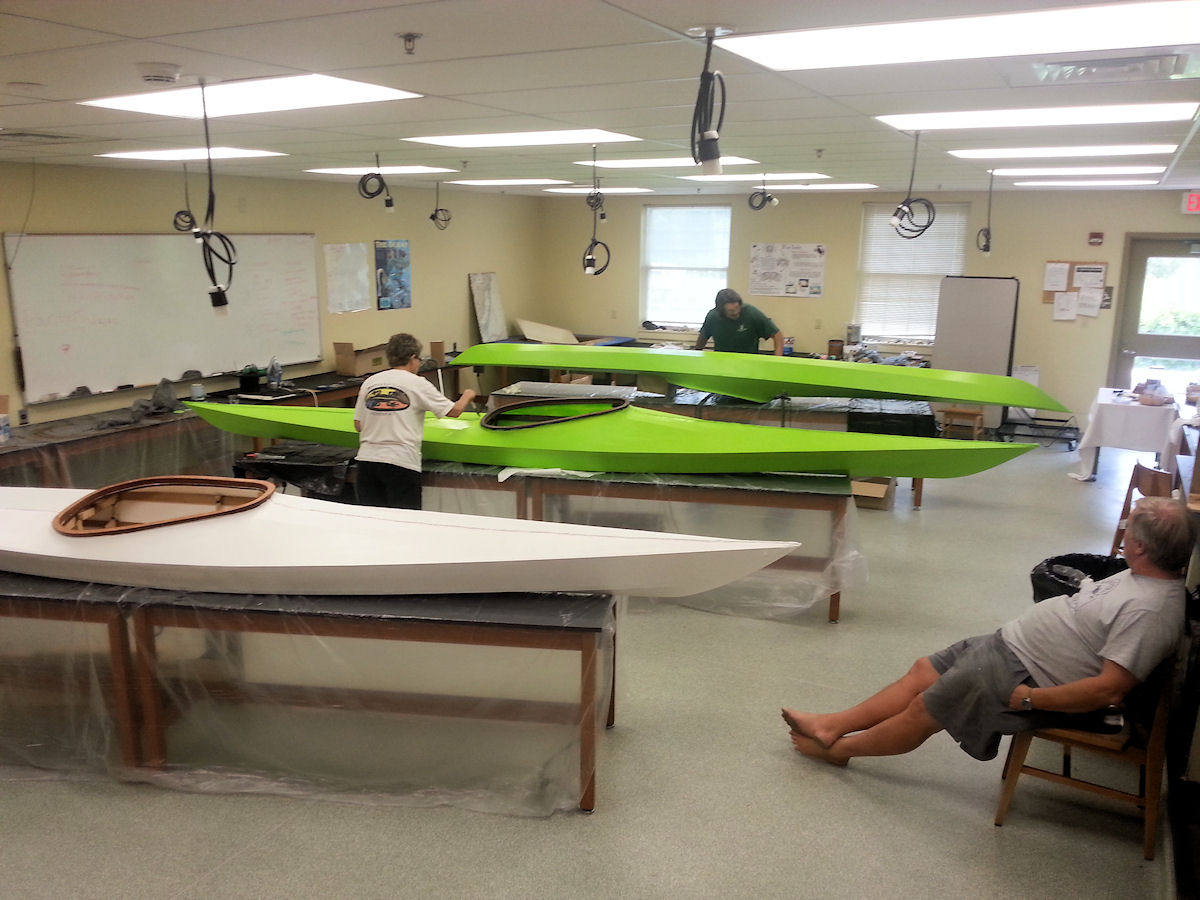
3 boats, 6 days.

Last of of August I was invited to the Chincoteague Bay Field Station, in  Wallop Island, VA to teach a Road Scholar class where each student builds a Fuselage Frame kayak for themselves.

Being a Road Scholar program the staff has also scheduled in field trips such as kayaking, exploring a private beach and educational classes. They also take everyone out to a few local Restaurants. All of which are very good, especially if you like sea food!

The facilities at the Field Station are top notch as is the the staff. As one student said, they over serve you! If you ask for a pencil you will get a handful of them with a sharpener and a smile. The Educators that work with the classes are college grads and most have studied Marine Science or related fields. They are all obviously the cream of the crop and you will not meet one that doesn’t impress you.  The ladies in the cafeteria always provide excellent meals and plan them well. I was last in line one morning and it looked as if they had run out of food. When I got up to the steam table I realized that actually there was just enough for a couple more people. They plan so well that there is just very little waste. It shouldn’t have surprised me because that is just typical of the way everything is done here.

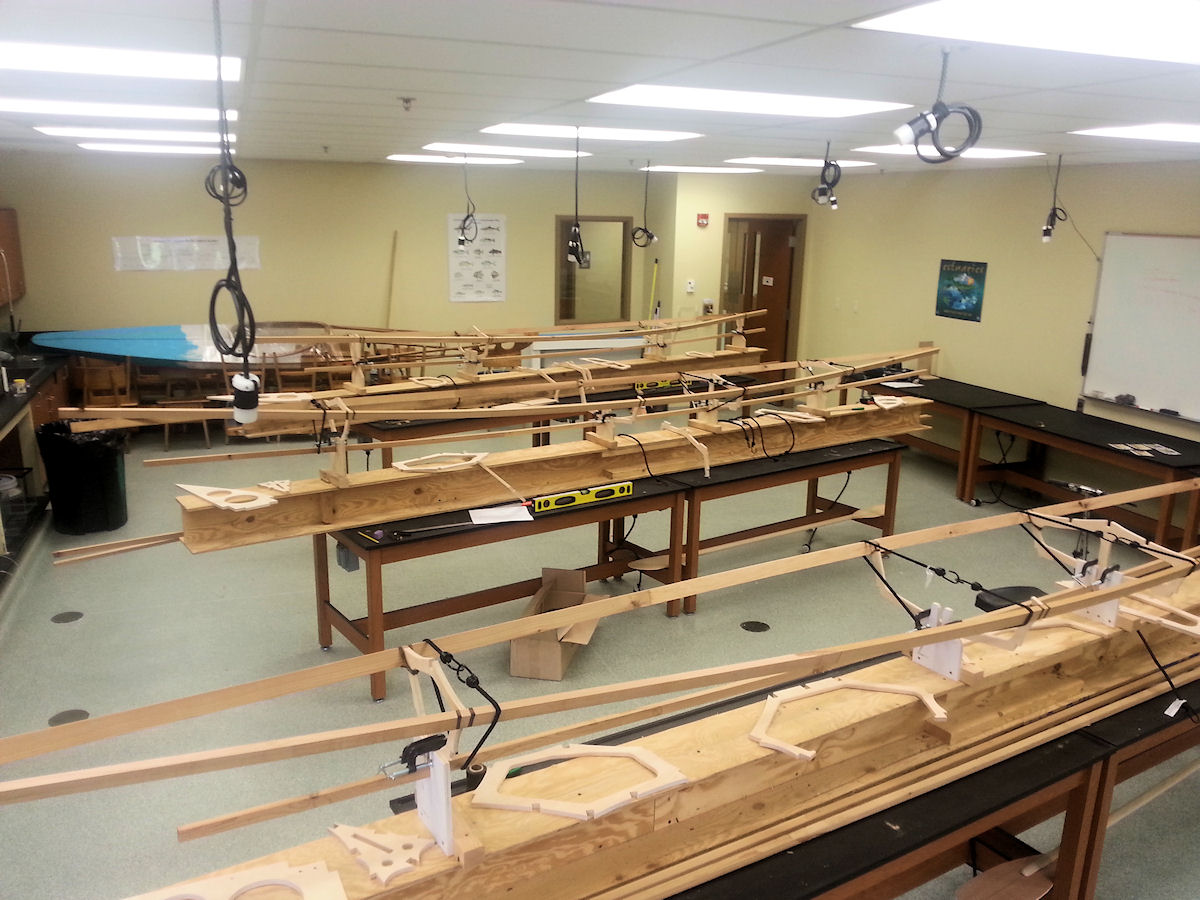
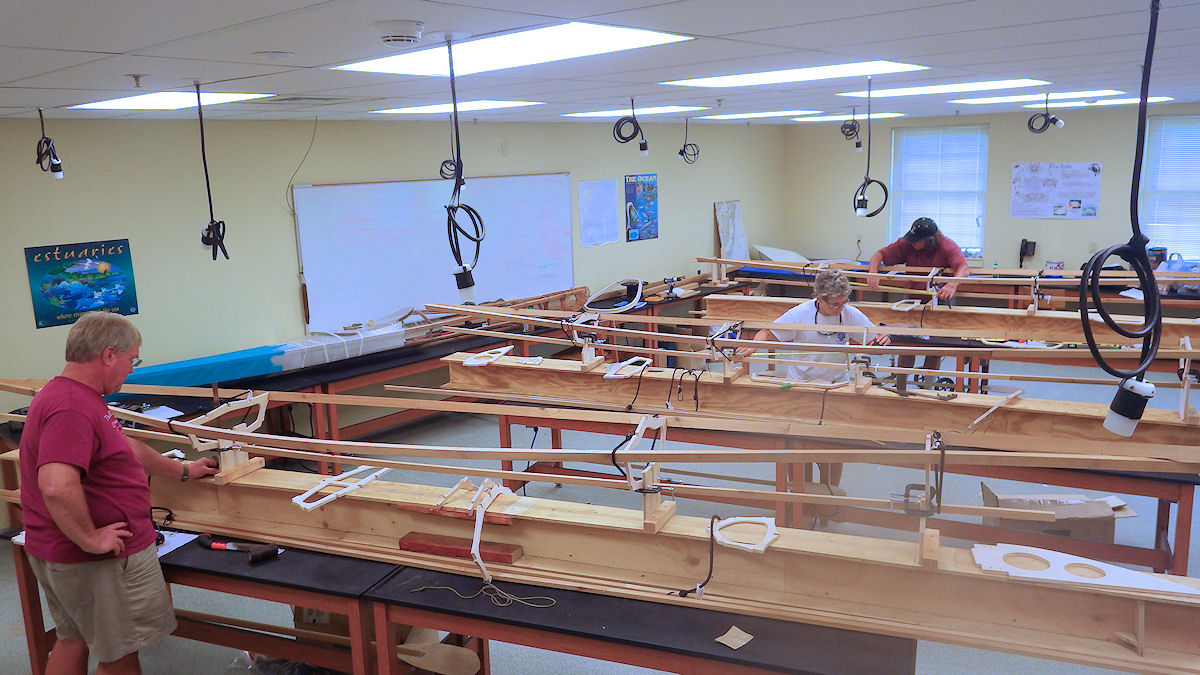
Sunday afternoon the students arrive and check in. I had arrived a day early and prepared my class room ahead of time. I had the strong backs set up, all the tools, frames, stringers, etc. sorted out and arranged at each work station.  It didn’t take long to have the class room in shape so I was free to enjoy a couple of days of paddling.

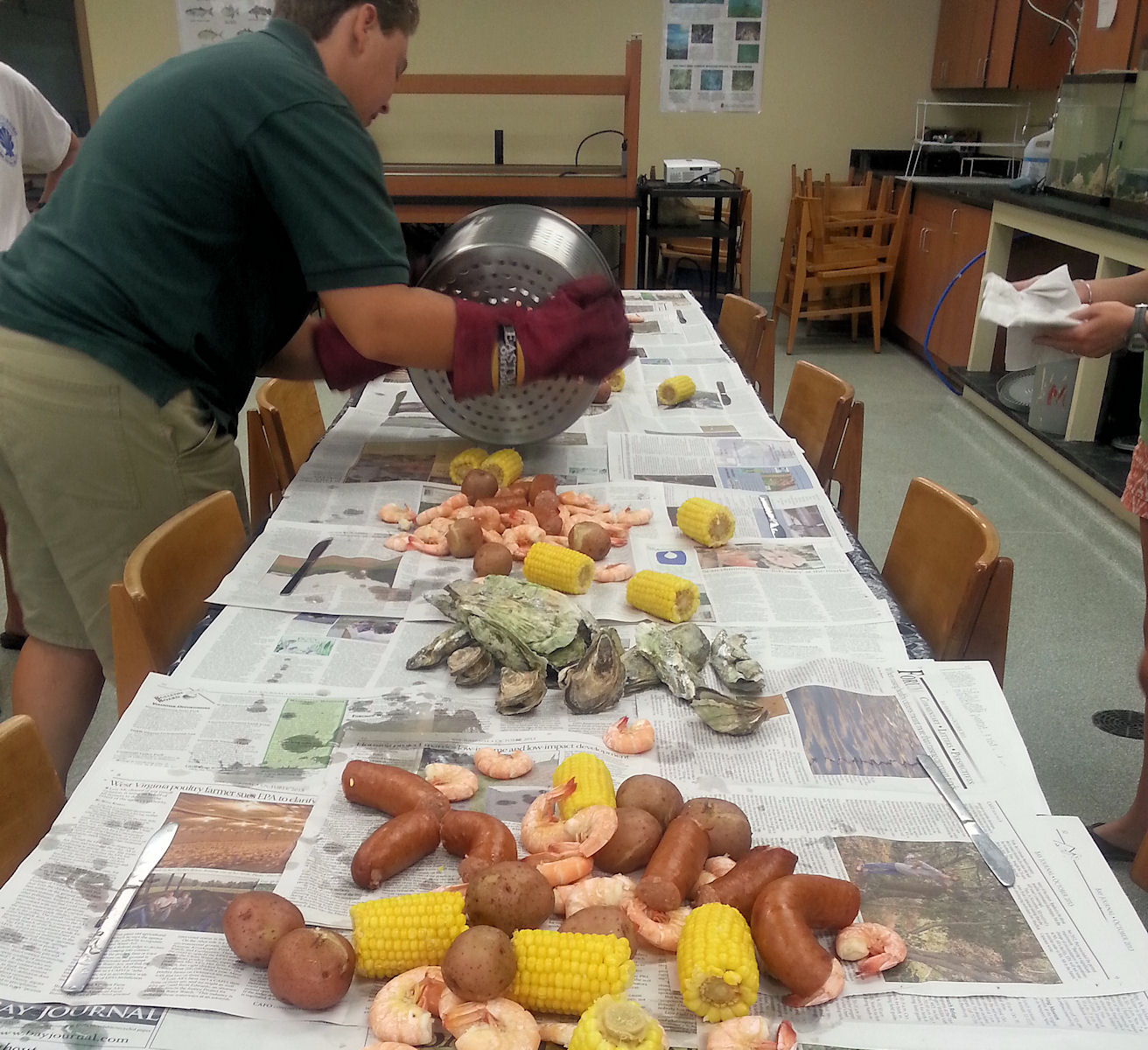
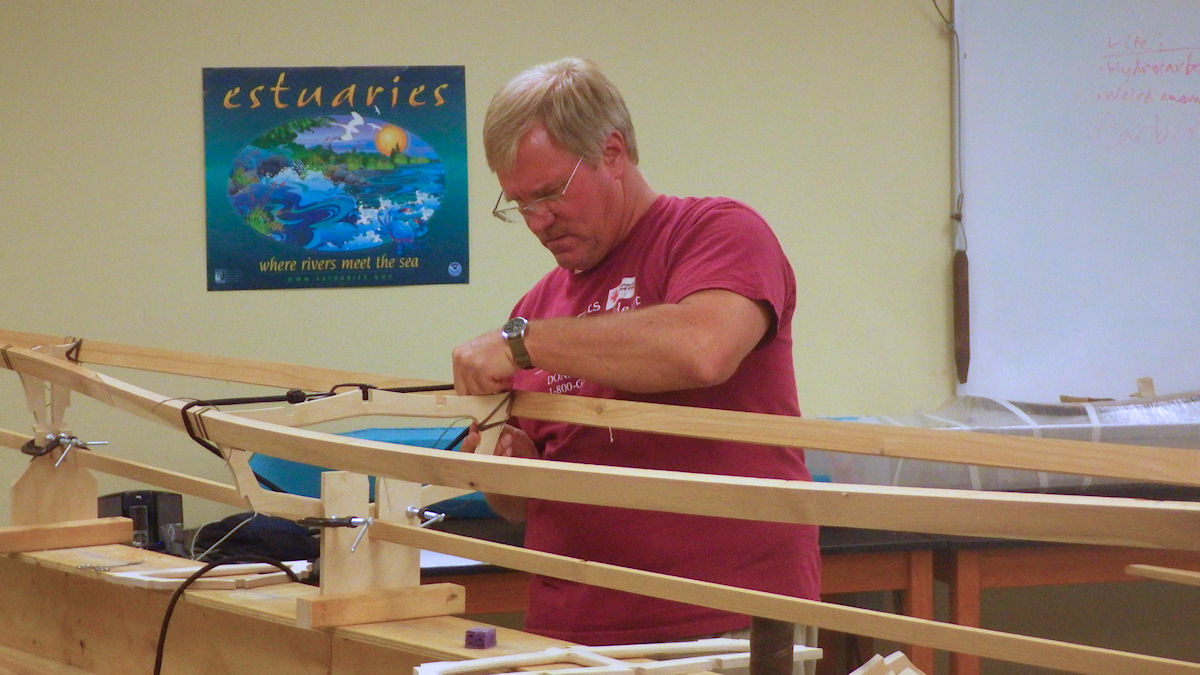
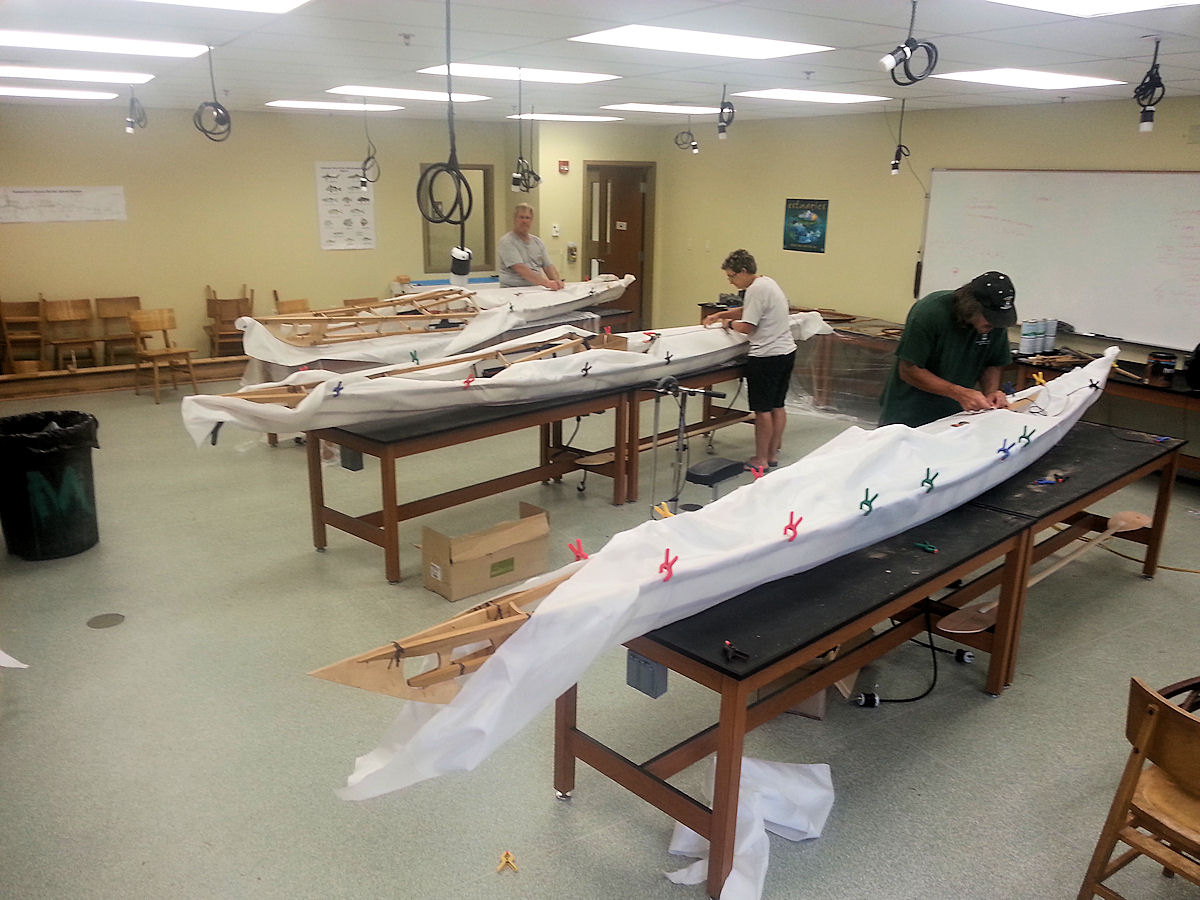
Sunday night I meet with my students, Parker does the introductions and goes over all the formalities and instructions for the coming week. Then my favorite part, The Boil! These folks start the class right, with meal fit for king! After the meal we visit the class room and show them what they have gotten into. I give everyone a homework project too.the boilMonday morning we meet in the cafeteria and have breakfast together and get to know each other a bit better. This year we were building 3 kayaks, two of my Vardo design and a one Ravenswood.  Once in the classroom I get everyone assigned to their stations. I cover some basics about building, teach them the names of the parts of the boat and I try to get them ‘hands on’ as quickly as possible.

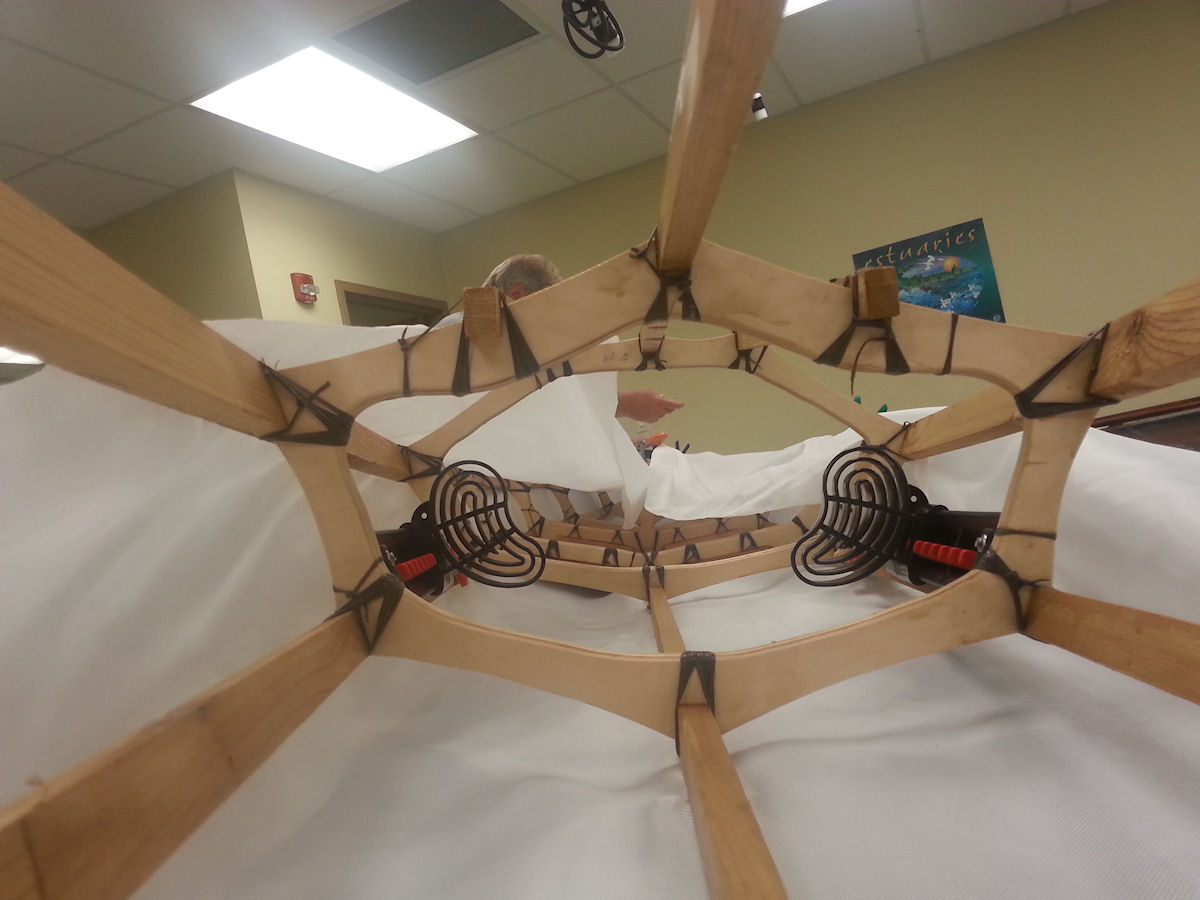
This is where we stopped at lunch, it doesn’t appear we have much done but it is actually a good start. They have a few frames in place and have started to lash them in place.2014 class -1 2014 class -2 2014 class -4It takes the students till the 3rd day to get the lashing to the point where we can take the boat off the strongback. However, these guys were here for one reason, to build a boat! The schedule is flexible and they decided to skip the extracurricular activities to stay in class and work. They even came back after dinner and worked when it wasn’t scheduled.  By the end of the second day they had their frame to the point it had to come out of the strongback.2014 class -8 2014 class -6 2014 class -7We pulled off the frames, lashed the joints you couldn’t get to and then it is time to apply a finish to the frame. Because of the time limitations we use water based poly because it will dry quickly. Since we were a day ahead Wallis and Jim wanted to stain their frame as well as the coaming.

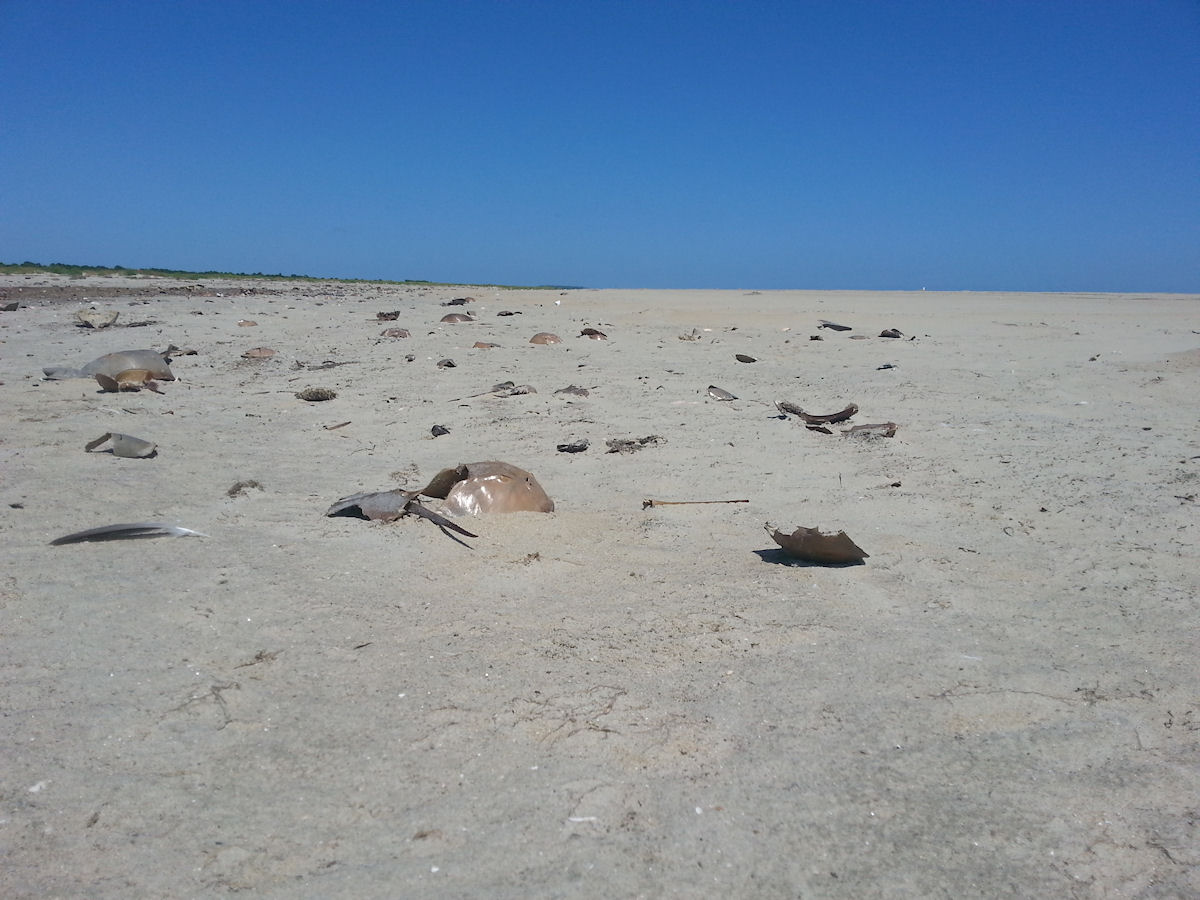
By the forth day, they were all starting to get a little tired from the pace they had been keeping. They decided to take some time off. So, the next couple of days we did some kayaking and went beach combing on Wallops Island, which is a Military base. It is used by the Navy and NASA has a launch facility there. The Field Station works with NASA and is the only group  that gets access to the beach other than those that work or are stationed there. beach beach2The beach was littered with Horse Shoe crabs. I discovered that this is Mecca for Horseshoe crabs!

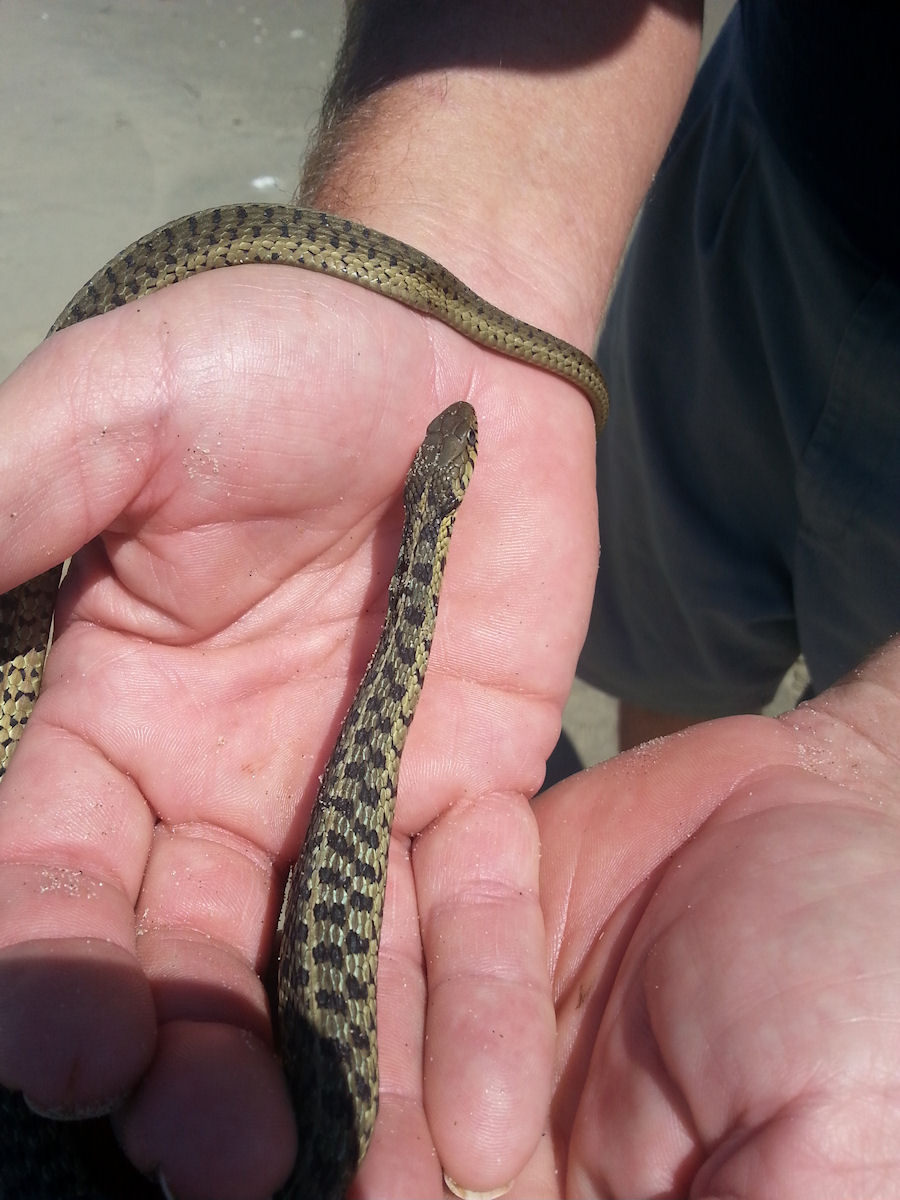
beach3Tara, one of my educators found this little guy on the beach. I managed to catch him and calm him down. For such a little fellow he was seriously wanting to eat me! I thought it must be a Rat Snake but it turned out to be a type of Garter Snake I had never seen. My other educator Gabe, who was off that morning, was involved with an ongoing snake research project on the Island and told me they were a rare site on the Island. After a few photos, we turned him loose.

With the frame finished they started skinning the boats. I decided to try the Double Corded Stitch for the first time in a class and that was a good choice. It probably cuts the sewing time in half. I was also impressed with how straight their seams were for first timers too. They didn’t realize just how well they were doing though but I was impressed.2014 class -11 2014 class -10 2014 class -9Saturday arrives and it is the last big step, painting. I always look forward to seeing what color everyone picks. I had heard lots of ideas tossed around during the week, but when it comes down to the wire you never know what they will go with.  Don seemed to go the safe route with white, but he had some big ideas for paint once he got home. So he just wanted to white base coat and has promised to send me photos of the finished product. Wallis and Jim…. well, they went bright!

2014 class -132014 class -14 2014 class -12Sunday morning, 50 +/- hours latter we have 3 boats 99% finished. These guys have been hard workers and now it is time for their reward. We work on installing the backbands and painters. Finished any last minute details and it’s time to load up the boats and launch!

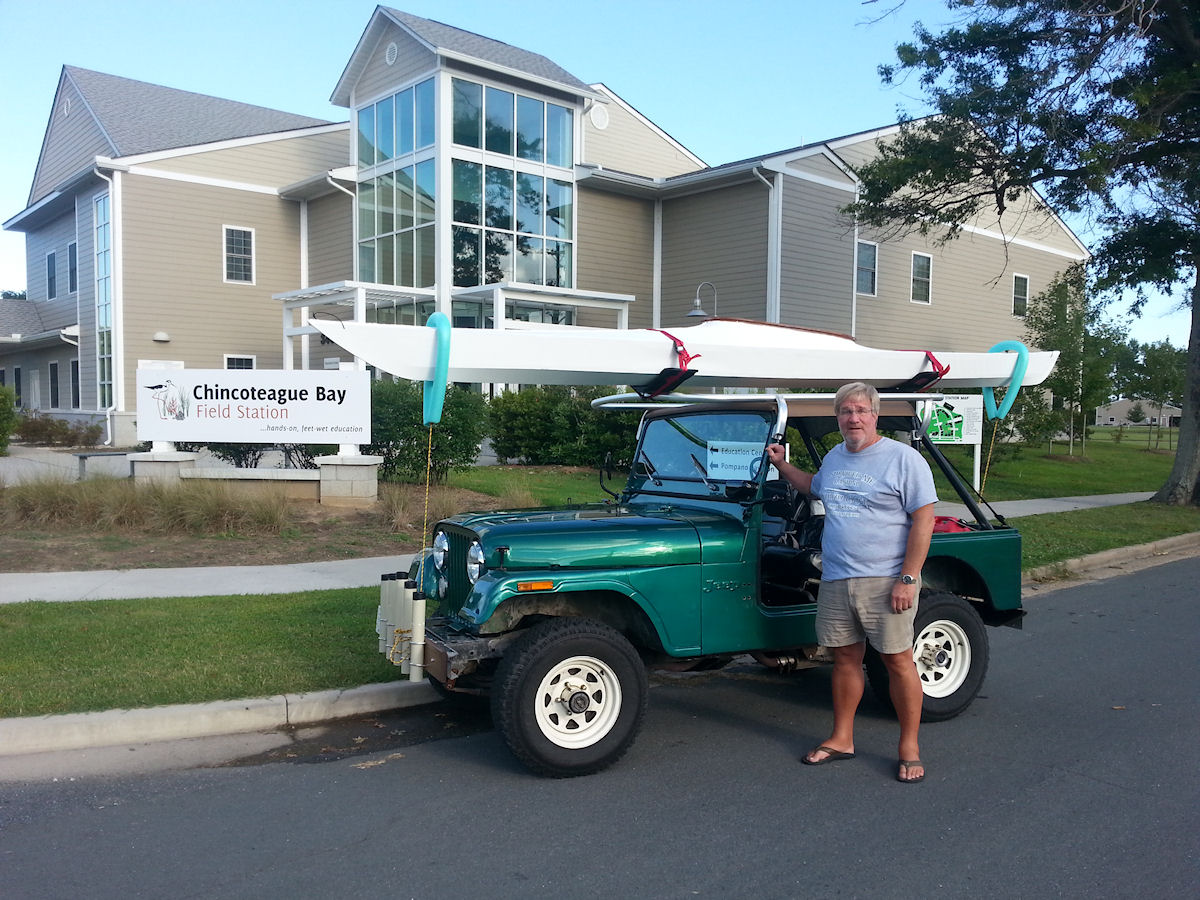
Don lived close by and decided to pass on the launching and so not soil the paint since he wanted to do some custom work on it.. He loaded up and said his good byes. And yes, that is a sweet little CJ!

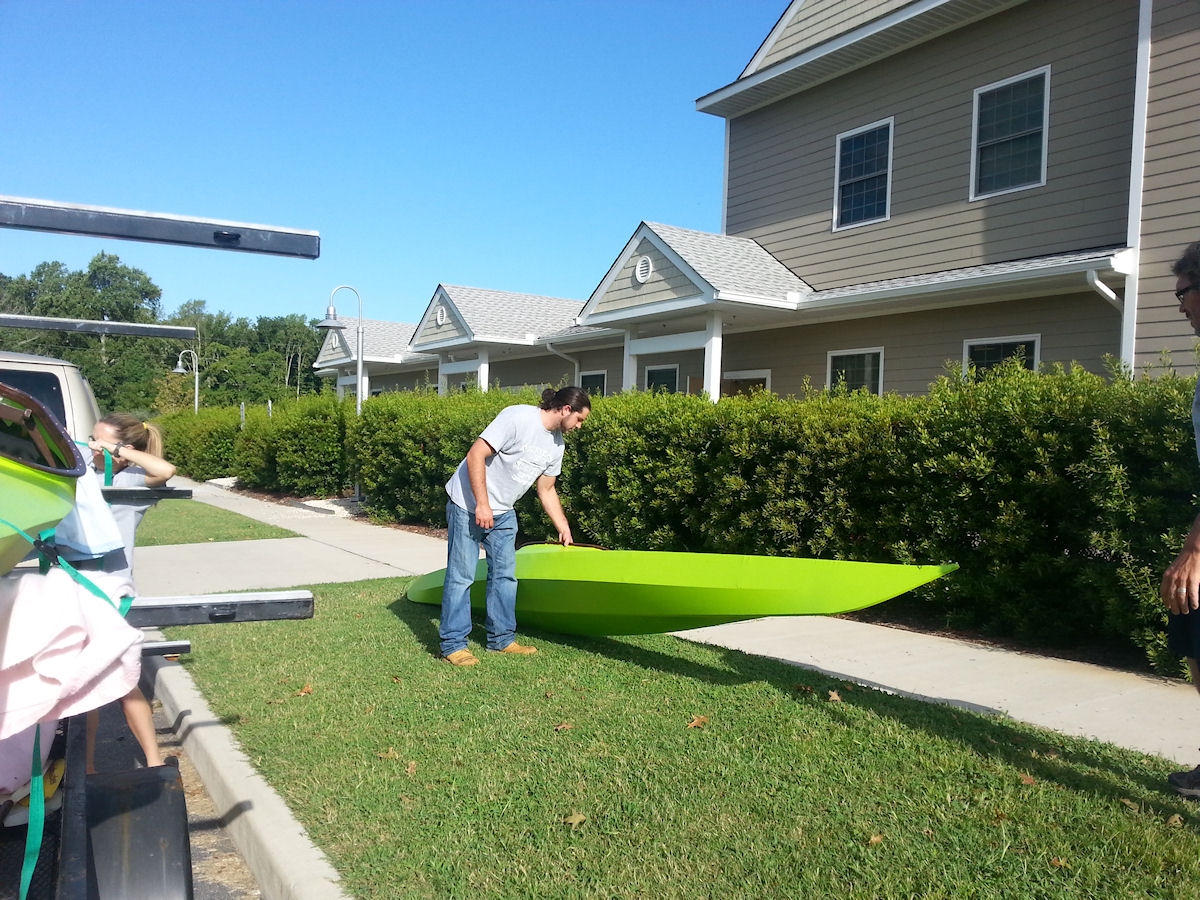
dons ravenswoodGabe and Tara, my most excellent assistants for the week, loaded up the boats on their trailer and we headed the NASA docks to launch.

2014 class -15

launching The smiles on their faces said it all! My camera had started acting up and I didn’t get to take any photos of us outside the harbor. I would have used my phone but there was at least 20 mph winds blowing and I wanted both hands on the paddle! That is a tough maiden voyage but it went very well and the boats looked great on the water.  We paddled around for about an hour and I think no one was any happier than me! I love seeing those smiling faces in their new boats, that they built!

I’m back! (finally)

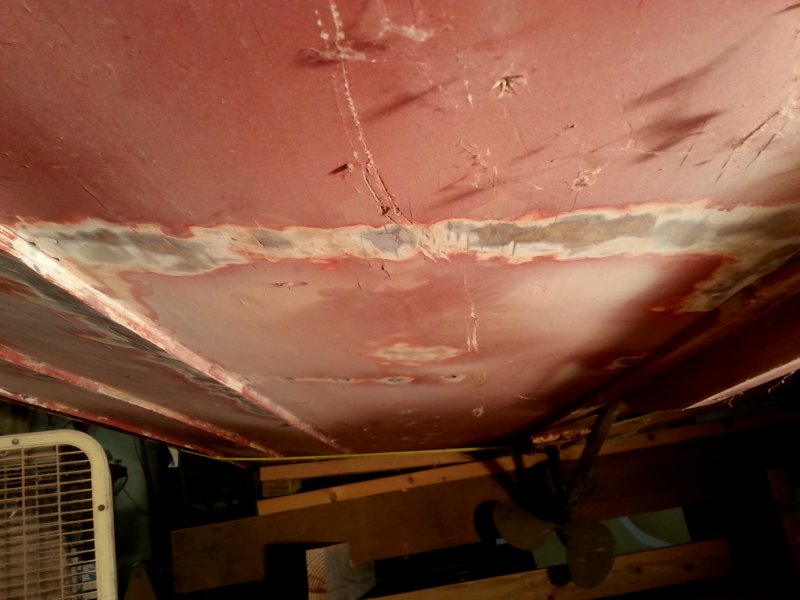
I am finally back to work on the Chris Craft. I must admit this phase of the project has really intimidated me and I every time I come down and start working on it, I ended up staring at it, wondering how am I going to fix that bottom?

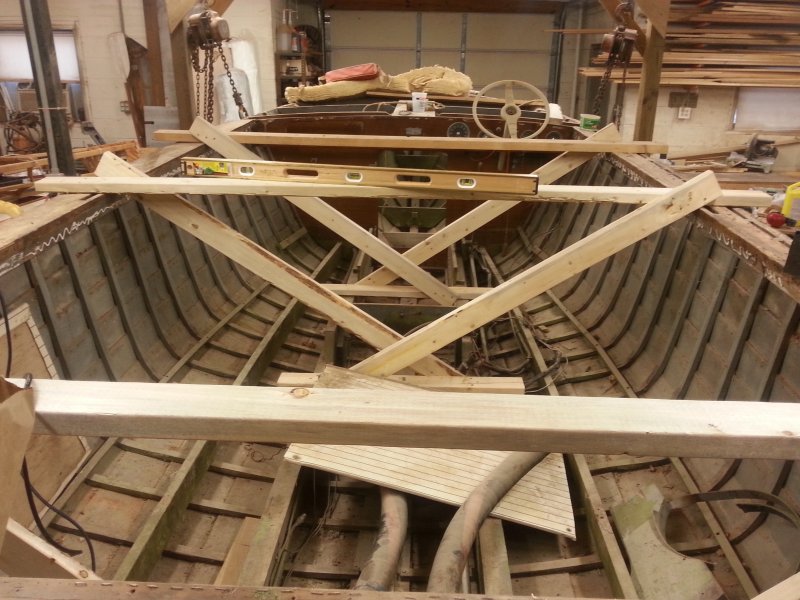
The answer was just muster up some courage and dive in. So that is what I have one the last couple of days. I started by installing some bracing to assure the boat holds it’s shape as I tear it apart.

bracing 

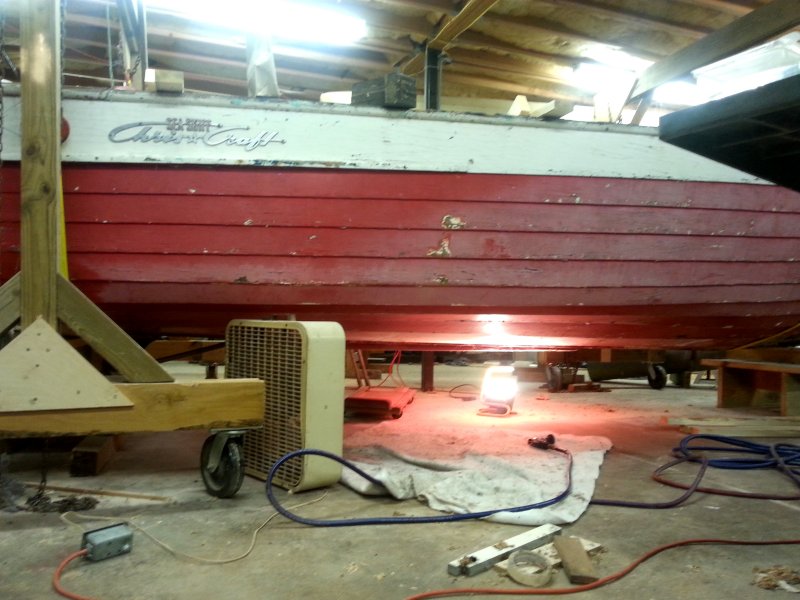
With the bracing in place it was time to crawl underneath and try to come up with a plan. I could quickly see I was going to be spending a lot of time underneath.

bracing-3 

I have found that an air powered angle grinder with a paint/rust removal pad is a good choice for the task at hand. It will quickly remove paint, filler and wood! And there is a lot of all three to remove.

bracing-2

And here is a photo of the first (of many) screws coming out.

first screw I am still intimidated by this project. Still not sure what to do but at the same time I am excited to be back at work on it.