Converting Long Shot * part seven

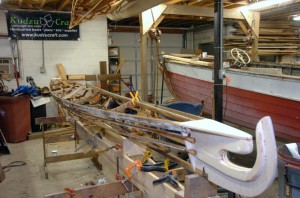
Lots of photos today and a good bit of progress too. I have started skinning the boat using the 8 oz polyester as I use on most of my boats.

I started sewing the skin around the boat, pulling it snug as I stitch. The one trick I learned when I skinned the first Firefly was to start at the cockpit and sew toward the bow. STOP, before you get to the bow and sew the Bifid bow first! Just trust me on this.

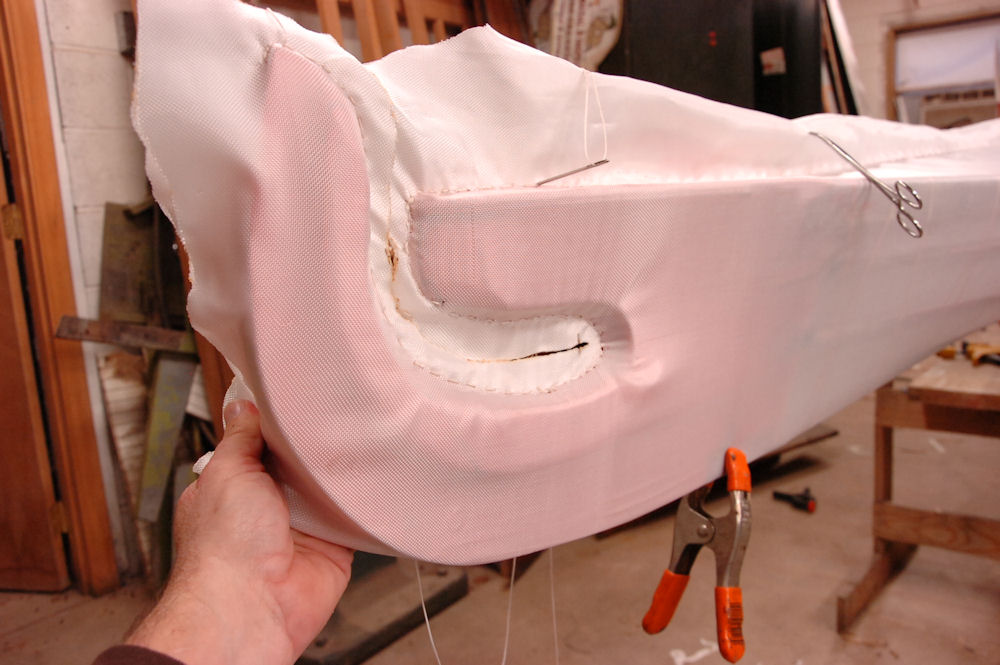
Sewing the Bifid is always tricky and my first attempt didn’t go to well. I had to remove a lot of my stitches and try again. Second time around looked much better. I ended up with a couple of puckered spots but I expected that and they will (should) pull tight once I shrink the skin.
jeffs-22

Another thing I am doing different is I am using Heat N Bond tape on the front of the bow to hold the skin in place. It is heat activated adhesive tape and you literally iron it on to the wood. Then peel off the paper backing, stretch the fabric tight and iron the fabric to bond it to the tap. I found it fairly easy to work with has a really good bond in one direction.

If I lift the fabric I can peel it off easy enough. But when pulling across the bonded area and not lifting it has a really good grip. So in this application it works really well. But it is not a permanent solution.

Once the boat is painted, I will be adding a bronze rub strip, screwed in place over it to finish it off. That will hide the exposed edges of the fabric and provide a very durable rub strip in the most damage prone area of the boat. And I think it will look better than stitching does.
jeffs-23

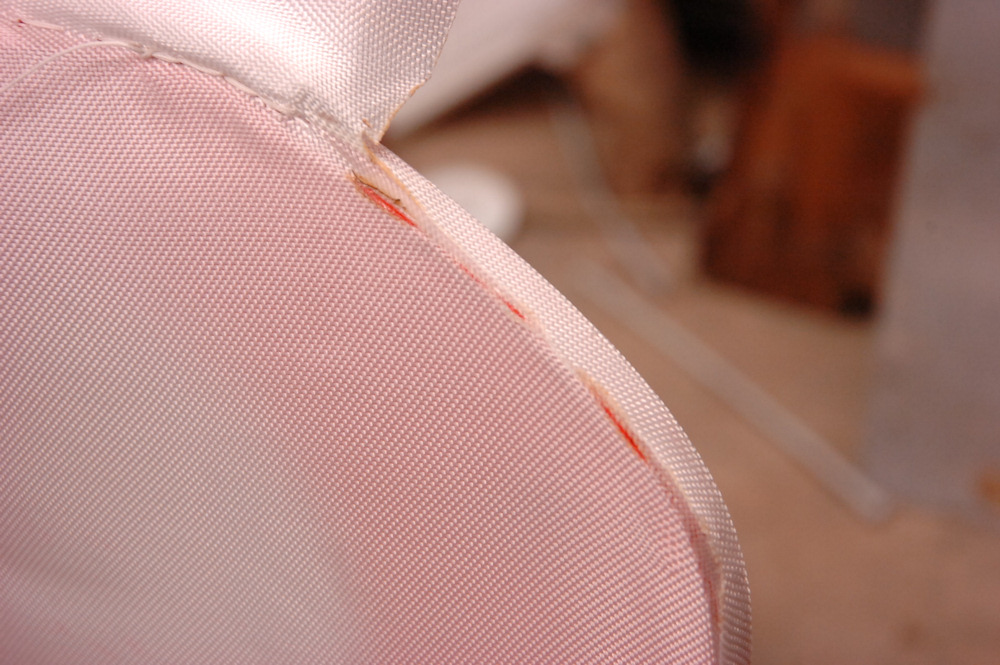
WOOPS! This is the stern and I used the tape there too. When I was trimming the excess fabric I stood on the wrong side of the boat and couldn’t see that I was hitting the corner with my hot knife and melting the fabric. If this were a clients boat I would have started over, but since it was mine I decided to repair it instead.
jeffs-24

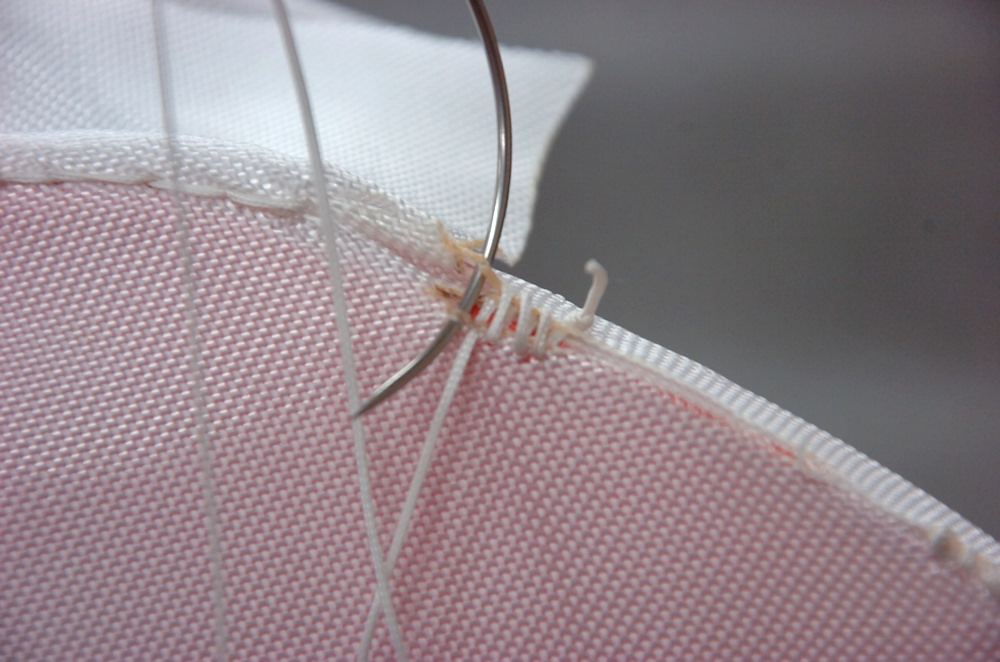
Using a curved needle I ran several stitches close together though the fabric behind the melted edge.
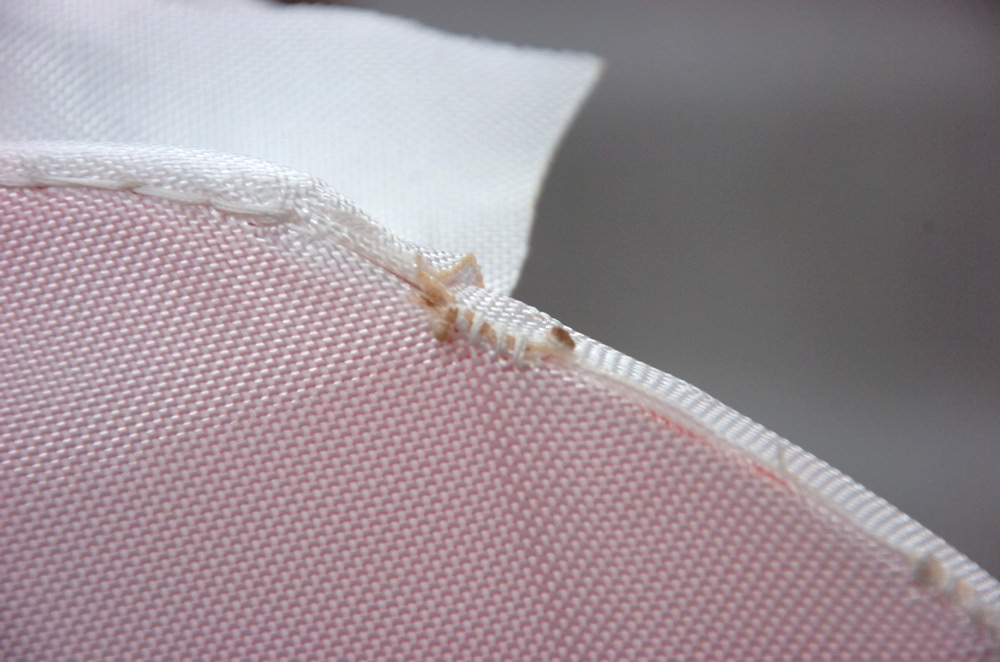
jeffs-25

Once it is pulled tight and the thread trimmed close you can barely eve see it. After it is painted and the brass rub strip is in place, I think it will take a sharp eye to ever spot it.
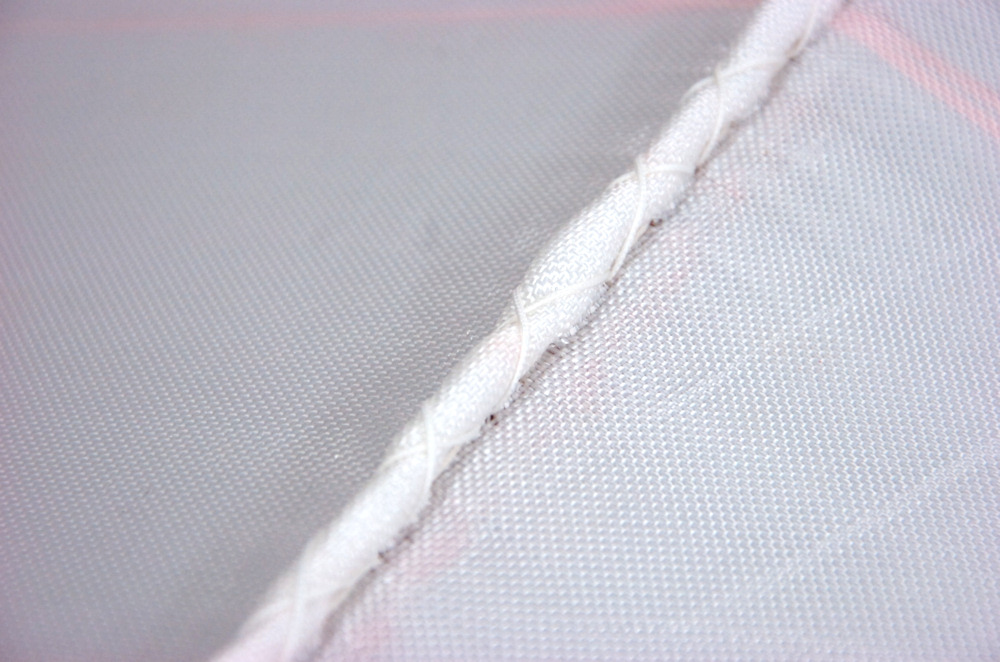
jeffs-27

I did something a little different on the sewn seams this time. I usually just do a whip stitch and pull it tight. That makes it resemble 3 braid rope. This time I did 2 whip stitches from opposite sides and I only pulled the thread snug so that it did collapse the rolled fabric. This leaves me with a smooth bead down the center and it will give the boat a cleaner look.
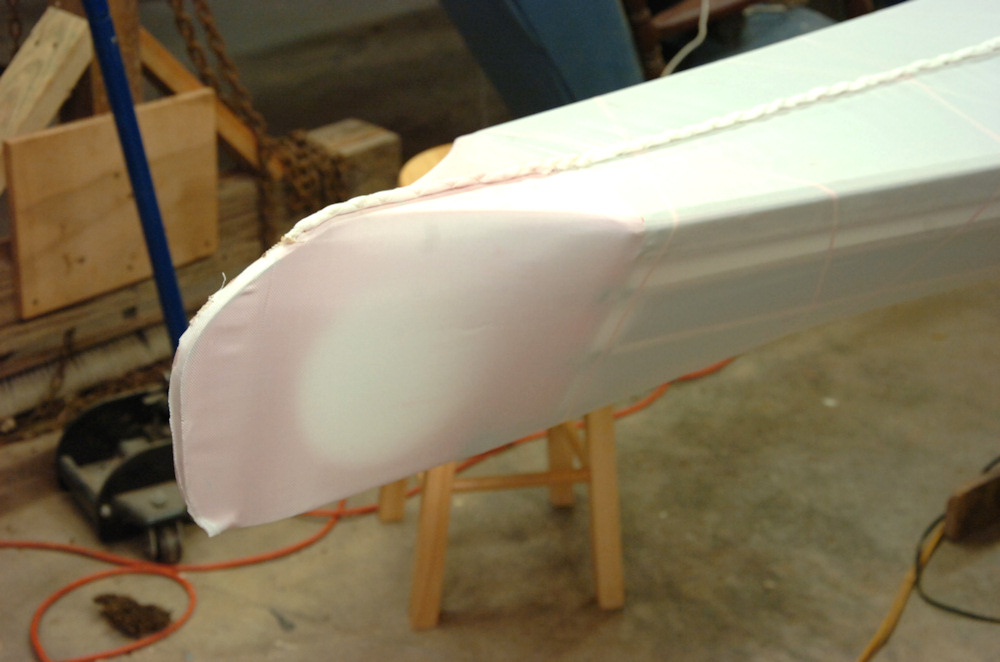
jeffs-26

Here is the stern after I shrunk the fabric a little. If you remember I really struggled with the design for the stern and now I couldn’t be happier with this. It still looks traditional but it has a little flair and is not just squared off like many were. I never liked  the squared off corners but I love this!
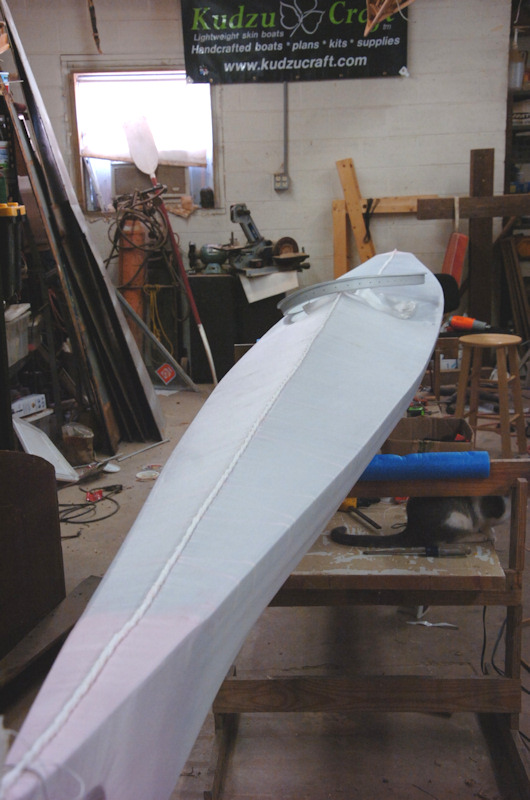
jeffs-28

Check out those straight seams! Yea, I am bragging just a little bit.  I need to install the coaming and finish the seam around the Bifid bow, which I am not looking forward too! That is going to be hardest part of the sewing.

The white coaming is a first for me, I usually varnish them but this will has a ‘special’ paint job so I decided to paint it to match. And that’s the only hint you going to get on paint job.
 

Converting Long Shot * part six

This is a two for one post.. I am going to update you on the boat and do a quick review or first impressions if you will, of the Critter Sprayer.

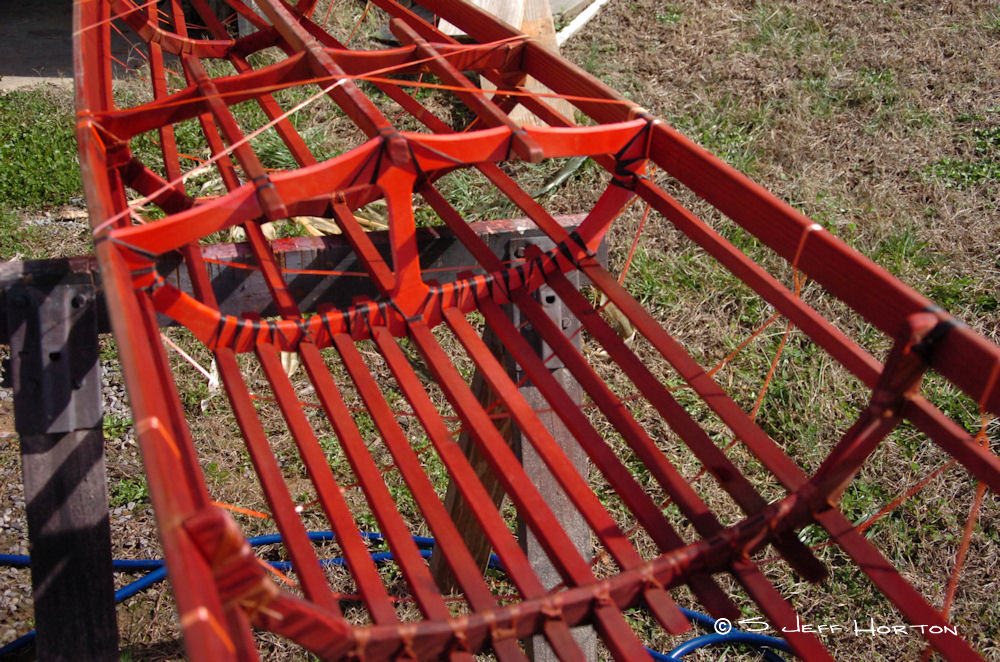
I believe I mentioned previous that I read somewhere that all/most/some Baidarka frames were dyed red. No idea why and not sure if anyone knows. I would guess they used blood to stain them and it was for religious or superstitious reasons. I always thought it was a neat idea and red will contrast with the painted skin really well, so that is why I wanted to try it.

I asked on a wood working forum I frequent and the overwhelming consensus was to use Aniline dye. It will mix with a lot of different media and water was the one thing I had plenty of. So I heated some water, added the dye till it was dark blood-red and them put it in the fridge to cool.

I set up the frame outside and here you can see the end results. The new wood accepted the color much better and is much brighter. The old wood is darker and looks more like a blood-red color. Once it is skinned I think I the new wood will be much less obvious and it should all blend in just fine.

jeffs-19

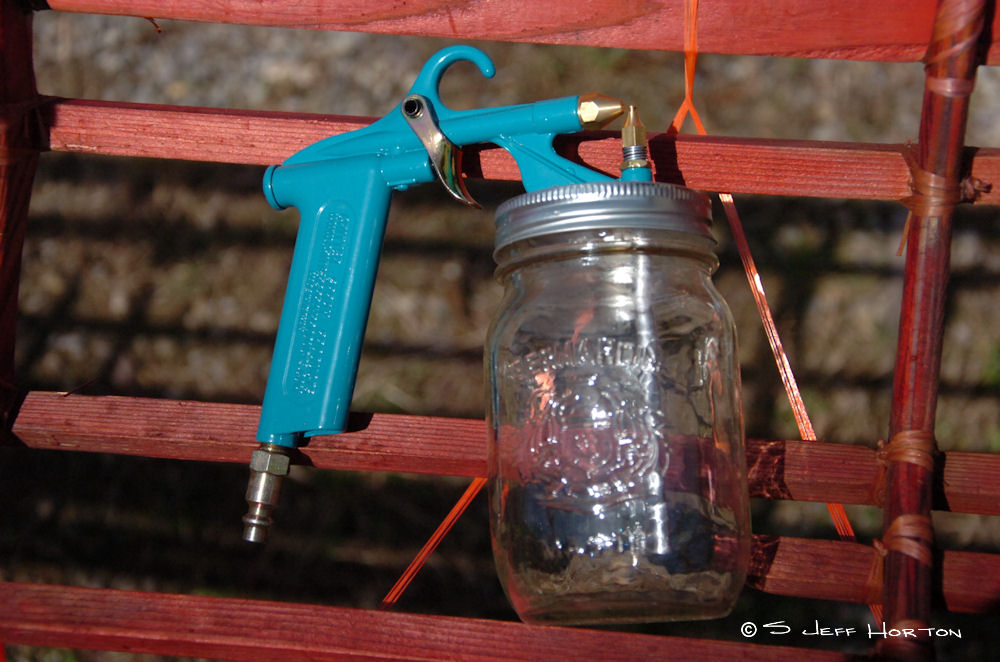
Now, the Critter sprayer. Let me start by saying I am impressed over all. It worked well and clean up took 3, minutes TOPS! It take 30 minutes minimum, to clean my HVLP gun. That along is a huge selling feature.

jeffs-20

The only thing I didn’t like was the vent hole to allow air into the mason jar. It locate on top of the lid with no baffling. Trying to spray inside the boat and I would be holding the gun at odd angles and that allowed a dye to leak or slosh out. Of course I ended up with it on my hands. With something thicker than water I think it would be much less likely to leak out as easy. After realizing what happened I tried to keep the gun more level and didn’t have it happen again.

It has one spray pattern, a round(ish) smaller spray pattern and  you can’t adjust it. It’s much like spraying with a rattle can, just larger. It took me 3 or 4 attempts at adjusting the siphon nozzle height to get it spraying like I wanted. But that is quick and easy to do.

You find the Critter sprayer online for $40 or less. It looks like a toy but my first impressions say otherwise. It is much like an oversized air brush. I wouldn’t want to paint anything really large with it, but as easy as it is to clean…. it might be worth  the extra time it would take. I really hate cleaning a spray gun.


Converting Long Shot * part five

Today I was finally able to get back to work on Long Shot. First work got very busy and I was so tired that I just didn’t feel like working. I should have recognized that as a warning. I have been through this so many times!  I was coming down with a sinus infection and for almost 2 weeks  I barely felt like getting up and fixing something to eat, much less going to the shop to work.

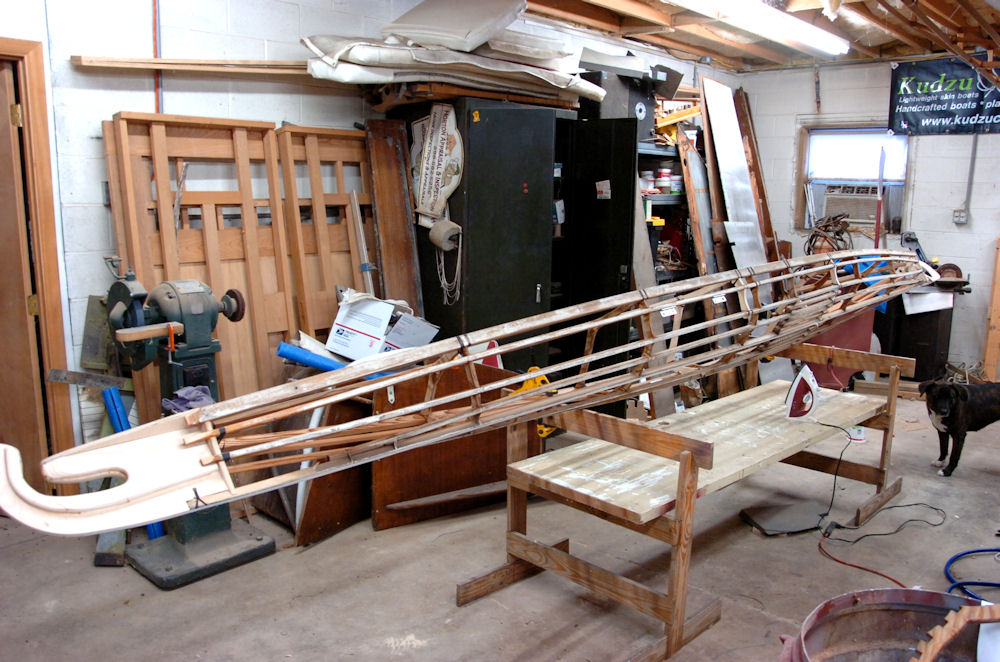
As I mentioned, this boat was a prototype and the frame was very flexible.I have wanted to do something to stiffen the frame for a long time. I decided to try the Geodesic Boat method of using Kevlar roving wrapped around the frame. Platt’s boat frames were so extremely light he used the Kevlar to give them enough structural strength not to collapse. OK, I don’t know that they would have collapsed but I strongly suspect some of his designs would have failed without it.  He took light weight to the extreme!

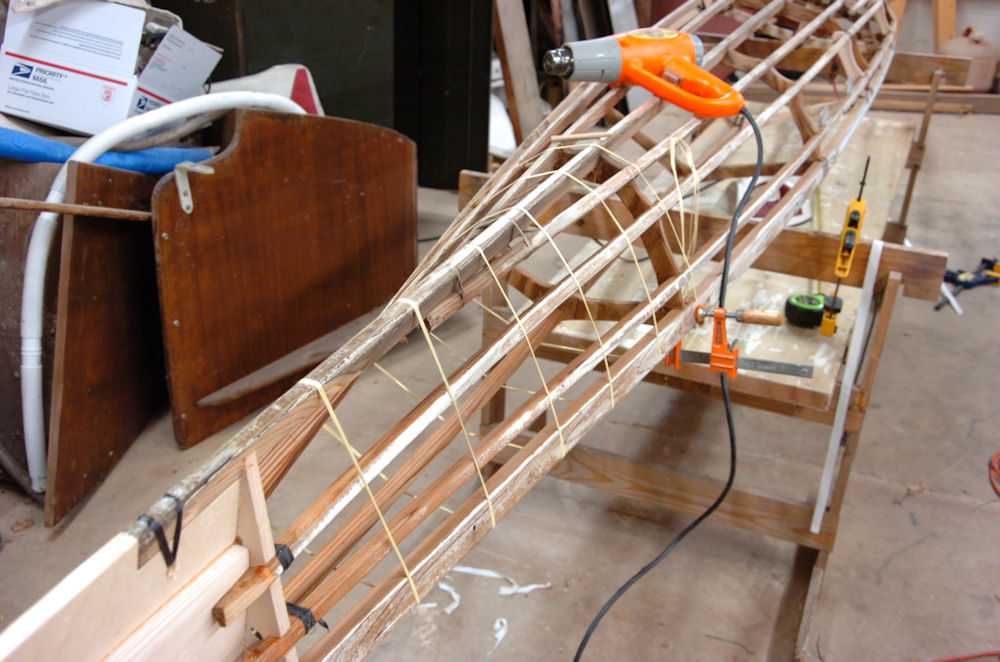
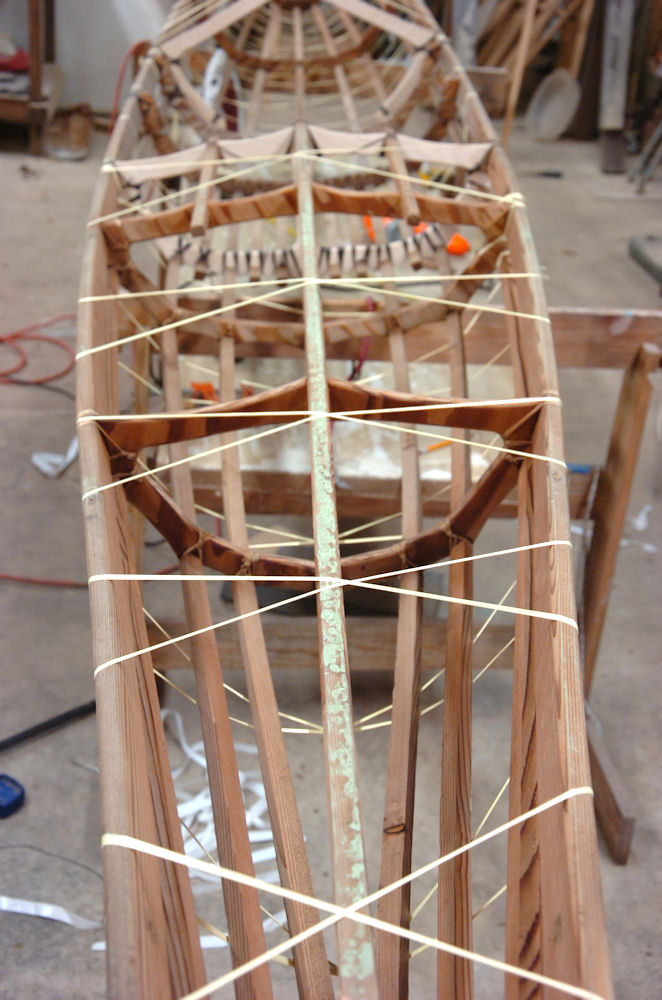
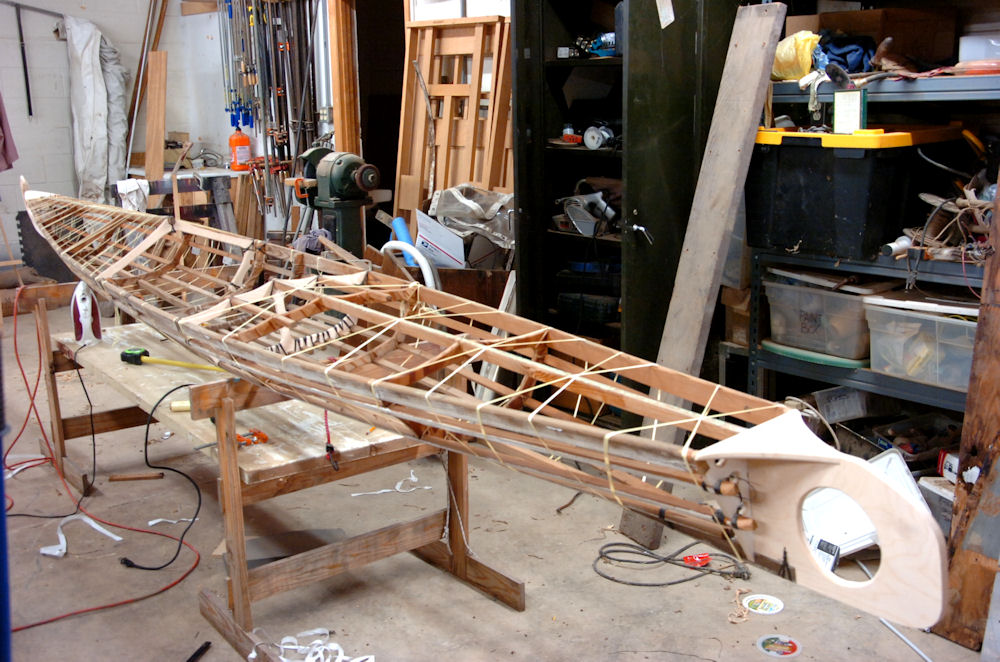
This morning I started with the Heat n Bond tape and ironed it onto the frame along the gunwale and the keel. I tied off the Kevlar to the frame and started wrapping it around the boat and then clamped the end to the frame. Starting at the front I pulled the Kevlar tight working toward the cockpit. Once the roving was tight all the way down the boat I secured the end.

jeffs-14

Using my heat gun to warm the tape where the Kevlar crossed I took a dowel with the end rounded over and pushed it into the tape to ensure a good bond.  Latter I found out that it was easier and quicker to just use the iron with some of the paper backing between the iron and roving. This kept glue from getting on the iron.

After giving the tape time to cool, I removed the clamp and was impressed with how well the tape held the Kevlar. I could lift it up without a lot of effort, but in tension the grip was strong that this where the stress is.

jeffs-15

I started on the bow wrapping the roving around the boat.  I now realize I was spacing it way to close together. On the rear of the boat I used a much bigger spacing and it is just as stiff and it was much faster to apply. And it looks much better.

jeffs-17

I kept testing the frame by flexing it and at first I was disappointed. There just didn’t seem to much improvement. But once I got everything in place I could tell that the frame was much stiffer than before. Not stiff like a plastic boat but miles ahead of where it was. 
jeffs-16
When I put the skin on I am going to pull it tight and bond it to the tape with the iron before sewing. Once the skin is shrunk I am very confident that this boat will be at least as stiff as the rest of my designs and I will be a bit surprises if it is not stiffer. Either way it will much improved over what it was.


Converting Long Shot * part four

I finished the bow and started lashing all the joints I had left loose. For some reason the stringer slot in this frame is deeper on the new design than on this one. If I lashed the joint it would pull the stringer out of line. If I had some wedge shape cutoffs from cutting scarfs lying around I could shim the slot to fit. But since I didn’t and they are lashed to the near by frame I decided to just leave like this.

jeffs-10

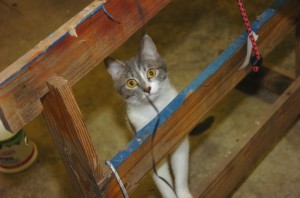
While I am lashing I look down and realize I am being watched. Then I realize ‘I’ am not being watched, it’s the lashing that she is watching. She could care less about me, see the dangling sinew? She does.
jeffs-11

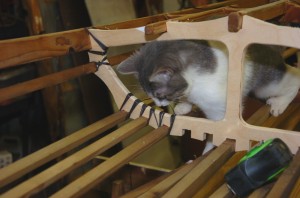
I turn my back to cut another length of sinew and I hear wood banging around. I turn around to find Grace inspecting my lashing and knocking the floor stringers out of the boat. All this time she has shown no interest in the boat. Now she won’t stay away. jeffs-12

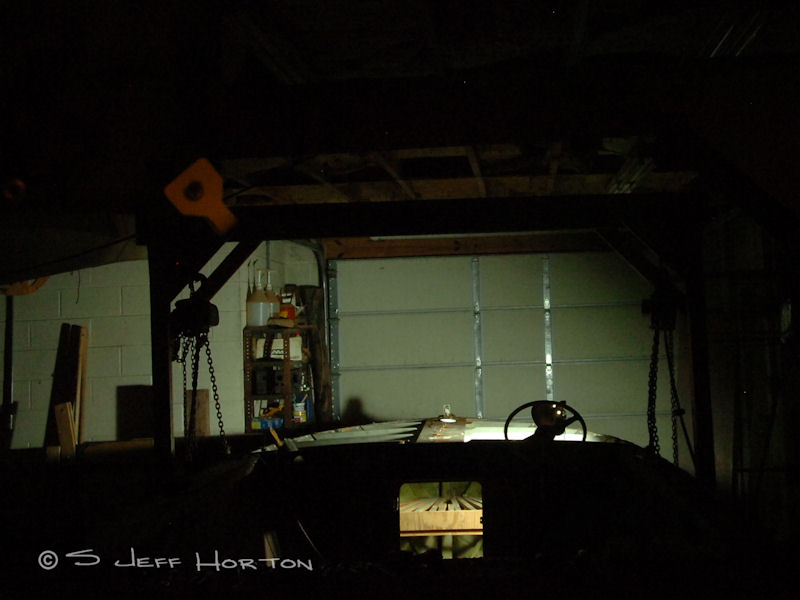
Despite all of Grace’s help I did manage to finish the frame. It is ready for to be oiled and skinned. Except I have some slightly different plans. I am going to order some red dye to color the frame. Then I will apply the oil finish over the dye.

Somewhere I read that many/most/all Baidarka frames were red. So, I am going to dye it red. I have always like the idea of the frame being a contrasting color but I have just never followed through on the idea. Maybe a black frame with a white skinned boat? Or a red frame with a ……. no,  you will have to wait to see what I have in mind for the paint job. It’s a surprise.
jeffs-13I am going to try to do something to stiffen the frame too. As I have said, this frame was the prototype Long Shot and I made changes to the final design. One thing I was not happy with is that this frame has always been too flexible  All Fuselage frames flex some, but this one was very flexible.

I have never said much publicly about this because the frame was redesigned before the plans were released. Since I know how rumors get started and people twist what you say, I just kept that to myself.

Since it is apart, I want to try reinforcing this frame with Kevlar roving similar to what Plat did on his Geodesic boats and see if that will not stiffen it. If it works I could see it having applications on a fuselage frame race boat.

If you are serious into racing you do not want any flex in the boats hull. While it is probably slight, the energy spent flexing the boat is energy not moving the boat forward. Probably very minimal but races are often won by very small amounts.

I have to order supplies so it will be next week before I can do much else on the frame. So mean time I am going to try to get some work done on the Sea Skiff.


Converting Long Shot * part three

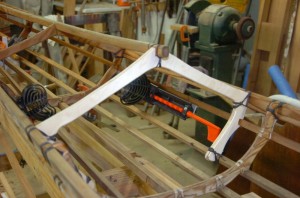
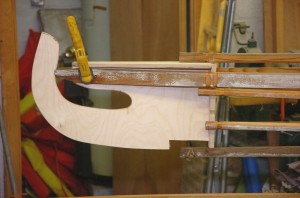
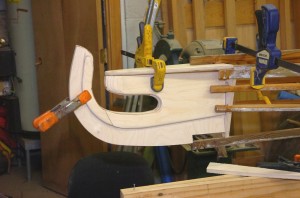
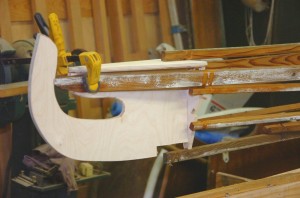
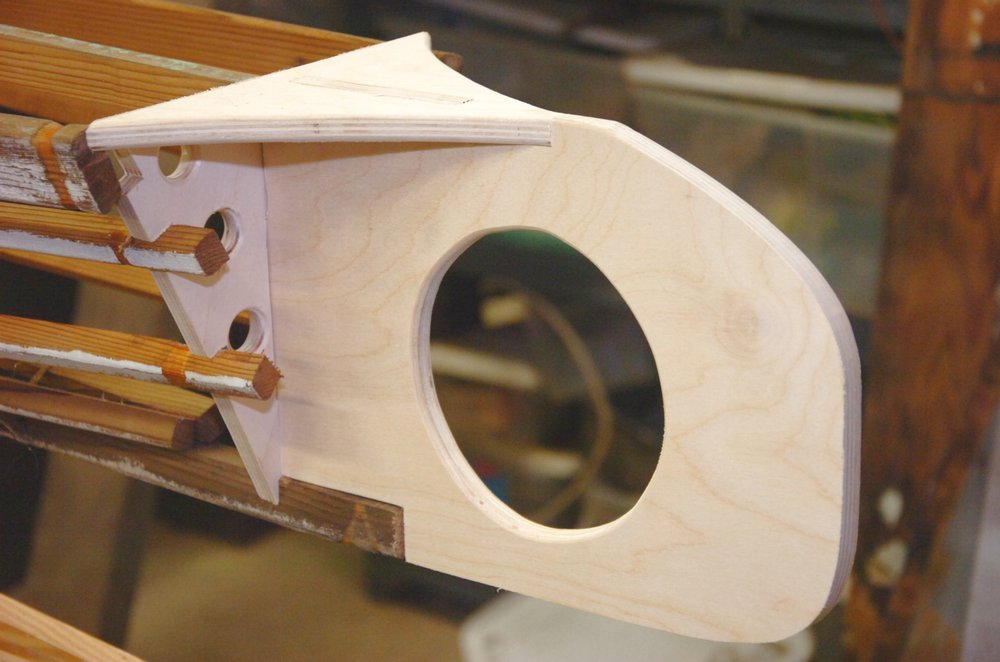
Just a quick post. I spent a lot of time working on the bow but there is not a lot so see. I wanted more than just the flat bow stem. I wanted to add some shape to it so it didn’t just look like a piece of covered plywood.

bow fitting

My first step was fitting the bow in place.  Clamped  in place I decided how I wanted to install it and the details of how I was going to do this. Once everything was trimmed and fitted it was time to move to the bench.

Since I am not working with a big block of wood I need to add stock. I started with a lot of scraps of cedar on my bench. Left over pieces of stringer, cutoff of’s from paddles, etc. I tossed around a lot of ideas trying to decide how best to get the look I wanted. After a lot of different ideas I decided using plywood  was the simplest way. It is heavier but it is also stronger and simple to glue in place since it has smooth faces it ready to glue in place.

jeffs-9

Tracing the outline of the bow on the scrap plywood, I cut the pieces on the bandsaw.

Holding them in place I stretch an old piece of t-shirt over the bow, this shows me how it will look once skinned. It also shows me where the skin will touch and where it doesn’t and how it transitions from one section to another.

I have to do a lot of trimming and shaping with the rasp to get the proper look and keep from  having a boat full of bumps and flaws.  It’s a slow process but if you don’t it’s very obvious and very ugly to my eye.

Once I was happy with the look, I applied the glue, clamped everything in place and called it night. This afternoon I still have a little fitting to do but I expect to finish the fitting the bow and start lashing it all in place.

Converting Long Shot part two

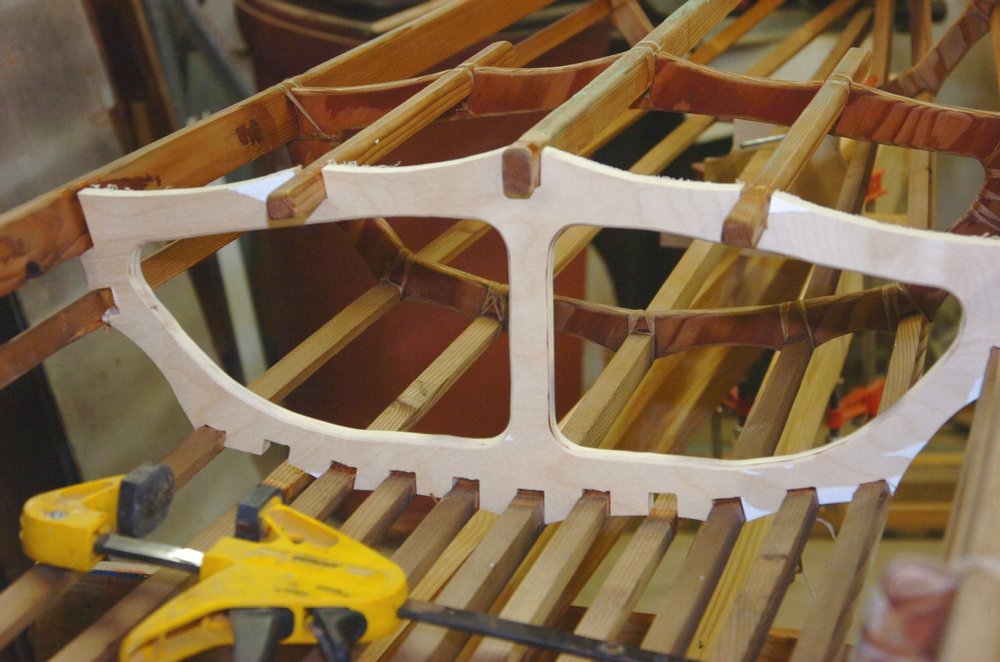
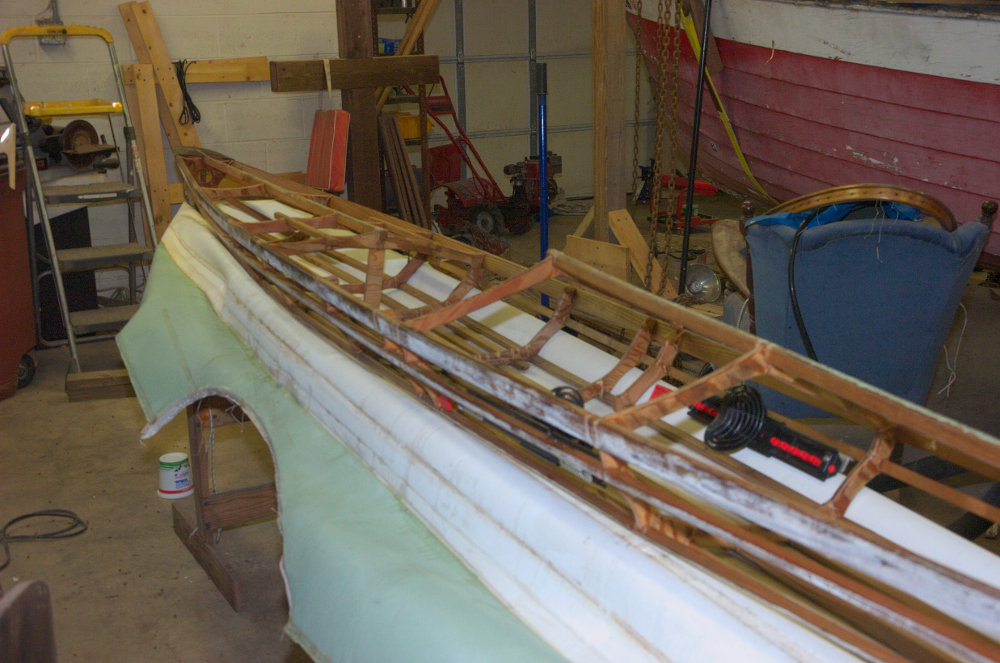
I now have the frames cut out and wrestled into place on the boat. They are not that hard to replace but they sure don’t fall into place either. It took some gentle persuading with a wood mallet to convince them to go back in place. But once you get them close they just fall into place. I have started lashing but I just did enough joints to lock them in place.

Here is the bow sort of in place. I wanted to see what I had and what I needed to do to fit it in place. I want to build up the bow by gluing on some wood and then shaping it to get the proper look. This is going to take some time to get it shaped exactly like I want.

The stern I am extremely happy with. I have been through a lot of ideas before I finally settled on this one. I wanted something fairly traditional but at the same time I didn’t just want to copy what has always been done. I took ideas from two or three different boats and this is what I settled on. I really like the way it looks. It’s look better than it did on the drawings.

Converting a Long Shot

My Long Shot has been a test bed for new ideas and has been heavily used. I have modified and reskinned it at least twice. No idea how many miles I have paddled it but I know it has been a lot!

This was the first Long Shot, the prototype boat and it has some issues that were addressed in the final version. While you guys paddle the new improved version I have been paddling a flawed version. So when I recently noticed a couple of problems starting to develop I started to think about the possibility of ‘upfrading’ my Long Shot. One idea has lead to another and then another.

I have always wanted a Baidarka and the more I looked at the plans, I started to realize  that I could rebuild this one as a Baidarka and finally have the one boat I have always wanted.

I have a design drawn, but I know that the plans don’t match the prototype. They are close but there are changes that have been made. So that is going to mean I can use the plans as a guide but I will have to fit the replacement pieces to boat.

Last time I paddled Long Shot it developed a leak. I kept thinking there was a lot more water in the boat than normal. I pumped it out and before long the water was back. Rather than try to patch it I decided it was time to rebuild it  (again). So, today I started by stripping it down the bare frame to see what I had.

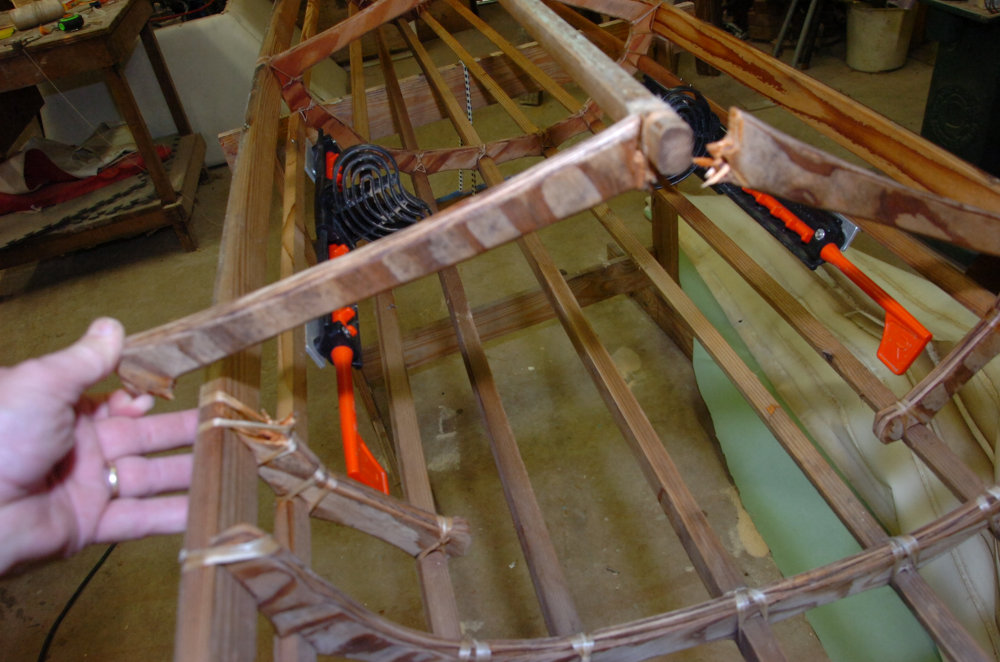
The frame looked just as I expected. It was in good shape with only one big surprise. One of the reasons for the reskin was I was seeing some flexing in the frame at the front of the coaming so I knew the frame was going to need to be replaced at some point. When I got skin off I was VERY surprised to see this.

Even though the frame was in two pieces,  the skin and the lashing were holding together quite well so and there was no way to see it was actually broken in two pieces  There was no danger because the skin wouldn’t allow it come part. I think that speaks to the toughness of these boats.

What happened, why did it break? I don’t know but when I strap it the rack on my car, the straps fall right on top of this frame. On my trailer the straps are further toward the ends.Another thins is the frame was very thin under the deck stringer. It’s possible the plywood was weak. I quit using this ply right after this boat was built because I was getting worse every time I bought it.

The frame design was one of the things I changed. The new ones are beefier and much stronger, especially if you use Baltic Birch plywood. This was my prototype and as I said, I this was one of several changes that were made.

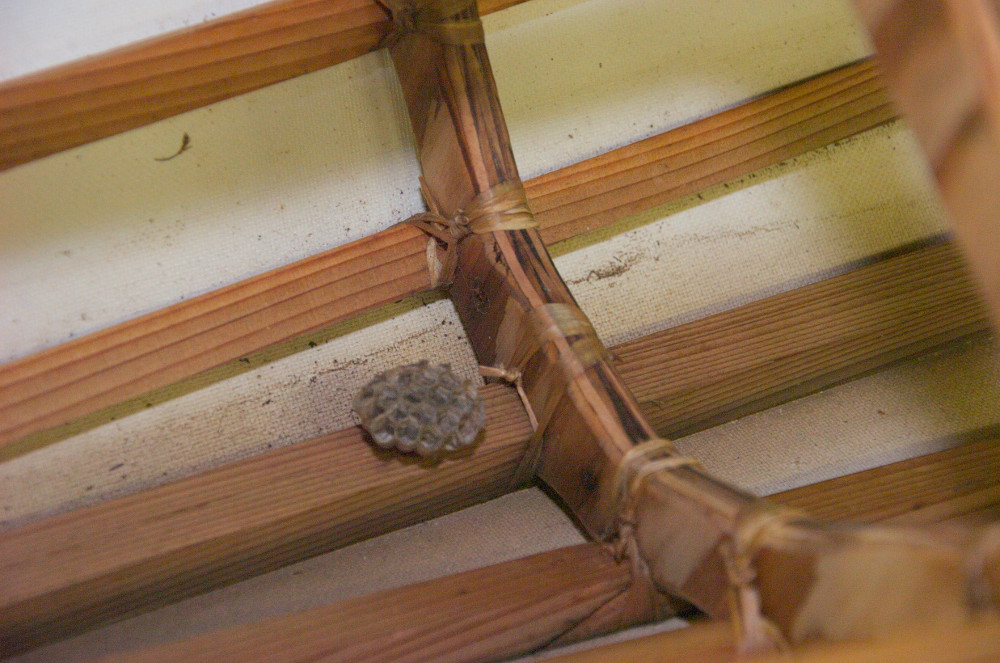
Oh yea, I found one other surprise inside the boat. There was the usual dirt, bugs and misc. trash that get trapped in the ends. But this one I was not expecting! Creates some scary thoughts too!


Kayak Geocaching

I tried something this past weekend that I have wanted to try for a long time, Geocaching. If you are not familiar with it, it is big Easter Egg hunt using million dollar Government satellites to find hidden ammo boxes and Tupperware hidden in public places.

What? I lost you?

All around you, totally unknown to you, strangers have hidden containers know as caches. They are out there just waiting for you to join in the fun andtry to find them. It is called geocaching.

Geocaching is a game, well maybe it’s better to say an activity, where you search for hidden ‘caches’ using a GPS unit or a smart phone with a GPS app. You are given the coordinates for where the container is hidden and sometimes a clue. Using this information you go on the hunt to find the hidden cache. The containers range from very small, with just a small scroll of paper for you to log your name and when you found it, to larger boxes with a log book and trade pieces inside.

Ammo boxes and Tupperware of probably the most common containers used. As I said, larger caches will have a log book and some trade items inside it. Most of time the swag is inexpensive items not something of any real value. Much of it is would appeal to children. You can get you kids interested and once they find the cache they can trade for something in there.

There are certain items such as tokens that some cachers collect. There are travel bugs, that when you find it, if you can, you take it and move it another cache. The travel bugs locations are logged and their travels tracked. When you find a cache, if you take something you are supposed to leave something in its place. That way there is always swag in there for the next person to find.

You can learn all about geocaching and sign up for free at www.geocaching.com.  From there you can find a map with the information you need to start hunting caches in your area.

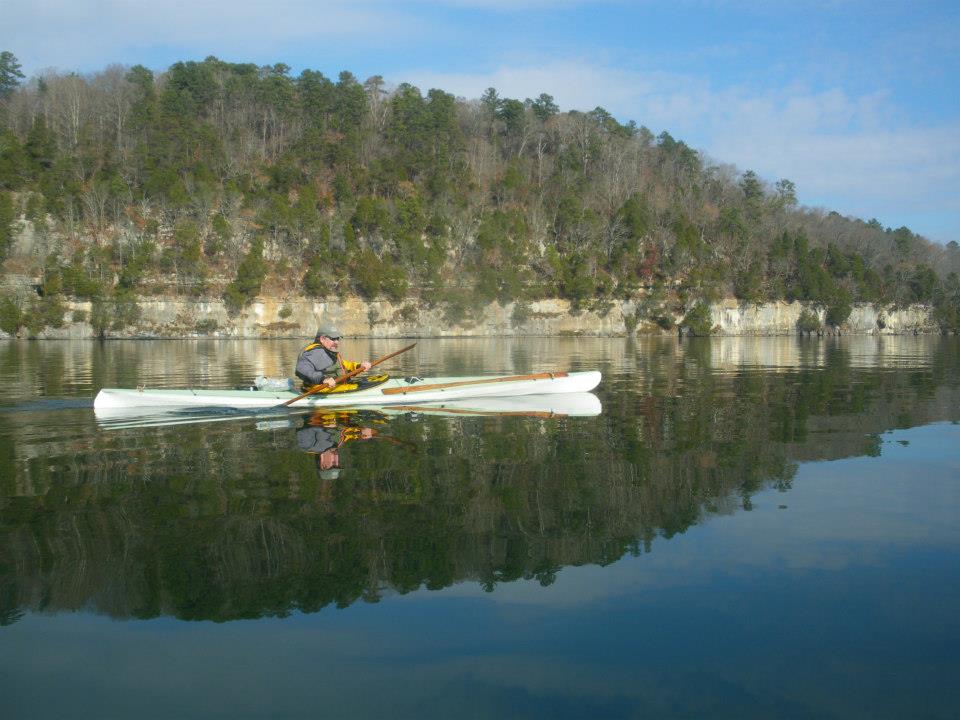
When I got interested, looking at the maps I realized there were several caches hidden around the lake and some that are only accessible by boat. Since we paddle so much, some of the areas have become kind of routine we know it so well. We are always looking for something different and this sounded like fun to me.

Searching the map I found four caches in the general area around the Dam. I discovered there were two catches hidden on Goat Island. It is a rock island that is probably close to 3 acres in size and the only access is by water. So I planned my paddle around these four caches.

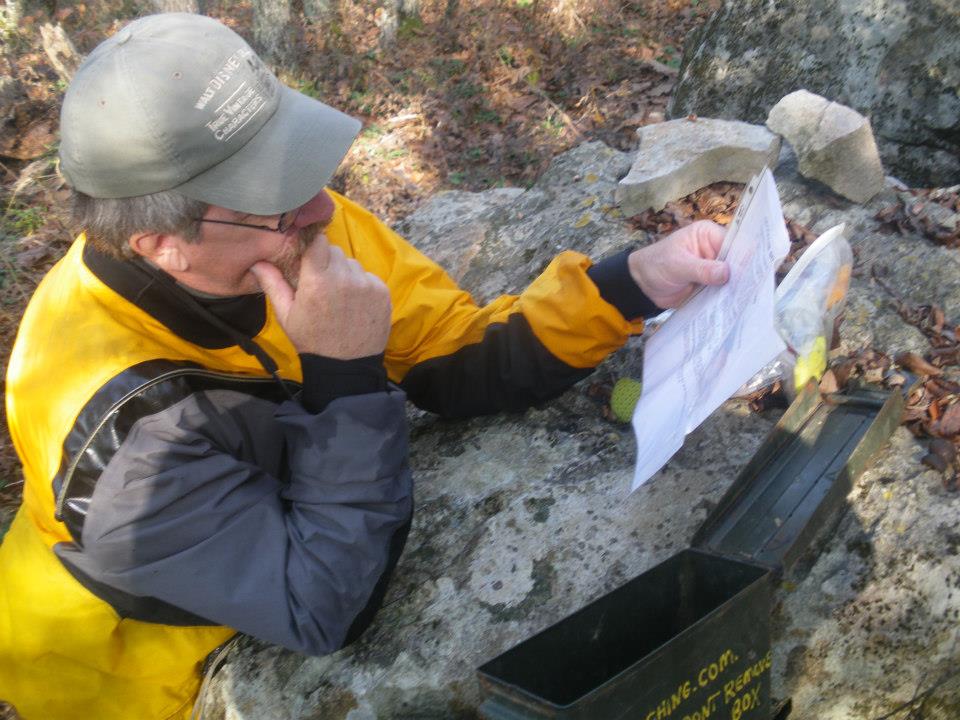
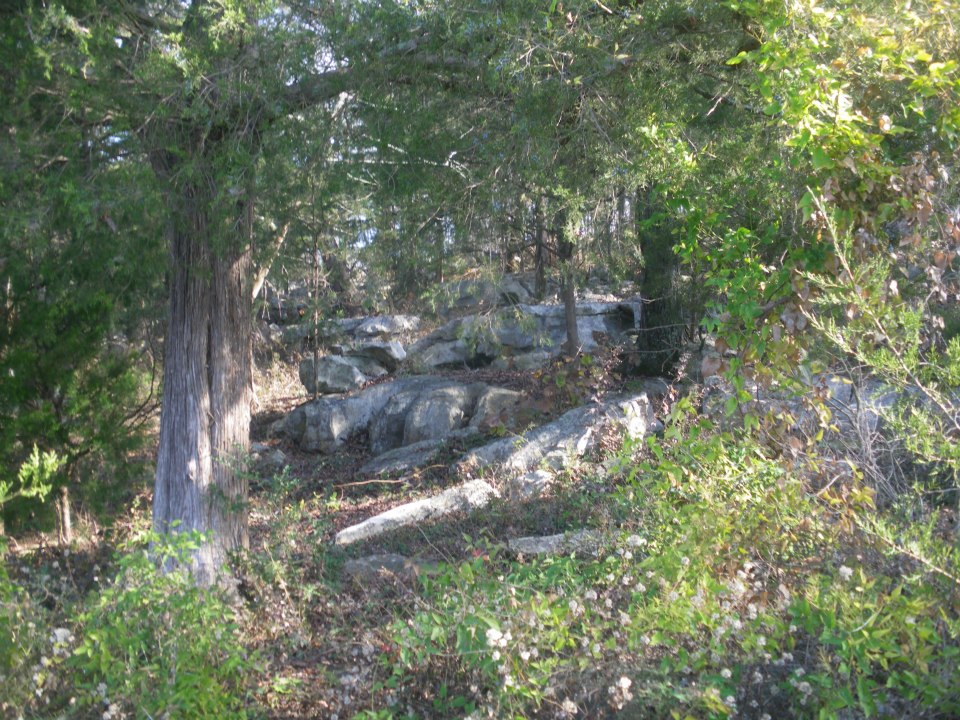
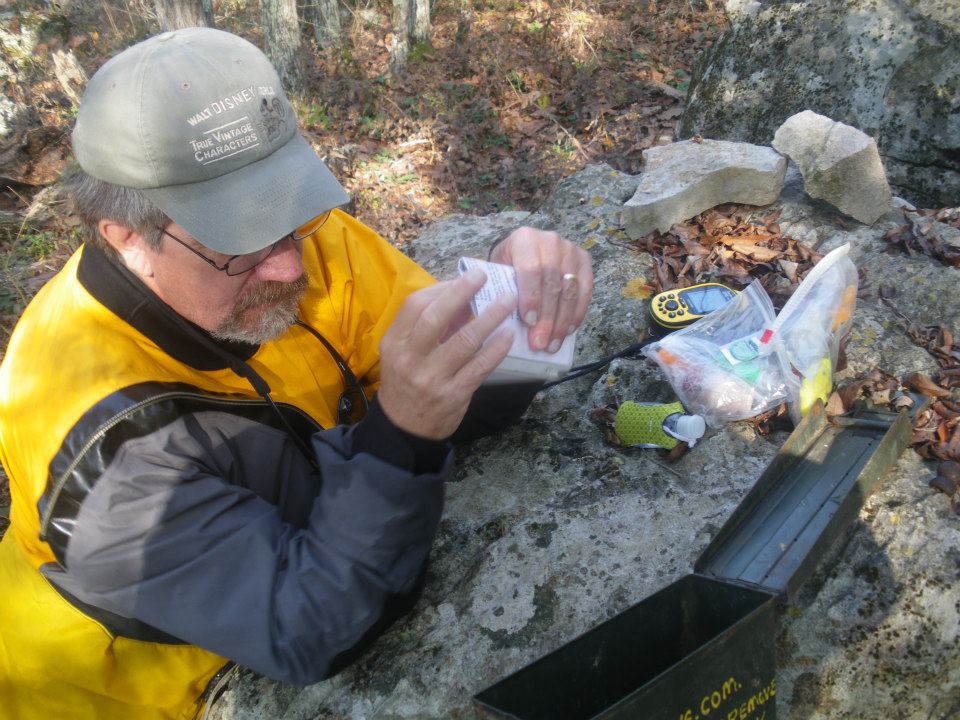
Dan, who took these photos, came along with me and we started on Goat Island. We found a place to get out, not an easy task since much of the island is  bluff. Using the GPS I narrowed down the search to a rocky area with lots of places to hide something. We both searched for a few minutes looking in all the nooks and crannies before we found the first cache. Once opened I signed the log book, looked over the ‘swag’ and since I didn’t bring anything, I didn’t take anything other than some photos.

The 2nd cache was across the island so we head out. It’s a warm day for December and I can promise you hiking up hill and over rocks is no fun in a dry suit! It would have been well worth the effort to have removed it and put it back on when I got back to the boat.

Eventually we got to the location on the highest point on the Island with a beautiful view of the water. It took both of us looking to find this cache. I was thinking we were not going to find it when I finally spotted it after a lot of searching. It was another ammo box with goodies inside. I signed the log book, checked out the Swag and put it back in place for the next person to find. At this point I was hooked. This was a lot of fun, like a treasure hunt!

There were two more caches hidden further down the lake and I found one but the other one eluded me. Reading on the web site when I logged in my finds and the did not find on this one, I discovered some others had problems finding it too. For some reason the GPS signal isn’t that good in this area and it was jumping all over the place. Seems other had the same problem. I am hooked and I will go back and find that one later on this winter!

If you haven’t tried geocaching look into it. If you’re near water there is a good chance you can find some caches that you can paddle too. If you are taking a trip you can look up caches hidden in the area you are going to be. It is something that kids can participate in and is a good way to get them outside and away from the TV.

Keep in mind some caches are hidden really well and are very difficult to find. Each one is rated as to how hard they are to find and also how rugged the terrain is. That ways can look for caches that are easier for the kids or if you prefer more challenging
 ones

If you try it let me know what you think. This was my first time but I loved it!


More stripping

I have not been able to spend nearly as much time as I thought I would working on the boat. I expected to be further along by now. Today I spent the better part of the day stripping the decking off the boat.

Stripping the boat has been a bigger job than I expected. Usually disassembly goes fast and you feel like you have made a lot of progress in a short time. But that has not been the case on this one. And since repairs and assembly go much slower ……..  yea, it’s going to take a while.

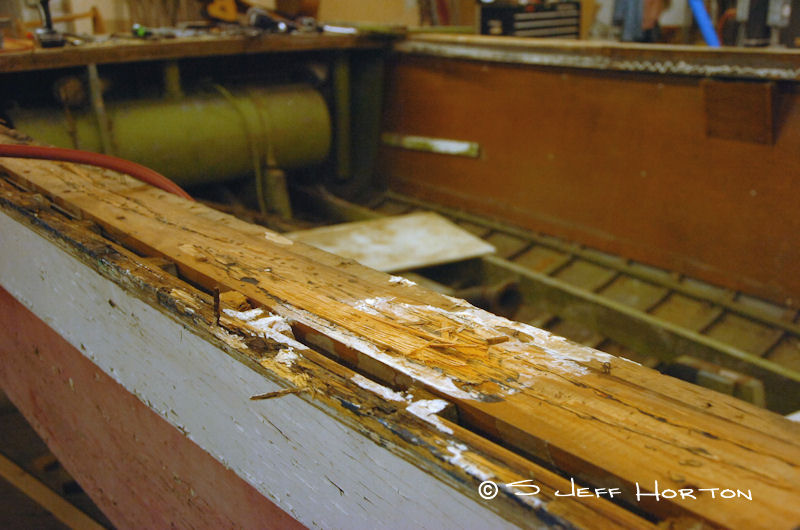
I started on the starboard side and moved a damaged section. I was pleasantly surprised to find no damage to the planking. With the access to the hidden screws I checked and every one of them was at least a little loose. I have decided to remove it all the decking so I have access to tighten these screws. After 50 years I am not surprised to find them loose!

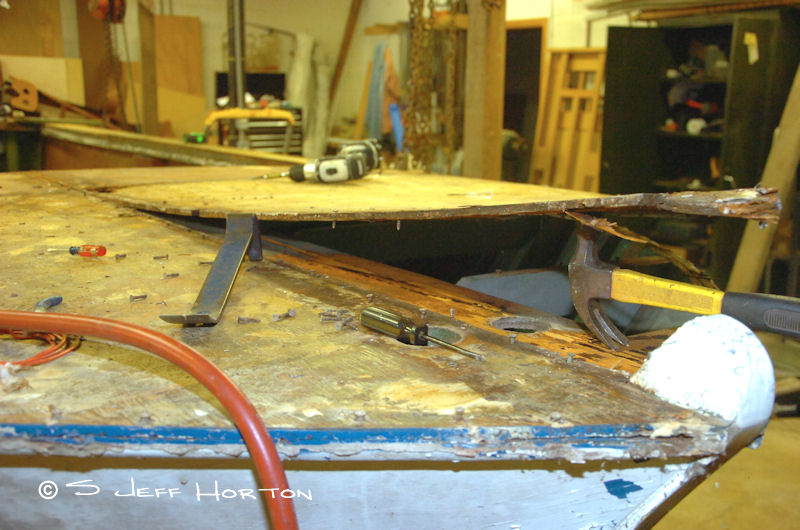
Removing the bow was a slow process. All the screws are countersunk and then puttied over. I spent a lot of time looking for the screws, chiseling out the putty, cleaning the slots and then finally removing the screws. This photo was taken while I was chasing down a couple of hidden screws that were holding the deck on.

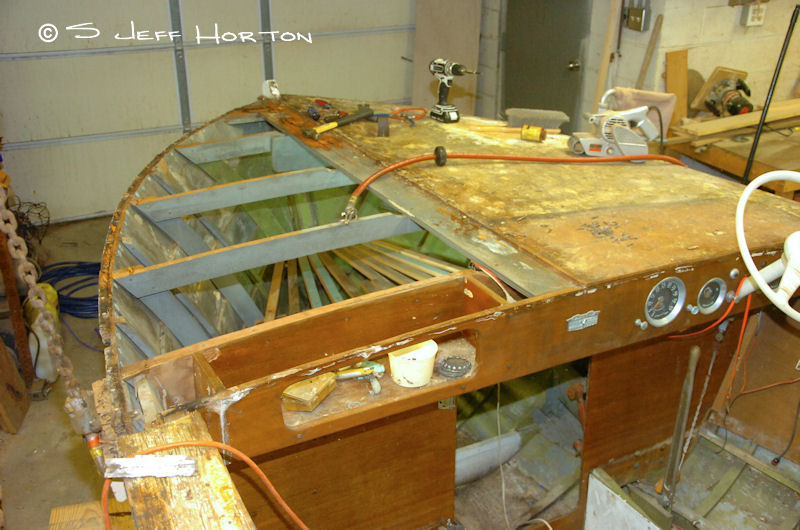
Finally I managed to get it off. Once again a couple of surprises but so far just small things.

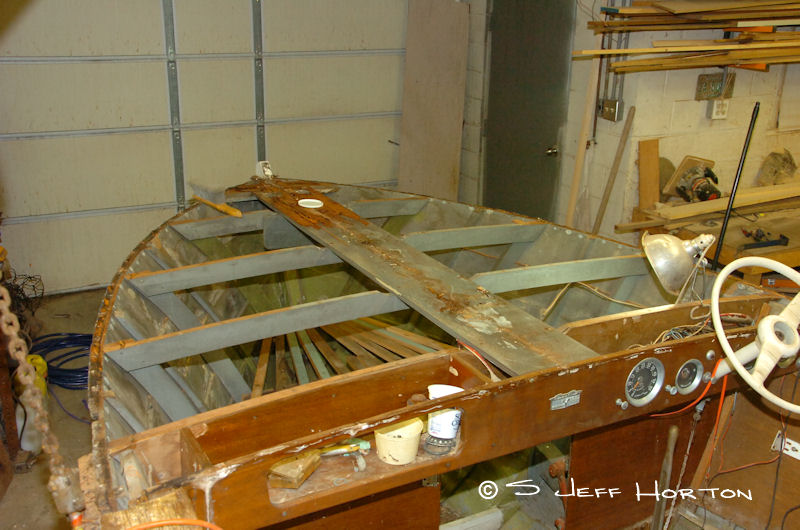
The other side came off much quicker since I knew where all the screws were. I can finally see inside clearly. I was too tired to survey the bow and see what shape it was in.

With the deck off the bow, I decided had accomplished enough. I turned out the lights and headed to the house.