Converting Long Shot * part eight

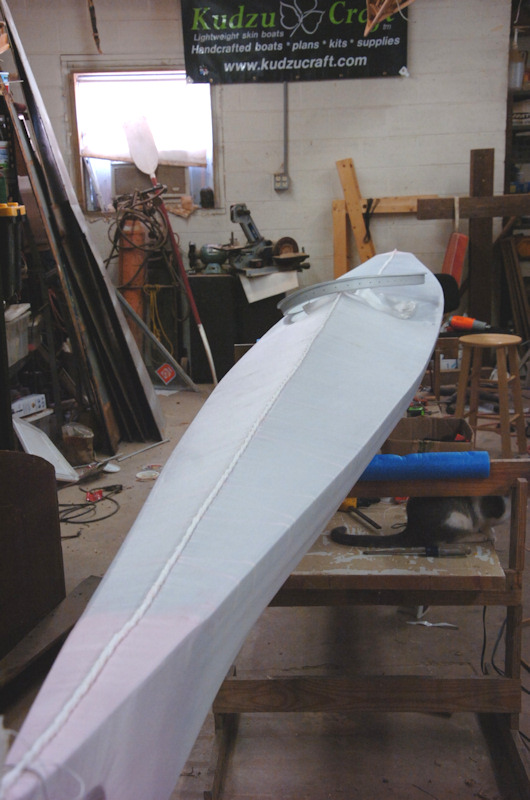
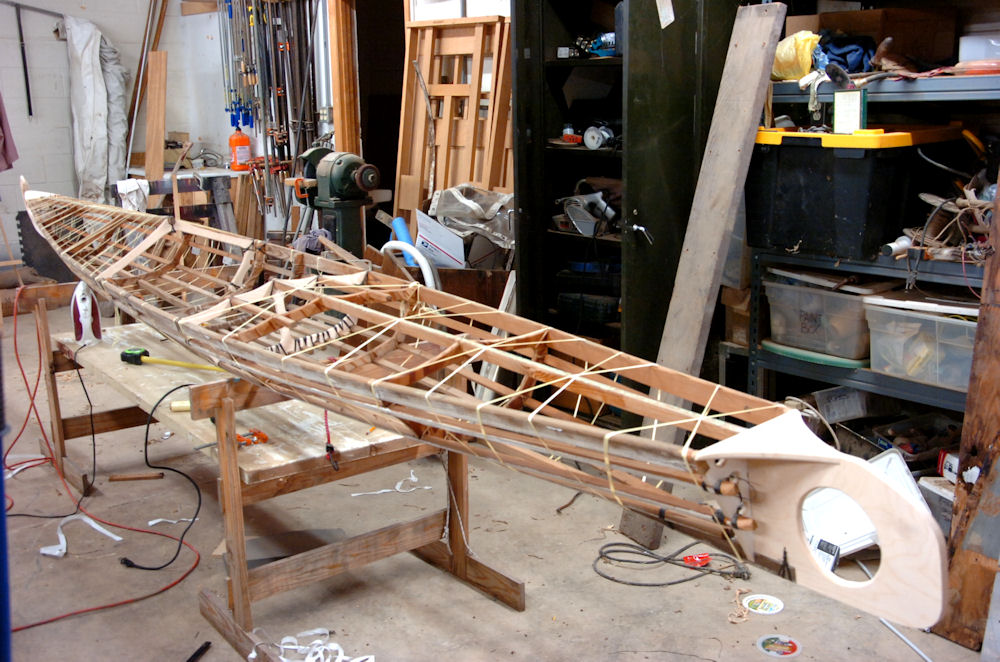
I got a little behind while I was sick but know now I feel I am making good progress. The (unnamed) boat is now skinned and the base coat is on. At this point it could go to the water actually. But I am not done. I want to work on the rigging and get my holes in place and the lines installed temporarily.

Once I have everything located I am going to remove it and layout the paint the rest of the boat.  These are probably the last photos till I finish it. Traditionalist beware……..

jeffs-31 jeffs-30

Converting Long Shot * part seven

Lots of photos today and a good bit of progress too. I have started skinning the boat using the 8 oz polyester as I use on most of my boats.

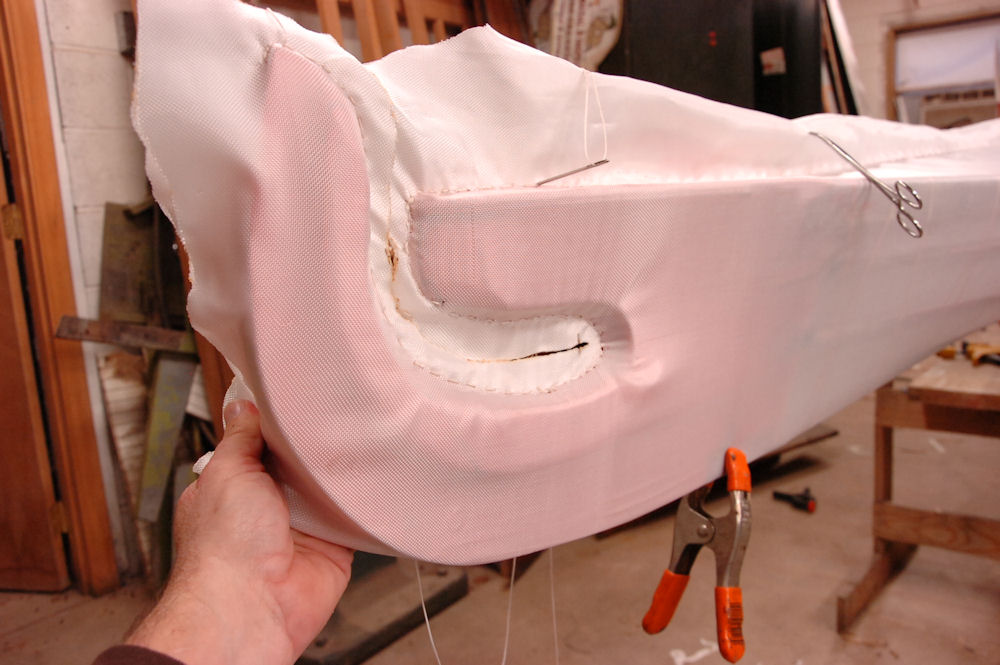
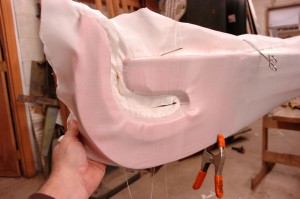
I started sewing the skin around the boat, pulling it snug as I stitch. The one trick I learned when I skinned the first Firefly was to start at the cockpit and sew toward the bow. STOP, before you get to the bow and sew the Bifid bow first! Just trust me on this.

Sewing the Bifid is always tricky and my first attempt didn’t go to well. I had to remove a lot of my stitches and try again. Second time around looked much better. I ended up with a couple of puckered spots but I expected that and they will (should) pull tight once I shrink the skin.
jeffs-22

Another thing I am doing different is I am using Heat N Bond tape on the front of the bow to hold the skin in place. It is heat activated adhesive tape and you literally iron it on to the wood. Then peel off the paper backing, stretch the fabric tight and iron the fabric to bond it to the tap. I found it fairly easy to work with has a really good bond in one direction.

If I lift the fabric I can peel it off easy enough. But when pulling across the bonded area and not lifting it has a really good grip. So in this application it works really well. But it is not a permanent solution.

Once the boat is painted, I will be adding a bronze rub strip, screwed in place over it to finish it off. That will hide the exposed edges of the fabric and provide a very durable rub strip in the most damage prone area of the boat. And I think it will look better than stitching does.
jeffs-23

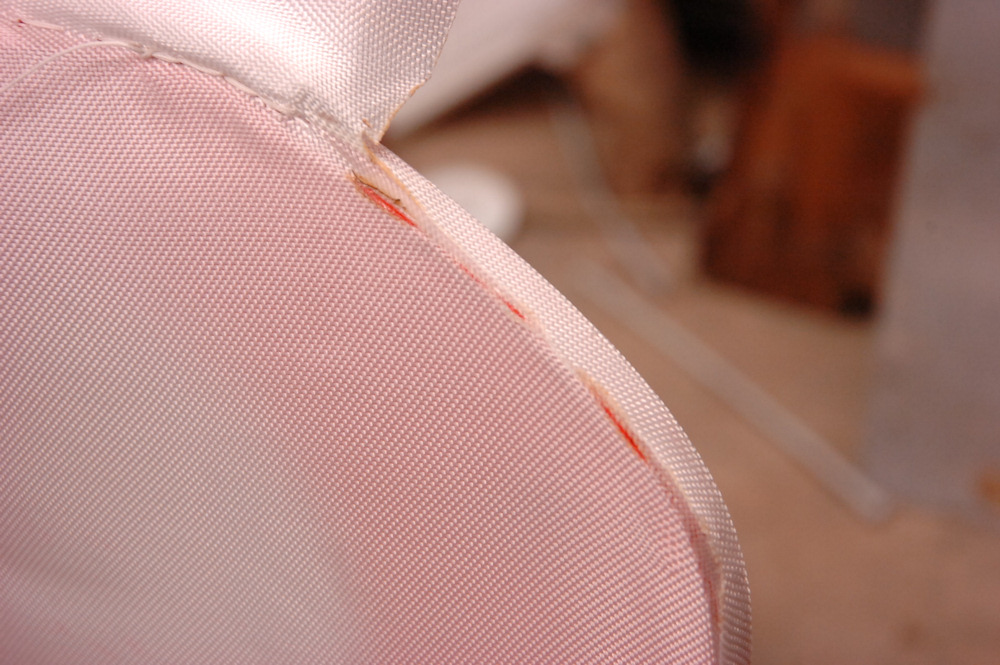
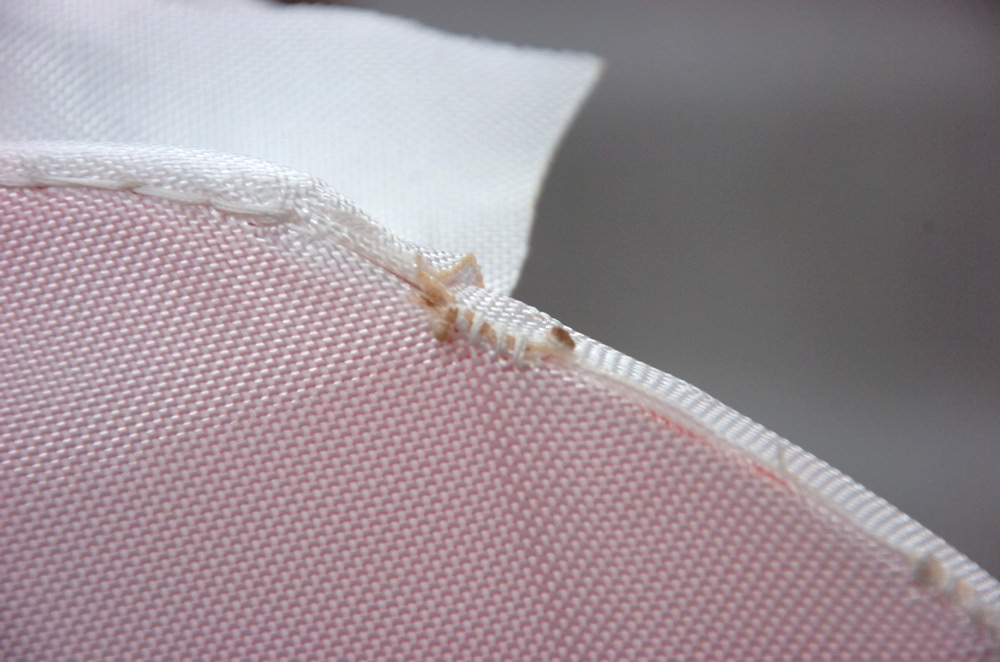
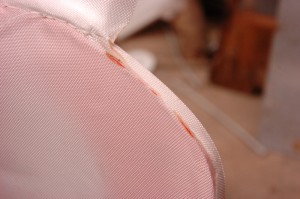
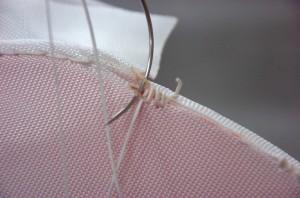
WOOPS! This is the stern and I used the tape there too. When I was trimming the excess fabric I stood on the wrong side of the boat and couldn’t see that I was hitting the corner with my hot knife and melting the fabric. If this were a clients boat I would have started over, but since it was mine I decided to repair it instead.
jeffs-24

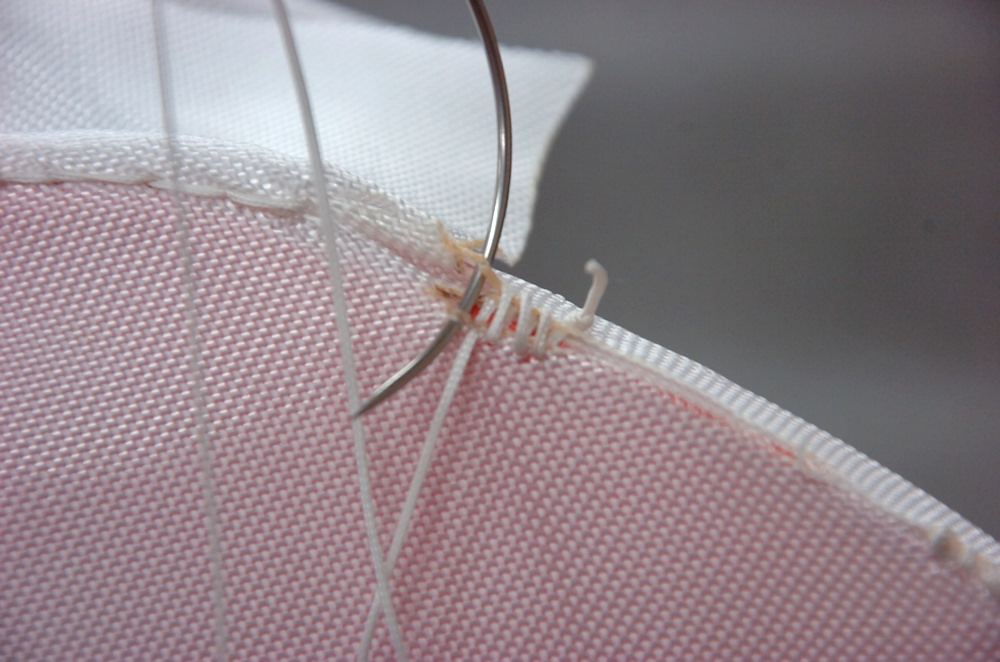
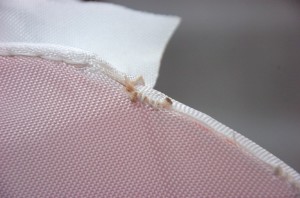
Using a curved needle I ran several stitches close together though the fabric behind the melted edge.
jeffs-25

Once it is pulled tight and the thread trimmed close you can barely eve see it. After it is painted and the brass rub strip is in place, I think it will take a sharp eye to ever spot it.
jeffs-27

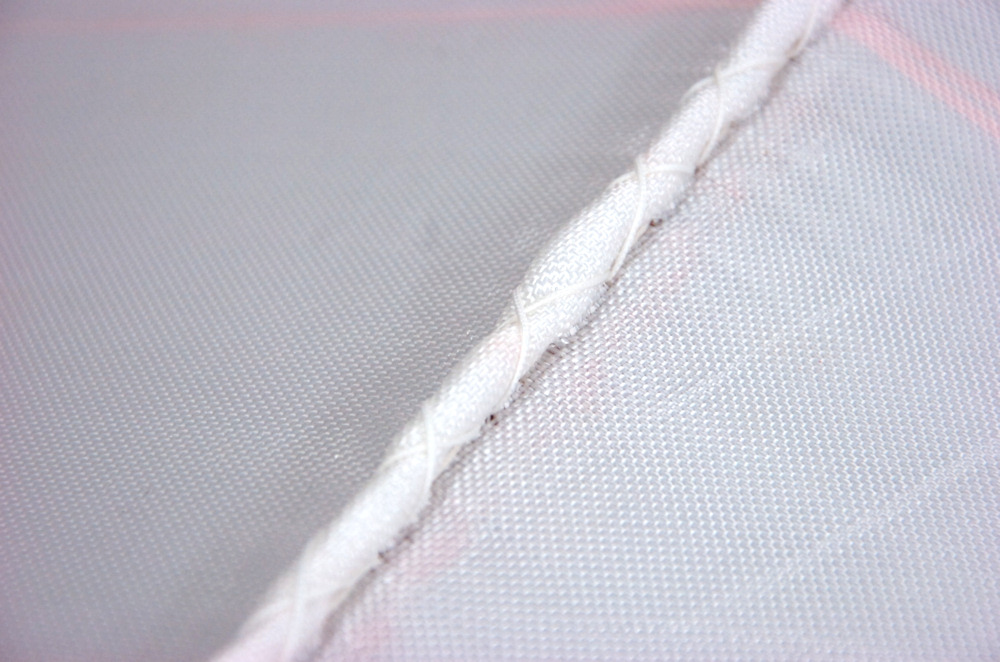
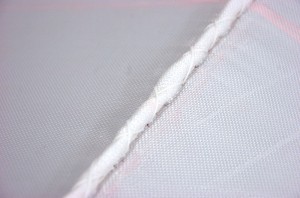
I did something a little different on the sewn seams this time. I usually just do a whip stitch and pull it tight. That makes it resemble 3 braid rope. This time I did 2 whip stitches from opposite sides and I only pulled the thread snug so that it did collapse the rolled fabric. This leaves me with a smooth bead down the center and it will give the boat a cleaner look.
jeffs-26

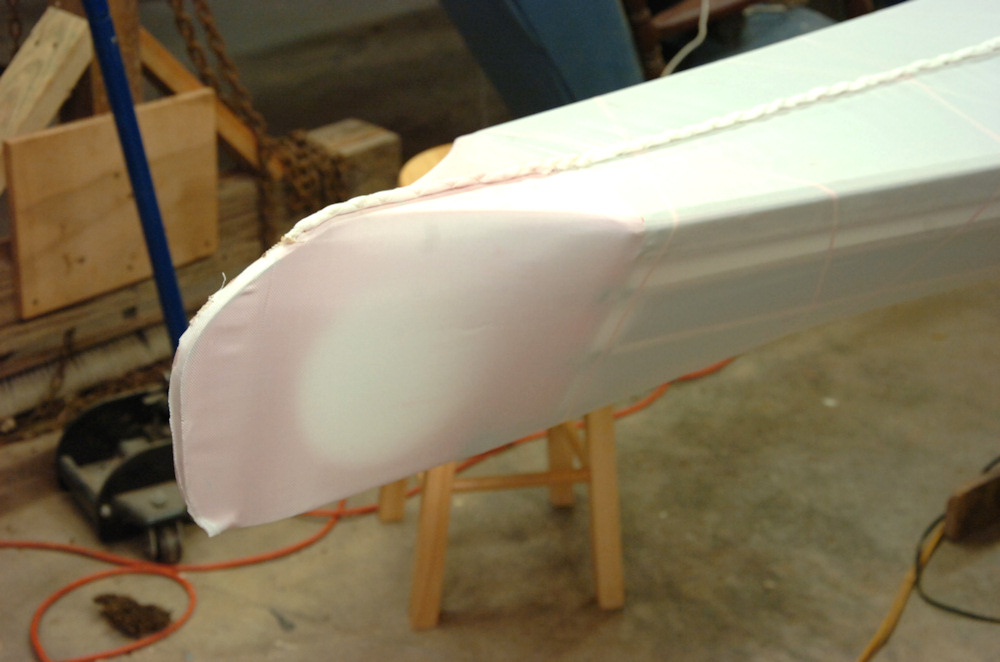
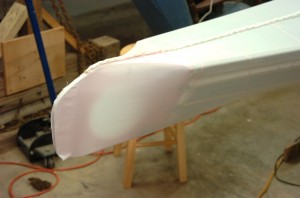
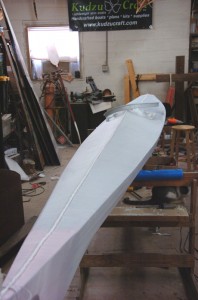
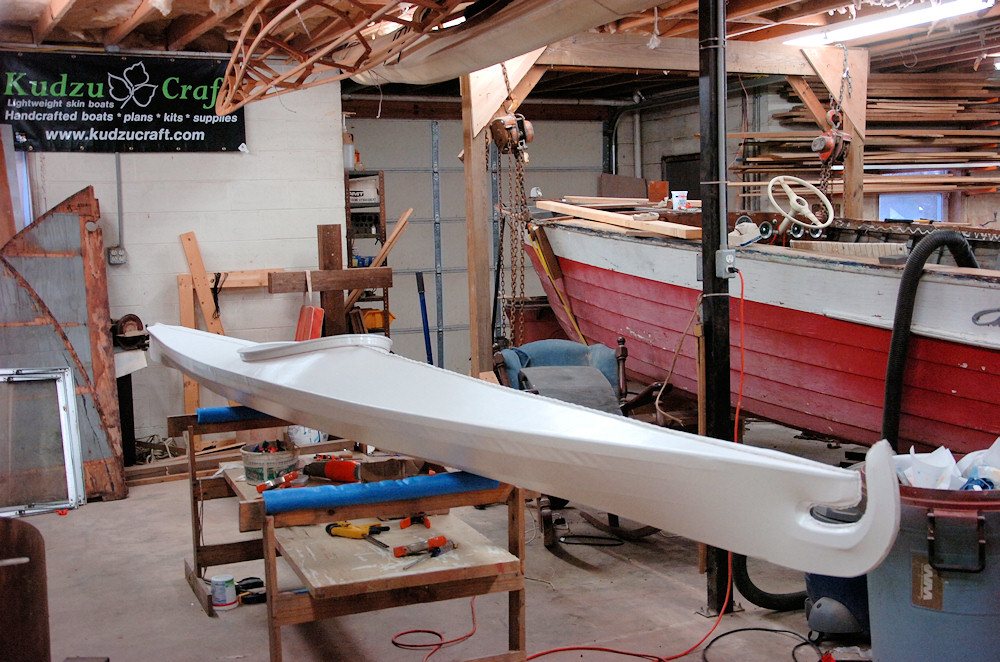
Here is the stern after I shrunk the fabric a little. If you remember I really struggled with the design for the stern and now I couldn’t be happier with this. It still looks traditional but it has a little flair and is not just squared off like many were. I never liked  the squared off corners but I love this!
jeffs-28

Check out those straight seams! Yea, I am bragging just a little bit.  I need to install the coaming and finish the seam around the Bifid bow, which I am not looking forward too! That is going to be hardest part of the sewing.

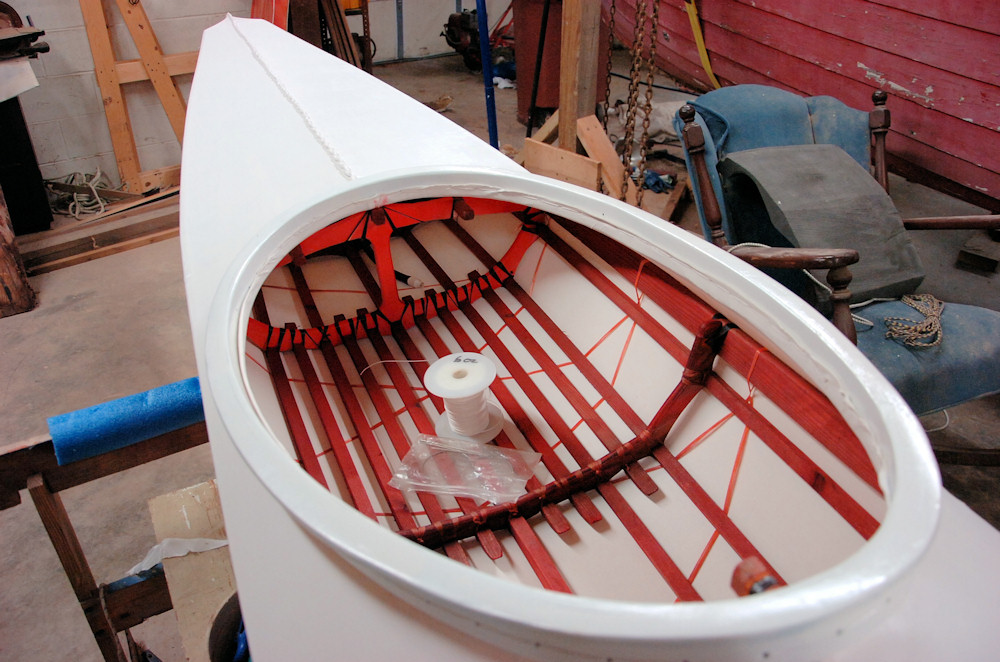
The white coaming is a first for me, I usually varnish them but this will has a ‘special’ paint job so I decided to paint it to match. And that’s the only hint you going to get on paint job.
 

Converting Long Shot * part six

This is a two for one post.. I am going to update you on the boat and do a quick review or first impressions if you will, of the Critter Sprayer.

I believe I mentioned previous that I read somewhere that all/most/some Baidarka frames were dyed red. No idea why and not sure if anyone knows. I would guess they used blood to stain them and it was for religious or superstitious reasons. I always thought it was a neat idea and red will contrast with the painted skin really well, so that is why I wanted to try it.

I asked on a wood working forum I frequent and the overwhelming consensus was to use Aniline dye. It will mix with a lot of different media and water was the one thing I had plenty of. So I heated some water, added the dye till it was dark blood-red and them put it in the fridge to cool.

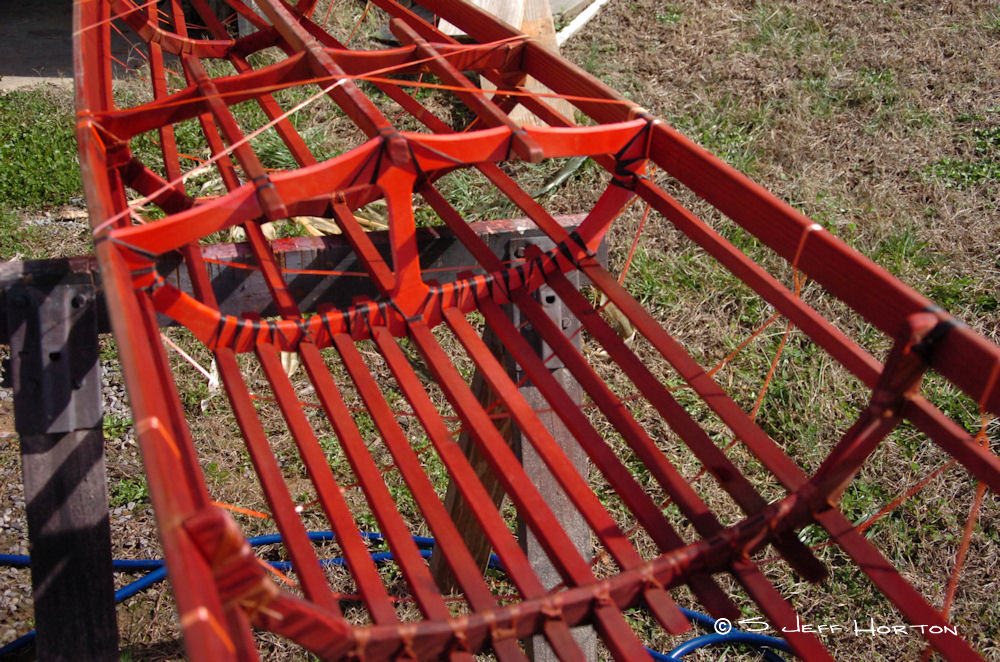
I set up the frame outside and here you can see the end results. The new wood accepted the color much better and is much brighter. The old wood is darker and looks more like a blood-red color. Once it is skinned I think I the new wood will be much less obvious and it should all blend in just fine.

jeffs-19

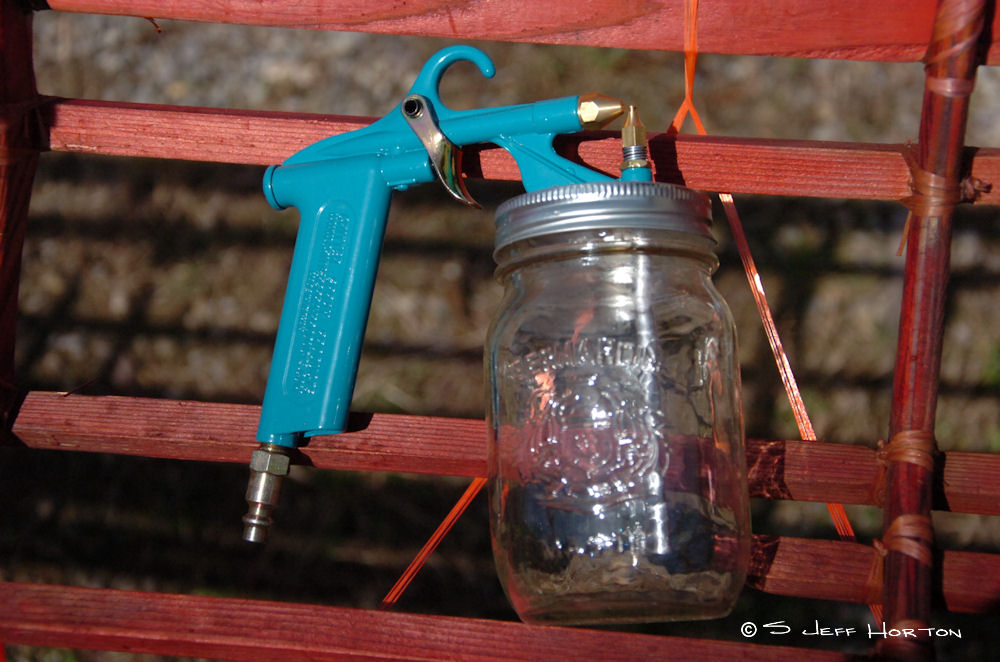
Now, the Critter sprayer. Let me start by saying I am impressed over all. It worked well and clean up took 3, minutes TOPS! It take 30 minutes minimum, to clean my HVLP gun. That along is a huge selling feature.

jeffs-20

The only thing I didn’t like was the vent hole to allow air into the mason jar. It locate on top of the lid with no baffling. Trying to spray inside the boat and I would be holding the gun at odd angles and that allowed a dye to leak or slosh out. Of course I ended up with it on my hands. With something thicker than water I think it would be much less likely to leak out as easy. After realizing what happened I tried to keep the gun more level and didn’t have it happen again.

It has one spray pattern, a round(ish) smaller spray pattern and  you can’t adjust it. It’s much like spraying with a rattle can, just larger. It took me 3 or 4 attempts at adjusting the siphon nozzle height to get it spraying like I wanted. But that is quick and easy to do.

You find the Critter sprayer online for $40 or less. It looks like a toy but my first impressions say otherwise. It is much like an oversized air brush. I wouldn’t want to paint anything really large with it, but as easy as it is to clean…. it might be worth  the extra time it would take. I really hate cleaning a spray gun.


Converting Long Shot * part five

Today I was finally able to get back to work on Long Shot. First work got very busy and I was so tired that I just didn’t feel like working. I should have recognized that as a warning. I have been through this so many times!  I was coming down with a sinus infection and for almost 2 weeks  I barely felt like getting up and fixing something to eat, much less going to the shop to work.

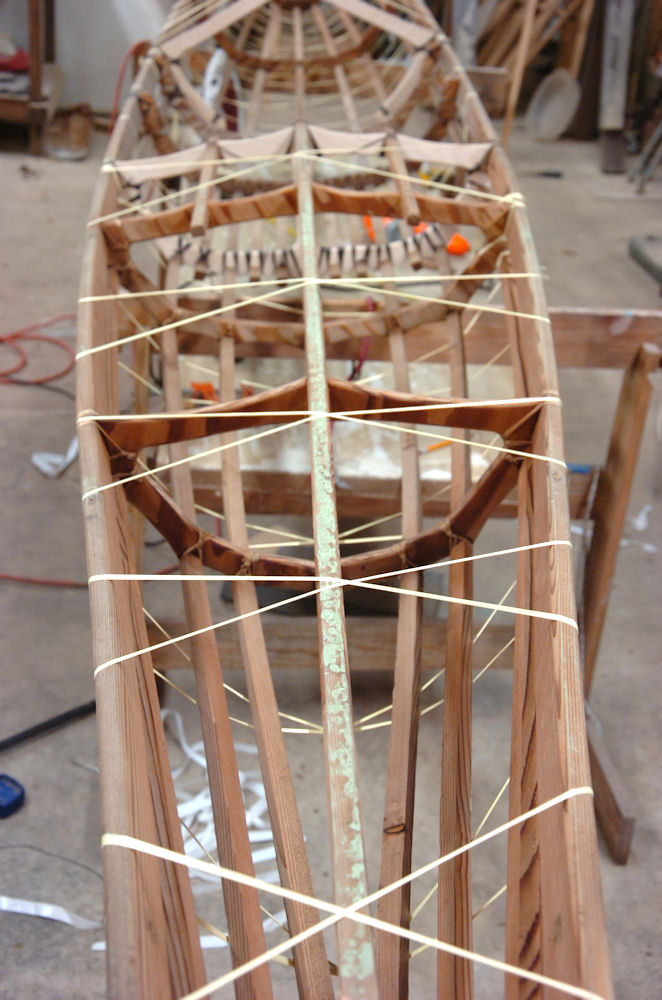
As I mentioned, this boat was a prototype and the frame was very flexible.I have wanted to do something to stiffen the frame for a long time. I decided to try the Geodesic Boat method of using Kevlar roving wrapped around the frame. Platt’s boat frames were so extremely light he used the Kevlar to give them enough structural strength not to collapse. OK, I don’t know that they would have collapsed but I strongly suspect some of his designs would have failed without it.  He took light weight to the extreme!

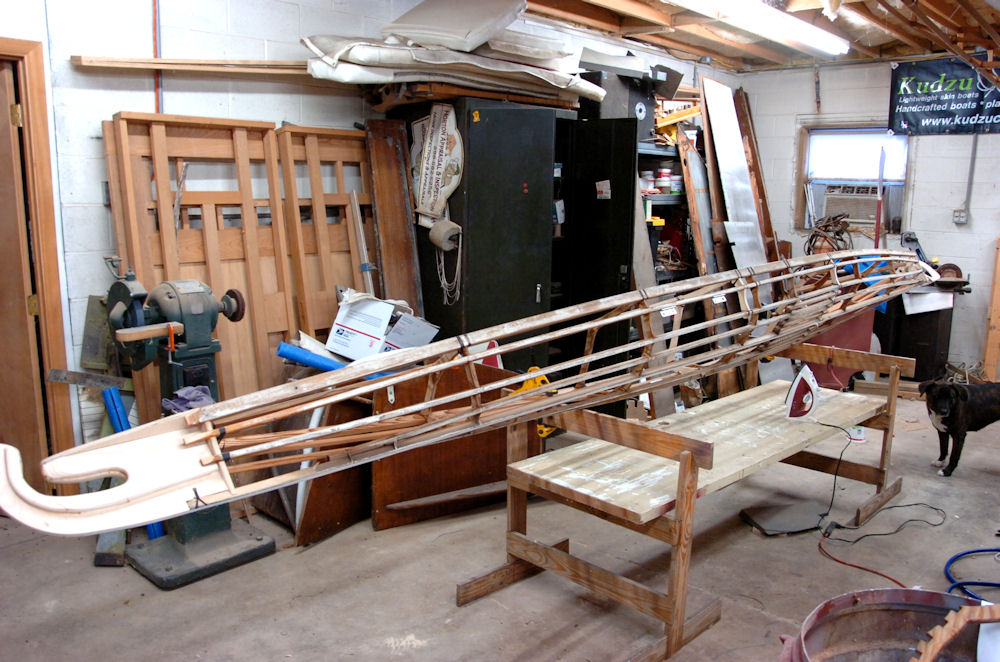
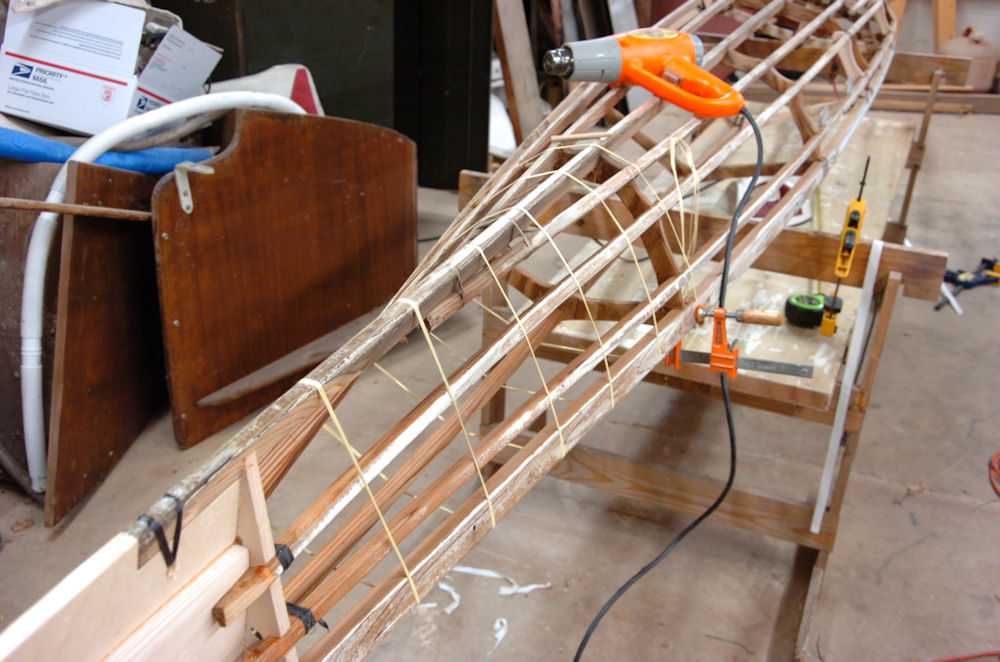
This morning I started with the Heat n Bond tape and ironed it onto the frame along the gunwale and the keel. I tied off the Kevlar to the frame and started wrapping it around the boat and then clamped the end to the frame. Starting at the front I pulled the Kevlar tight working toward the cockpit. Once the roving was tight all the way down the boat I secured the end.

jeffs-14

Using my heat gun to warm the tape where the Kevlar crossed I took a dowel with the end rounded over and pushed it into the tape to ensure a good bond.  Latter I found out that it was easier and quicker to just use the iron with some of the paper backing between the iron and roving. This kept glue from getting on the iron.

After giving the tape time to cool, I removed the clamp and was impressed with how well the tape held the Kevlar. I could lift it up without a lot of effort, but in tension the grip was strong that this where the stress is.

jeffs-15

I started on the bow wrapping the roving around the boat.  I now realize I was spacing it way to close together. On the rear of the boat I used a much bigger spacing and it is just as stiff and it was much faster to apply. And it looks much better.

jeffs-17

I kept testing the frame by flexing it and at first I was disappointed. There just didn’t seem to much improvement. But once I got everything in place I could tell that the frame was much stiffer than before. Not stiff like a plastic boat but miles ahead of where it was. 
jeffs-16
When I put the skin on I am going to pull it tight and bond it to the tape with the iron before sewing. Once the skin is shrunk I am very confident that this boat will be at least as stiff as the rest of my designs and I will be a bit surprises if it is not stiffer. Either way it will much improved over what it was.