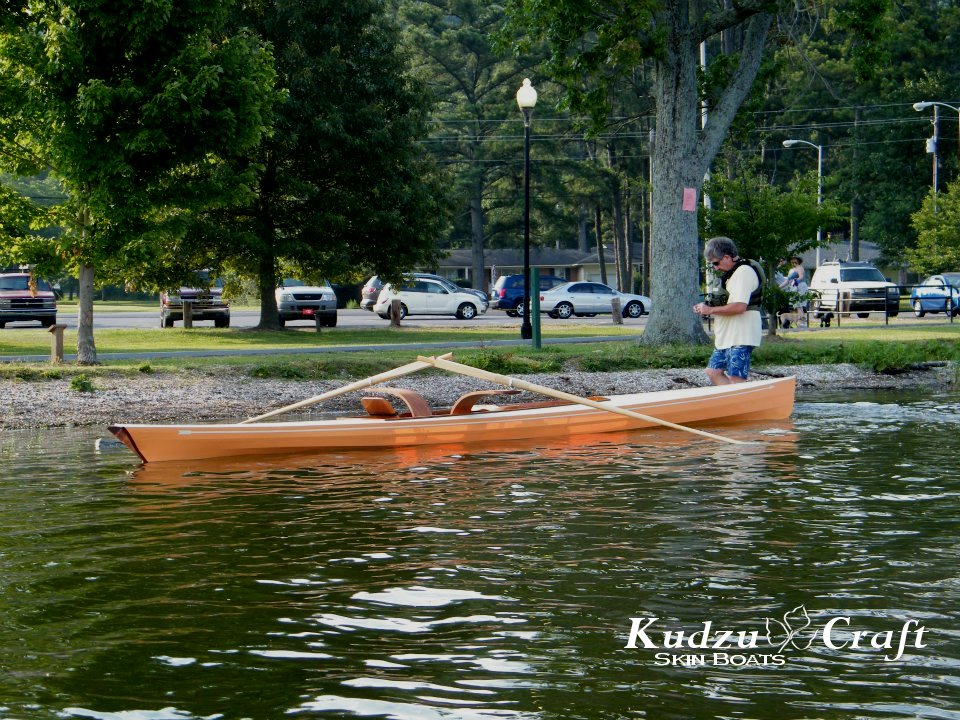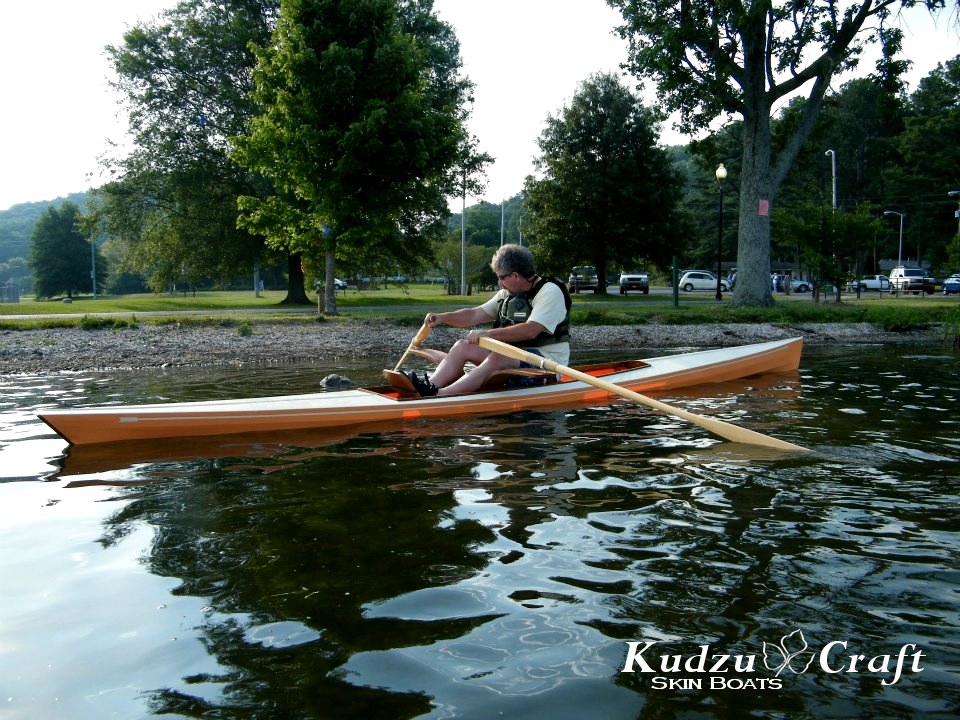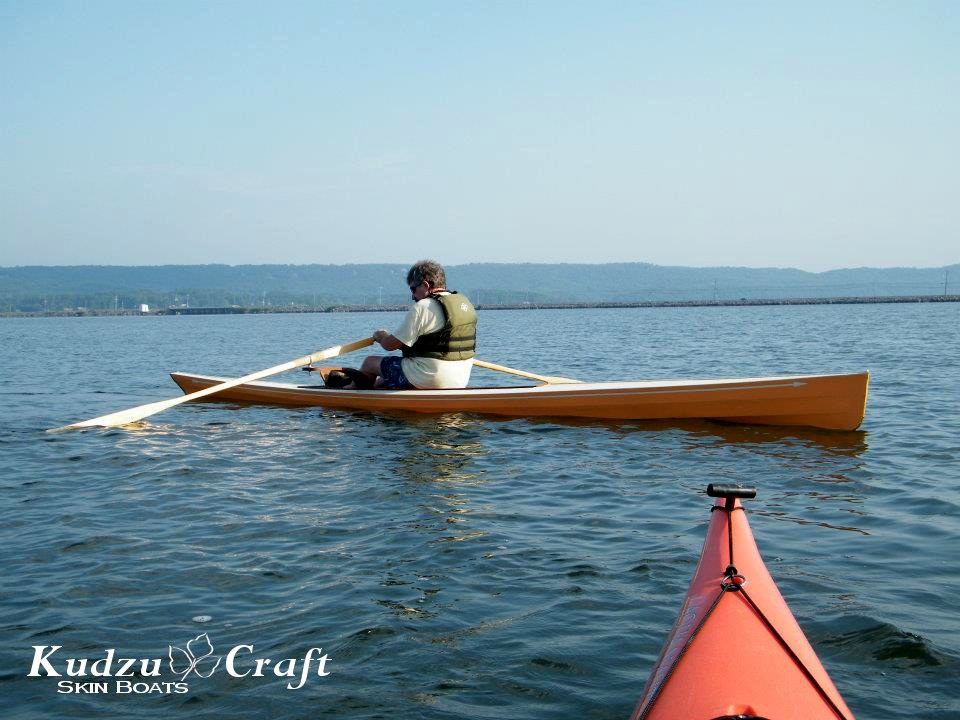
Just got in from a 5 minute paddle and learned a lot more.
Raising the oars 2″ made a dramatic difference. No bloody knees! Plenty of clearance and did not bang my knees once. So that was a huge improvement and one issue resolved. I had searched and searched the web but could never find any recomendation on this height so I guessed and guessed wrong. But now I have a good starting point from now on.
As a side note I am thinking I made this boat to low. It should have been at least an inch taller and maybe even two. I don’t want to get caught out in rough water in this thing. Maybe with some experience it will OK but that leads to the other issue, stability…..
There is more to stability than just keeping a boat upright. I have no problems there, I can sit in the boat with or without oars no problem. It’s tender but I guess from paddling lower stability kayaks is why I don’t find it a big problem. Phil however struggled with the stability which sort of surprised me.
https://www.facebook…469379416407085
But today, since I wasn’t focused on keeping my knees out of the way I started to confront the next issue. I keep dipping one oar in the water which could be a really bad thing at higher speed. Right now it is just a major annoyance and frustrates the heck out of me!!!! I was assuming it was just me letting one side droop and hit the water. But being able to focus on this, I realize that was not the case.
I am wobbling as I paddle, leaning the boat to one side or the other and with the lenght of the oars it doesn’t take much for an oar to dip into the water. So it is a stability issue, not turning over but rocking from side to side. That will improve with experience I am sure but since I can’t paddle worth a darn now I am going to try to lower the seating position.
I tried sitting on top of the seat frame (very uncomfortable!!) with the sliding seat all the way back but that made a big difference. It would not be very hard to add a board across the frame to use as a fixed seat. That will lower me an inch and half and that will make a marked difference. And it’s easier than making a new frame. So I will probably start with that.
Stay tuned!