Skin and Oar

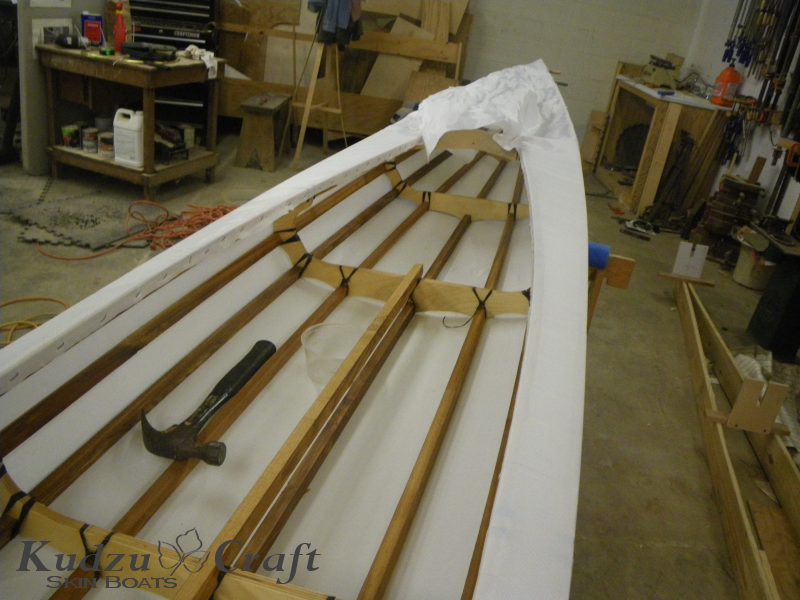
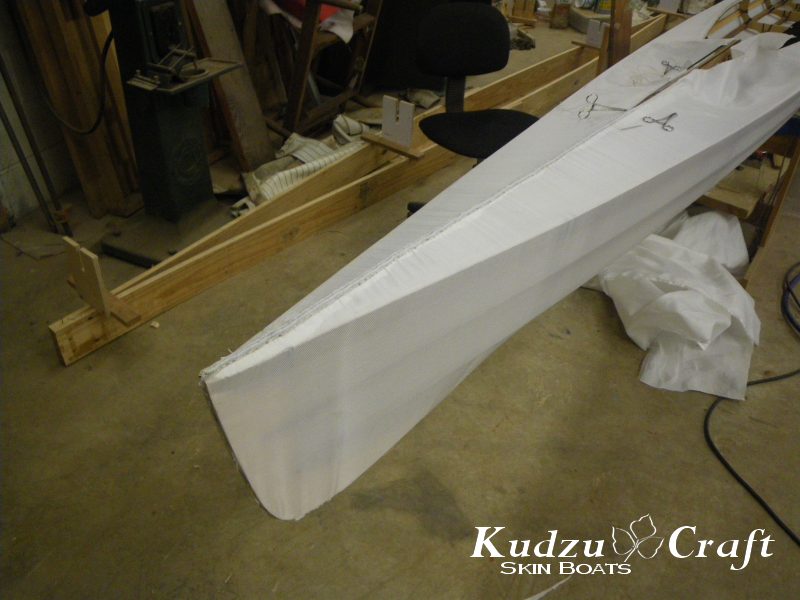
The boat is skinned and ready for paint. Love the new method I used for skinning. I learned a few things things not to do on the next one. This is the tightest polyester skin I have ever had. It really is drum tight It’s actually too tight near the rear of the boat.

“I think” I know what color(s) I am going to use. I had an inspiration today but that will have to remain a secret for a while yet. I am still trying to decide if that is what I want. Lets just say it’s not as traditional as I was first thinking. 🙂

Next I worked on the finishing the oars. On my glued up blank, the handle  had ended up bad off center somehow and I had decided to just use this as test piece to learn from. As I started to mark the final shape on the glue up I realized that the handle was right, I had just left more stock on side than the other.

So I finished the oar still thinking I would just use it as a pattern but it came out so well that I decided to just keep it. I am very happy with it and it looks like it is a keeper.

Next is one more oar, paint on the hull and a lot of varnishing on the sliding seat rig. Oh and of course trim around the cockpit. That will take a little time to install and varnish but it’s getting close.

Last nights paddle

Laid back paddle last night around the ‘islands’. Neither of us were in a hurry to do anything or go anywhere.

Phil snapped this one with the River Bridge behind me. I like this.

Told you it was a laid back paddle!


Oars and skin

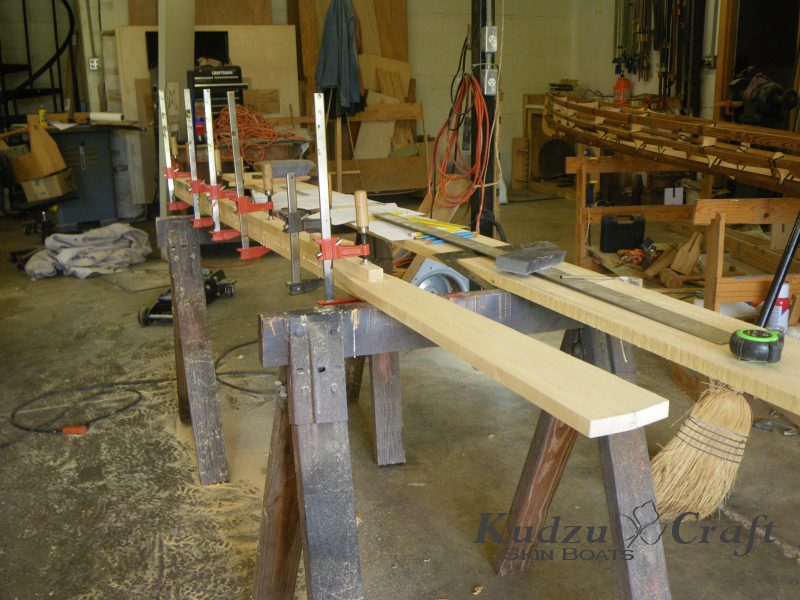
I have started on my oars. After a false start and a lot of looking around I finally settled on laminating some basswood boards into a blank.  I looked at a lot of plans on the web and I am more or less following Jim Michalak’s plans. His plans are for 8 foot and I am making 9′. So they will vary a little bit.

With that glued up I moved over to the boat and started skinning.

On this boat I just staple the skin on the inside of the coaming.

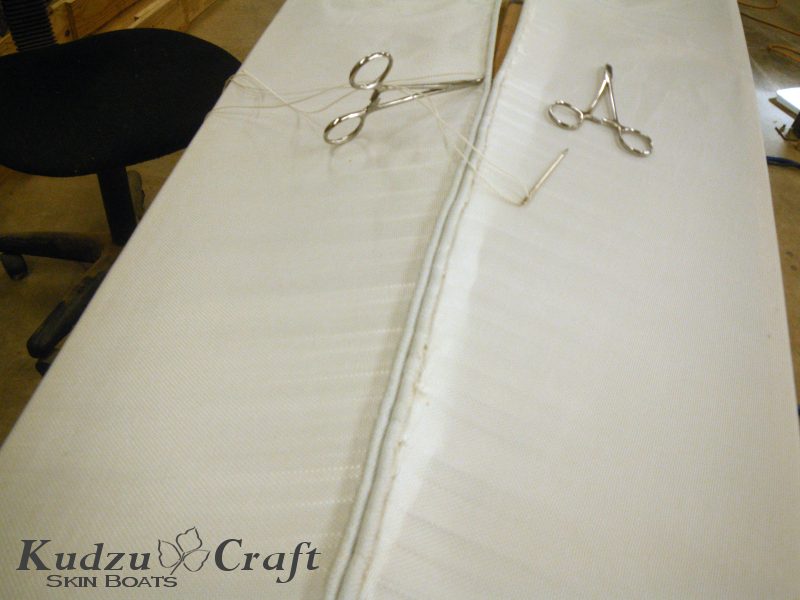
I am trying a new stitch down the bow. I have seen this done before but never knew how it was done and finally just decided to try it. It’s slower but I love the way it looks and I also found that I can pull the skin tight and not get those pesky pull holes either.

The bow is sewn and ready for a little shrinking to pull out some wrinkles. It’s going to be a couple of days before I can get back on it but it will not take long to be ready for paint or whatever finish I decide on.

Any color suggestions? I am stumped.

Rounding the corner

As the title implies, it feels like I have rounded the corner when I get to this point.

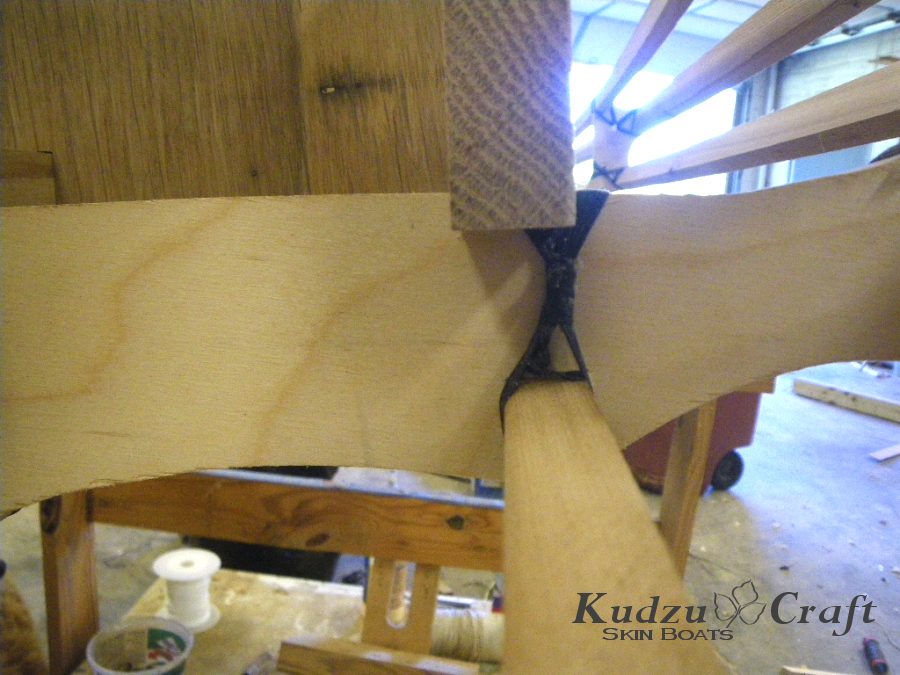
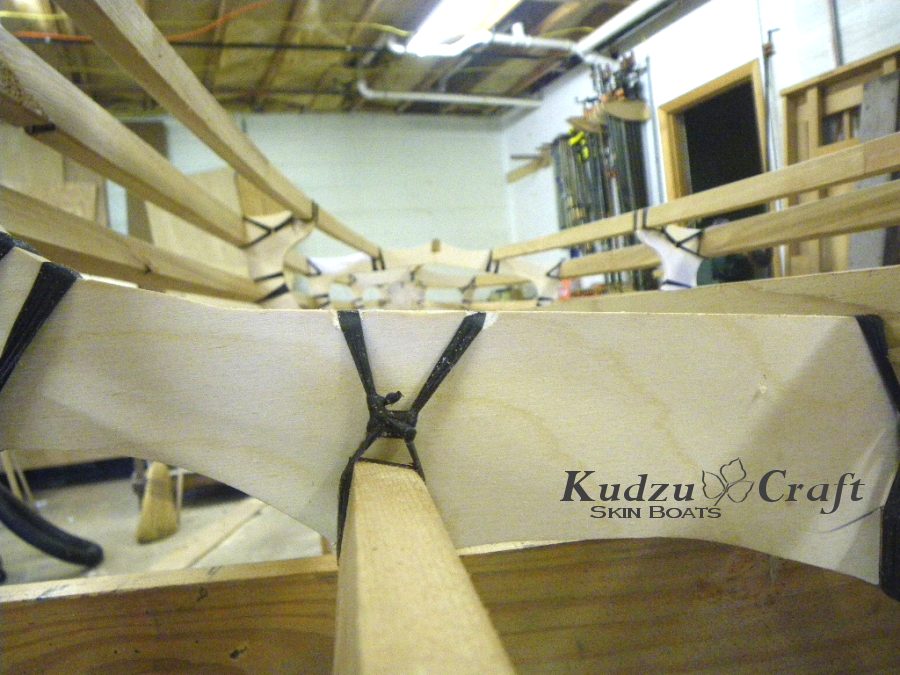
First order of business was to go back and relash a couple of stringers. This photo is probably a bit confusing but you are looking at the end of the sliding seat unit resting on the frame. The unit is resting on the lashing. Taking it in and out is would eventually wear out the lashings so I needed to fix it…. or rather fix all 6 of them.

The fix was simple enough. Just cut a notch in the frame for the lashing to rest in and that would keep it out-of-the-way.  Then lash the stringer with an H lashing.

With that done the frame is finished and it’s time to apply the oil. This is not one of my favorite jobs but I do love watching the wood change as the oil is applied! I love the look of oiled WRC.

I have finished the outriggers, I am just waiting on the hardware to arrives so I can mount them to the frame. I oiled the outriggers and seat frame.

Once I get everything fitted and I will apply the varnish. I was going to varnish now, but I had second thoughts and decided to wait.

Once the oil has had a couple of days to dry it will be ready to start skinning. Next I need to  building a set of oars. For the first time I feel like I can see the end of this project. There is still a lot left to do but it feels like it is getting close.

And this one is JUST RIGHT

Outriggers are done, well as far as I can go right now. They are still held in place with some F-clamps so I need to order hardware.  I think I will start sanding and varnishing everything next. It might get skinned up a little but I can touch it up before I do the final assembly.

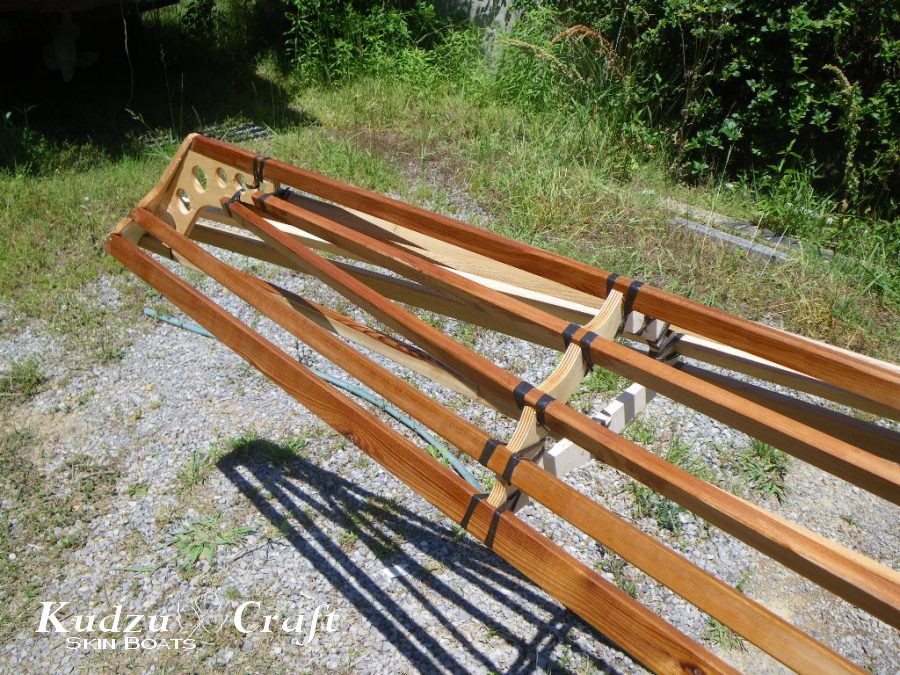
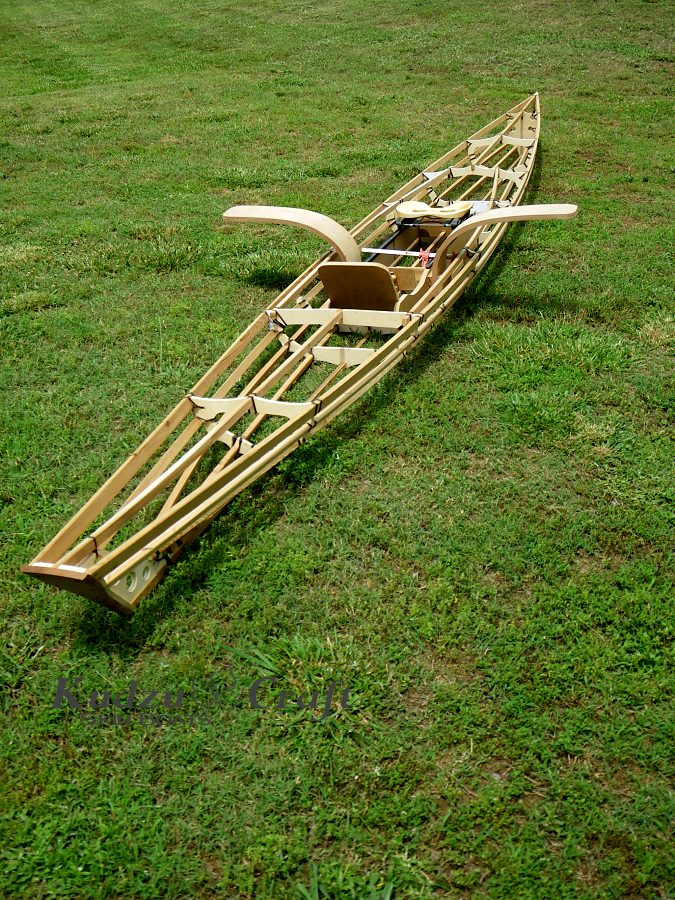
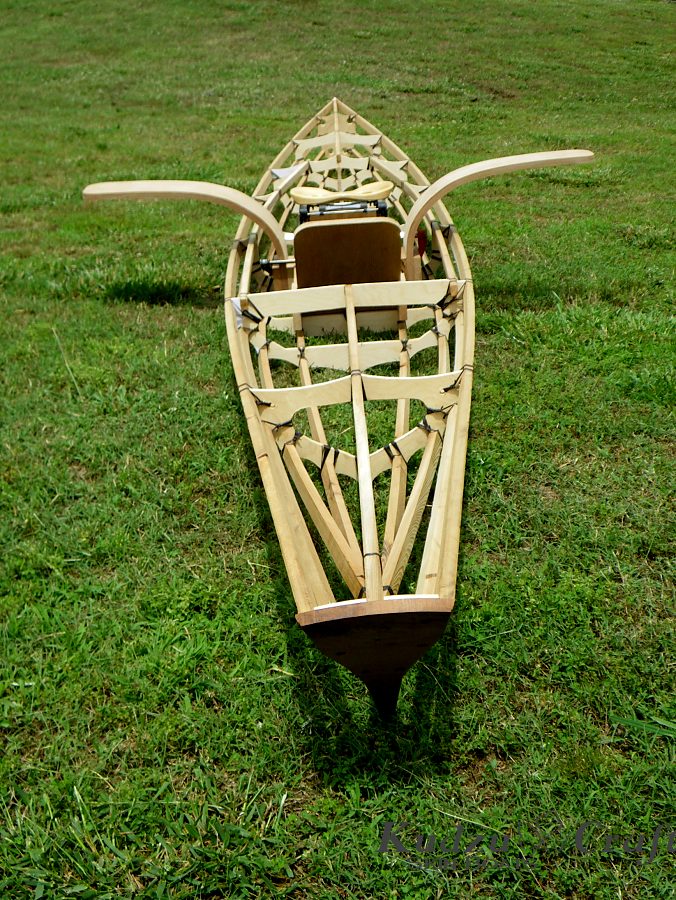
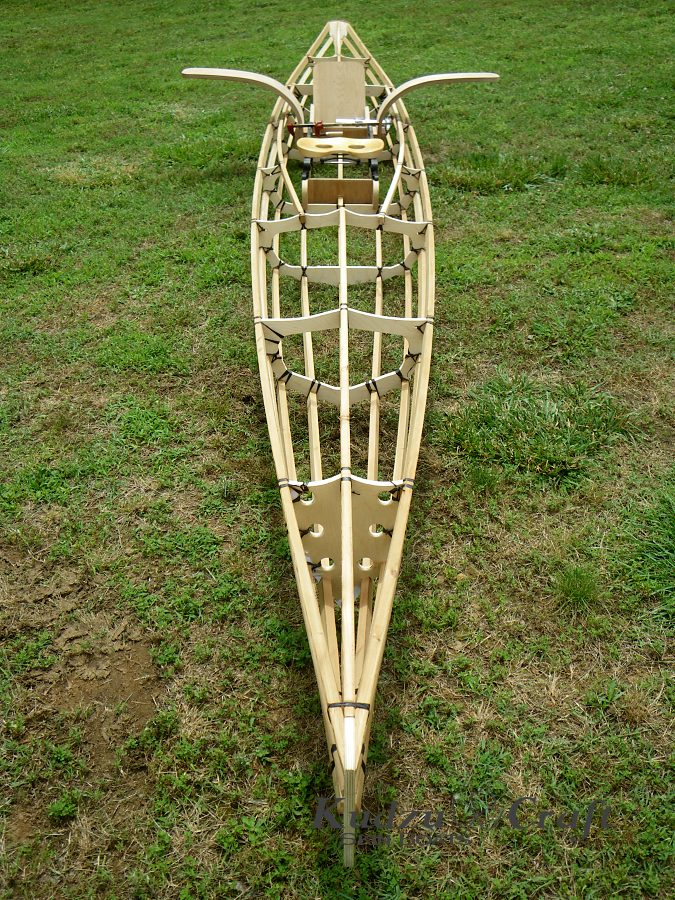
It is supposed to be stormy but since the storms are not here, I decided to take some  FROG photos (Frame On Grass).  Looking at it the outriggers look sort of narrow but they are correct for a set of 8 foot long oars. I wanted to start with these and see what I have built. If I don’t have any problems and decide later I want to try some 9′ oars, it’s just a matter of building a new set of outriggers and bolting them on to the frame.

The Goldilocks method of design

If you have been following along you know that the sliding seat design was done. The only thing missing was the outriggers for it.  I have had several ideas on how to build these and had drawn several versions, but there is nothing like taking it from the computer screen to wood. It doesn’t always work the way you had in mind!

One my goals in nearly all my designs is to keep is simple so that most anyone can build it. At the same time I don’t want it to look like a backyard project that was thrown together. I want something that looks really good when your done.

VERSION #1 (Too ugly)

I started with a simple and old design for a boomerang shaped wing with two simple supports that would attach to the frame near the feet. On paper it looked OK, not especially attractive but sometimes form just needs to follow function. So I built it, clamped it together it looked promising
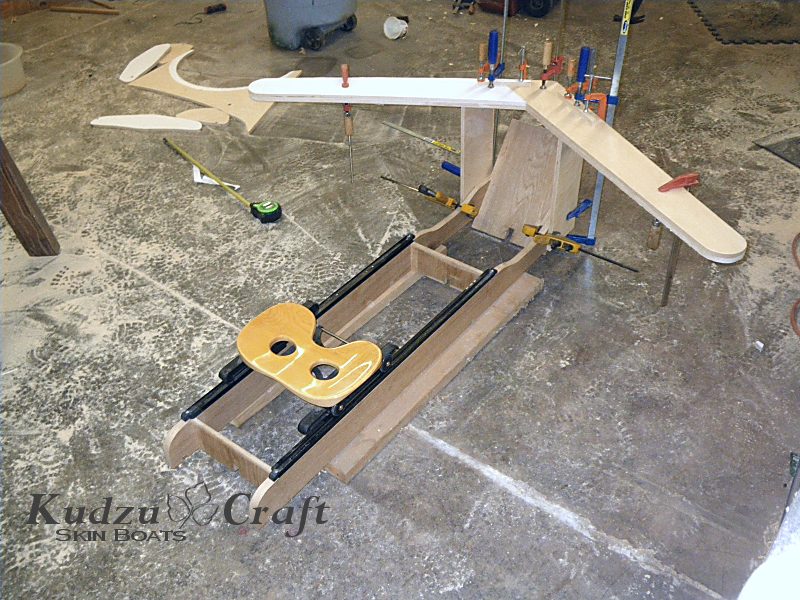
Until I put in the boat!
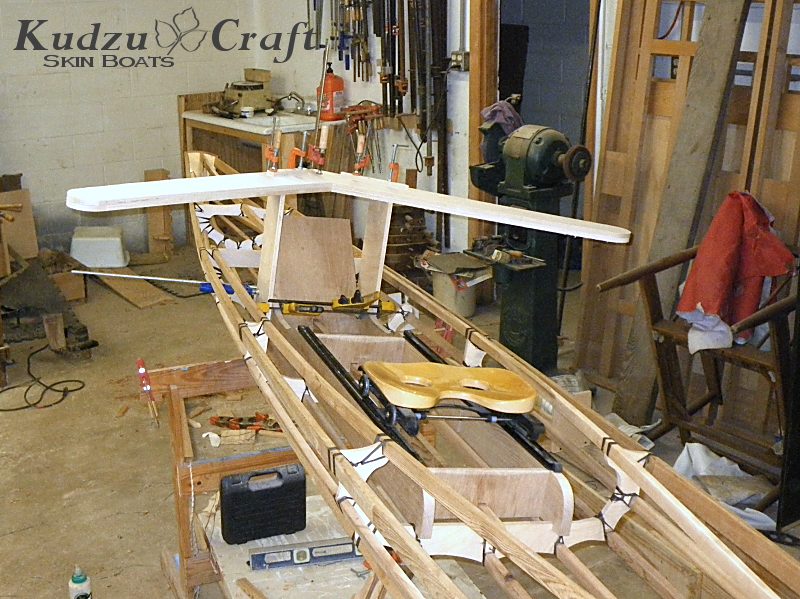
HOLY UGLY DUCKLING, BAT MAN!! That thing looks like it is trying to grow wings and fly!

VERSION #2 (Too hard)

As the old saying goes,”Life it to short to spend it in an ugly boat.”  So this had to go.  Another idea I had played around with was cutting the outriggers into three pieces and joining it together at angles. It would look like a Gull wing and shouldn’t be too hard to build …. so I thought!

I did some quick layouts, recut the pieces from the first version and started to put it together.
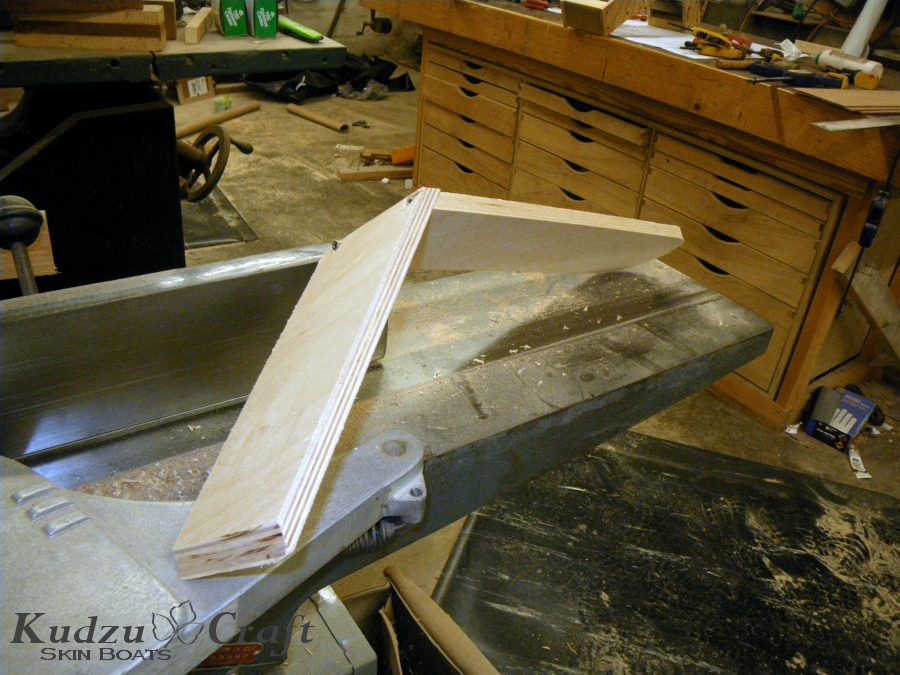
It didn’t take long to realize assembling this was not going to be easy for anyone. By the time all the braces were added to make it strong enough it was going to be a big job to build. Bottom line was there simply was not advantage to this version.

There was really only one good way to build this and I had been trying to get around it.

VERSION #2 (THIS ONE IS JUST RIGHT)

Time to build a form and laminate the outriggers from strips. I was trying to avoid this because I was afraid it was to complicated for inexperienced builders.  I have built a lot of laminated coamings for my kayaks and while they are not particularly hard, they are very aggravating.

To my total surprise this was nowhere near as hard as I had expected. Anyone with any skill could do this. And to think of all the time I wasted trying to get around laminating them.
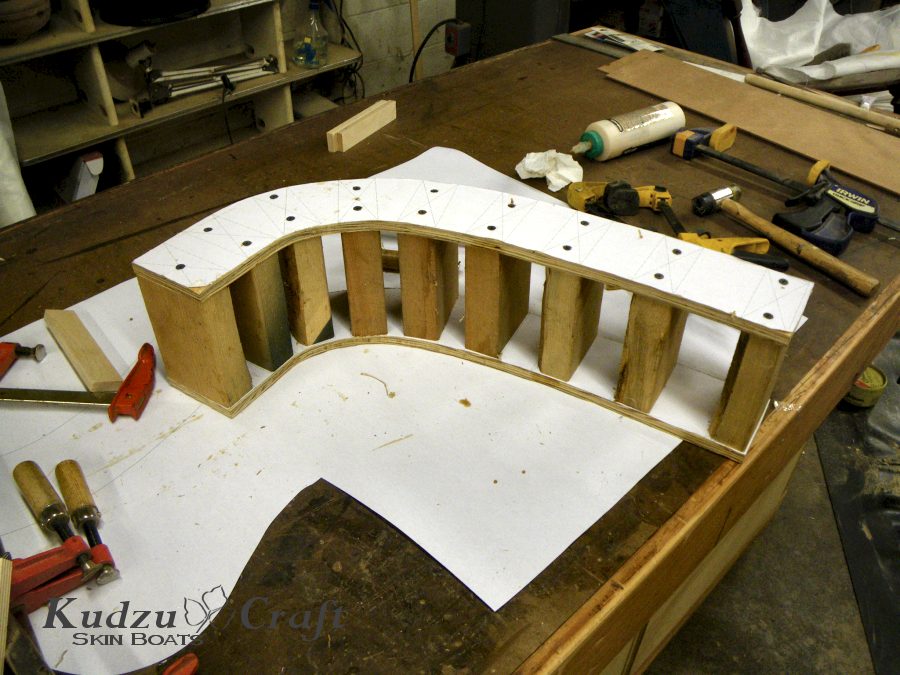
I drew full size patterns. Cut out two pieces of plywood and used short lengths  of 2×4 as spacers and clamping points. These were simply held in place with  drywall screws.

For the lamination’s I used 3mm Okoume plywood ripped into strips. I thought about ordering maple veneer used for making skateboards but I had the plywood in shop and no use for it. So if it failed I wasn’t out anything.  I applied glue on each piece and clamped 6 strips on the jig and started bending and clamping them around the form. I was surprised at how easy it was to bend 6 layers and clamp it in place. A second set of  hands wasn’t necessary but it would have made it easier, but I didn’t have any problems by myself..  I was totally surprised at how fast this went.
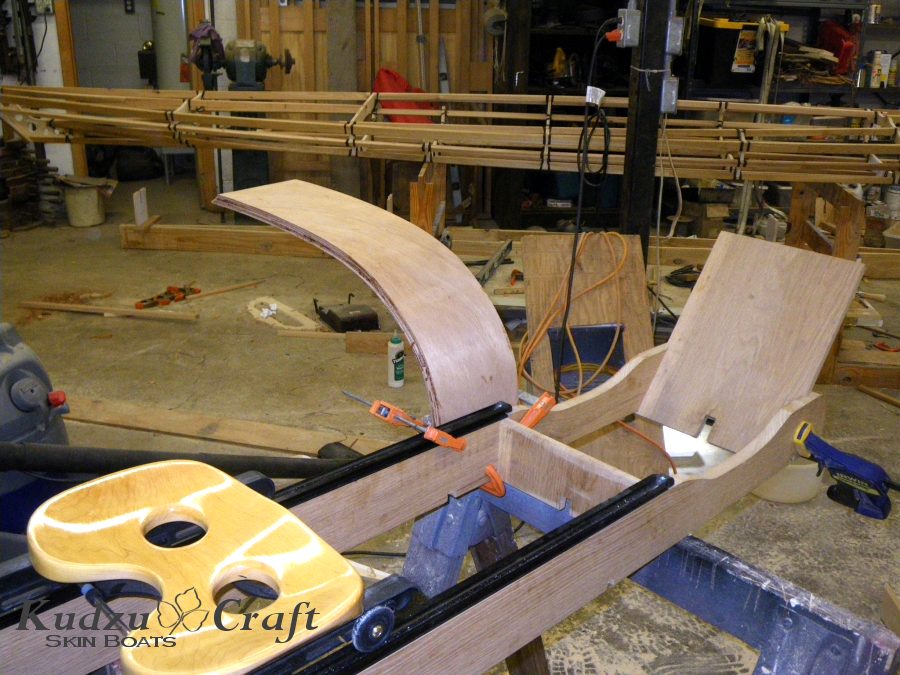
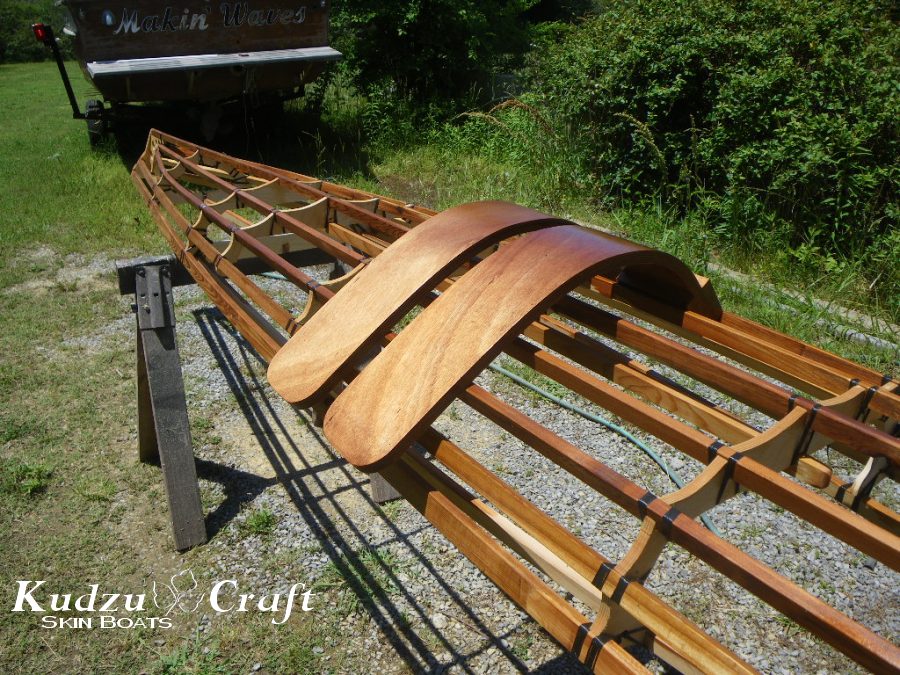
First piece straight off the mold and on to the sliding seat. I had to see what it would look like.

Here it is in the boat.  You can see that is it very close to the seat. I have to add a spacer behind it but that was part of the plan all along. I wanted to make sure that I had the clearance that I expected and that there were no surprises before I did anything else.

I had planned on laminating it to a full inch of thickness but I was surprised at how rigid it was at this thickness. There is going to be some give under a hard pull but since this is a recreational boat and not for competition I don’t think a little flex will be a problem. If I were racing I would want all my energy gong to moving the boat, not bending wood. The good thing is, if this does present a problem, I will build some stronger one and replace them.